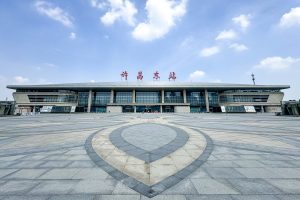
The high-speed train hisses to a halt at Xinyu North. Steam rises from a vendor’s cart on the platform — rice noodles in pork broth, chili oil floating like amber glass. You step onto the polished stone floor of the station concourse, phone in hand, and realize the map app shows a gray blob labeled “city center” ten kilometers south. No subway. No obvious bus queue. Just a line of black sedans with roof signs and a cluster of electric scooters whining at the curb. This is how Xinyu greets you: practical, unscripted, and hungry.
Getting There and Getting Oriented
Most visitors arrive on the Shanghai–Kunming high-speed line. The station sits in a new development zone, all wide boulevards and half-finished towers. A taxi to the older Yushui District core takes twenty minutes and costs roughly the price of a decent lunch. Drivers rarely speak English; have the Chinese name of your hotel or a landmark screenshot ready. If you prefer the bus, look for the green city routes — 1, 2, or 101 — that pull up at the station forecourt. They run every ten minutes until late evening. Pay with a transit card or exact change; drivers do not carry coins.
The city spreads along the Yuan River. Yushui District holds the government offices, the main shopping streets, and the night market near People’s Park. Fenyi County, to the south, feels more like a cluster of market towns linked by two-lane roads. You will not need a car in Yushui. Shared e-bikes — blue Meituan, yellow Hello — stack at every intersection. Scan the QR code, unlock, and ride on the bike lane separated from traffic by a low curb. Helmets are optional but smart; the traffic rhythm follows its own logic.
Where to Sleep: River Views vs. Alley Quiet
Chain hotels cluster around the railway station and the Wanda Plaza mall. Rooms are predictable: clean sheets, reliable hot water, English-speaking front desk at the big brands. For something with character, walk the lanes behind Renmin Road. Courtyard guesthouses hide behind high walls, their doors marked only by a red lantern or a hand-painted sign. Ask for a room facing the inner garden — mosquitoes gather near the canal at dusk. In late spring, the plum rains turn the alleys slick; bring rubber-soled shoes. Winter nights drop near freezing, and central heating is rare. A portable heater and thick socks serve better than an extra blanket.
Eating Your Way Through the Day
Breakfast starts early. Follow the steam to a stall where a woman ladles rice noodles into bowls, tops them with pickled mustard greens, crushed peanuts, and a spoonful of chili paste she ferments herself. The broth remembers every pork bone that ever swam in it. Eat standing, slurping, wiping sweat from your forehead. By mid-morning, the same stall sells steamed buns stuffed with preserved vegetable and minced pork — dense, salty, perfect with a cup of hot soy milk.
Lunch means a proper sit-down meal. Order family-style: a whole steamed fish with ginger and scallion, a clay-pot braise of tofu and pork belly, a plate of stir-fried lotus root slices that snap between the teeth. The local cuisine leans sour and spicy — vinegar from fermented rice, chili from dried red lanterns strung under eaves. Do not ask for “less oil.” The gloss on the sauce is the point. If you cannot read the menu, point to a table where diners look satisfied and say, “Yíyàng de” — the same as theirs.
- Rice noodles (米粉) — thin, white, slippery; broth cloudy with collagen
- Pickled mustard greens (酸菜) — sour, crunchy, cuts the richness
- Fermented chili paste (辣椒酱) — deep red, fragrant, not only hot
- Lotus root (莲藕) — cross-section shows lace holes; stays crisp after cooking
- Preserved vegetable (梅干菜) — dark, salty-sweet, steamed inside buns
Dinner migrates to the night market beside People’s Park after sunset. Skewers of lamb, quail eggs, tofu skin, and lotus root dusted with cumin and chili powder sizzle over charcoal. Grab a plastic stool, order a bottle of cold Snow Beer, and watch the city unwind. The grill master fans the coals with a cardboard square; flames kiss the meat. You pay by the stick — count the bamboo skewers on your plate when you finish.
Two Days on Foot
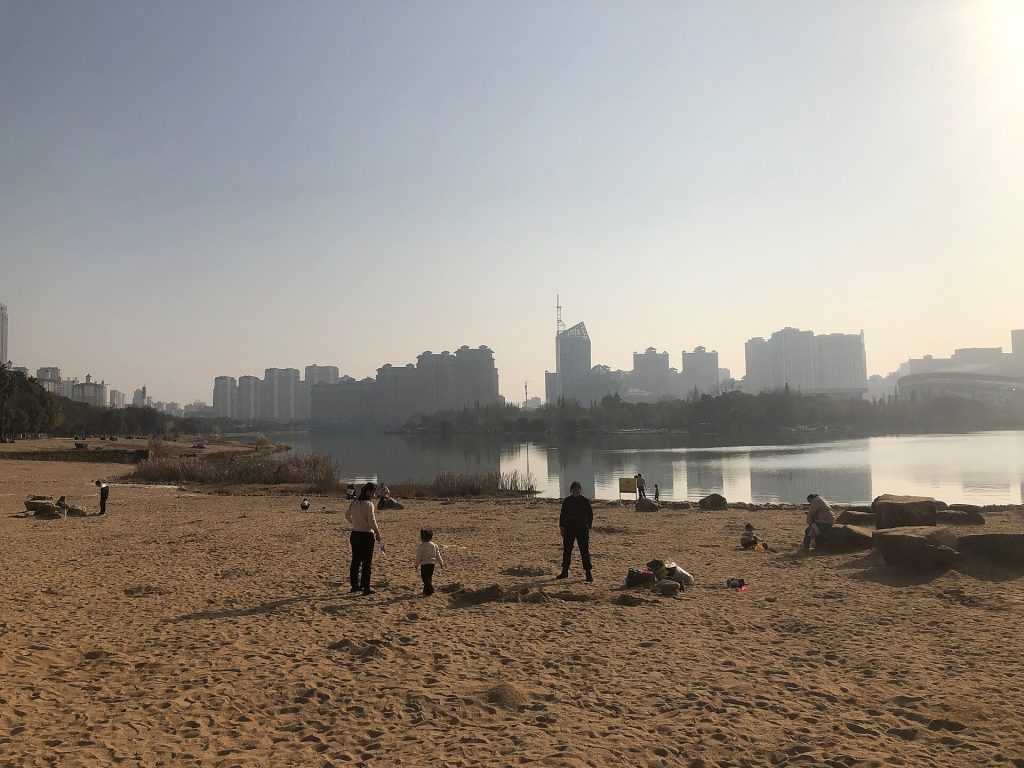
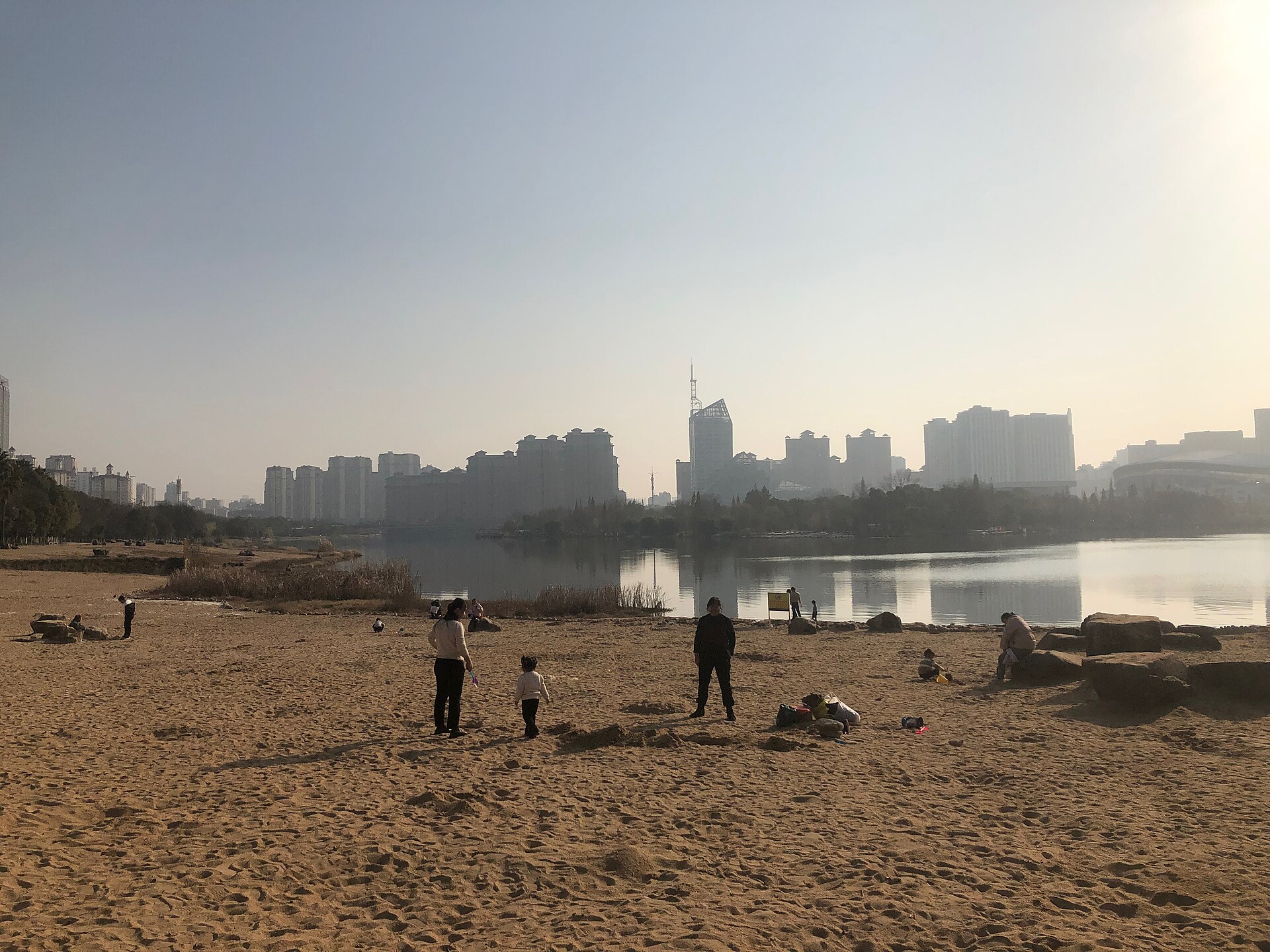
Morning one: start at Fairy Lake (仙女湖). The name promises magic; the reality is a broad reservoir ringed by walking paths, willow trees, and the occasional fisherman in a wooden skiff. Rent a paddle boat if the sun is gentle. Walk the dam toward the sculpture park — abstract stone forms that look like frozen calligraphy. By noon, head to the Xinyu Museum on Wenhua Road. Two hours cover the bronze-age ceramics, the revolutionary-era posters, and the exhibit on the city’s steel industry. The captions are Chinese only; use your phone camera to translate.
Afternoon: slip into the lanes behind the museum. A tea house occupies a renovated Qing-dynasty courtyard. The owner, a man with ink-stained fingers, pours Gongfu cha — tiny cups, repeated infusions, the aroma rising like incense. He will not rush you. Stay for three rounds. Evening returns to the night market.
Morning two: take bus 101 south to Fenyi. The ride passes rice paddies, ponds dotted with white egrets, villages where chickens peck at doorsteps. In Fenyi town, visit the Confucian Temple — quiet, tiled roofs, a courtyard where elderly men practice calligraphy with water brushes on stone slabs. Lunch at a family restaurant: ask for the “farmer’s set” — braised bamboo shoots, salted fish, greens with garlic. The bill comes handwritten on a square of red paper.
Return by late afternoon. If energy remains, climb the hill behind the TV tower for a view of the river cutting through the city lights. The climb is steep, unpaved in sections, and unlit. A local teenager may offer to guide you for a few yuan. Accept. He knows the loose stones.
What Locals Expect (And What Trips You Up)
Queueing is theoretical. At the bus stop, at the noodle counter, at the ticket window — bodies cluster. Hold your ground, keep your elbows in, and state your request clearly. No one is rude; the concept of a single-file line simply does not apply. Cash is fading. Even the vegetable seller on a tricycle displays a QR code. Carry a power bank; a dead phone means no payment, no maps, no translation.
Mandarin works everywhere, but the local dialect — Gan — colors every conversation. You will hear “ha” for yes, “mo” for no, and a rising tone that turns statements into questions. Smile, nod, repeat the few words you catch. Effort earns patience. Tipping does not exist. Leaving coins on the table confuses the server; they will chase you down to return them.
Public toilets in parks and stations are squat-style, often without paper or soap. Carry tissue and hand sanitizer. The high-speed rail station and major malls have Western bowls and attendants. Plan accordingly.
Finally, the plum rains arrive in early summer — weeks of drizzle that soak everything. Umbrellas sell at every convenience store for the price of a coffee. Buy one, keep it in your daypack. When the sun breaks through, the humidity lifts, the lake smells of wet earth and lotus, and the city feels like it belongs to you alone.