The minibus shuddered to a halt on a hairpin bend halfway up Jigong Mountain. Through the open door, a wall of white cloud rolled across the road, swallowing the guardrail and the tea terraces below. The driver lit a cigarette, exhaled, and gestured at the void. “Wait ten minutes,” he said. “The mountain decides when you see it.” That moment — stuck between a thermos of lukewarm tea and a landscape that refuses to perform on command — captures Xinyang better than any brochure. The city sits in southern Henan, where the plains tilt toward the Dabie Mountains, and life moves at the pace of mist rather than metro schedules.
Getting There and Moving Around
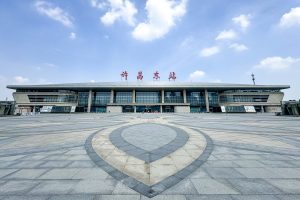
Minggang Airport sits about forty-five kilometers from the city center in Pingqiao District. Flights connect to Beijing, Shanghai, Chengdu, Chongqing, and a handful of secondary cities, but schedules shift with the season. Most travelers arrive by high-speed rail. Xinyang East Station handles the G-trains on the Beijing–Guangzhou line; the older Xinyang Station, closer to downtown, serves conventional services. From either station, a taxi ride to the central hotel cluster near Renmin Road takes fifteen minutes and costs roughly thirty yuan.
Inside the city, the shared-bike system works smoothly. Scan a Meituan or Alipay code through WeChat or Alipay, unlock, and ride. The downtown grid is flat and wide, but bike lanes disappear once you head toward the mountain scenic areas. For Jigong Mountain or Nanwan Lake, hire a private car for the day — around three hundred yuan including driver wait time — or join a minibus tour from the square in front of the railway station. Buses numbered 1, 6, and 16 link the main hotels to the long-distance bus station, the tea market, and the university district. Cash still works on buses, but drivers prefer exact change.
Where to Sleep
Business hotels cluster around the railway stations and along Jiefang Road. A clean private room with hot water and reliable Wi-Fi runs 150 to 250 yuan per night in the off-season; prices climb during the spring tea harvest and the autumn “red leaf” weeks. For a quieter night, look at the guesthouses in the old lanes behind the Confucius Temple. Courtyard rooms with tiled roofs and wooden shutters go for 200 to 350 yuan, and the owners usually serve a breakfast of steamed buns, pickled radish, and strong green tea. Book by phone or WeChat a week ahead during peak periods; walk-ins often find only smoking rooms left.
Mountain and Water: The Two Big Days
Jigong Mountain (鸡公山) dominates the western horizon. The main scenic area opens at 7:30 a.m.; the first cable car departs at 8:00. Buy the through-ticket (around 110 yuan) that covers the shuttle bus to the lower station, the cable car, and the summit trail. The ride climbs through pine forest into a band of rhododendron that blooms in late spring. At the top, a stone pavilion overlooks a sea of peaks. On clear mornings you can see the Huanghuai Plain stretching north. The cloud bank that trapped our minibus is common from late spring through early autumn. Locals say the best light falls between 9:00 and 11:00 a.m., after the night mist burns off and before the afternoon thunderheads build. Wear shoes with grip — the summit path is slick stone, not boardwalk.
Nanwan Lake (南湾湖) lies thirty kilometers southeast of the city. The reservoir sprawls across drowned valleys, its arms reaching into forested hills. A lakeside road loops the western shore; rent an electric scooter at the main entrance (forty yuan for half a day) and follow the signs to Yanzhi Peninsula. Fishermen sell fresh crucian carp from bamboo baskets at the small pier — have a nearby restaurant steam it with ginger and scallion for fifty yuan. Weekends draw families from Wuhan and Zhengzhou; weekdays feel almost private. If you stay until dusk, the water turns the color of cold tea and the hills fade into silhouette.
Old Streets and Quiet Corners
The Confucius Temple (文庙) on Wenmiao Street survived the Cultural Revolution because a school principal locked the main hall and claimed it as a warehouse. The Dacheng Hall still holds its Ming-dynasty roof beams and a stele forest recording local scholars who passed the imperial exams. Incense smoke curls before the statue of Confucius; students tie red ribbons on the ancient cypress for exam luck. Admission is free, but the caretaker appreciates a ten-yuan donation for incense.
Two blocks west, the former British Consulate compound sits behind a high wall. The consulate opened in 1899 after Xinyang was declared a treaty port; the red-brick buildings now house a small museum of local trade history. Exhibits include tea-export ledgers, a hand-cranked printing press, and photographs of the railway construction camps. The garden has a ginkgo tree that drops golden fans in late autumn. Open 9:00 to 17:00, closed Mondays.
For a slower pace, walk the lane behind the temple at 6:00 a.m. Elderly men practice tai chi beside a lotus pond. Vendors push carts selling soy milk in porcelain bowls and youtiao twisted into figure-eights. No tourists, only neighbors greeting each other by surname.
Eating in Xinyang
The city’s signature dish is Xinyang Maojian tea, but the cuisine runs deeper than the cup. Breakfast means a bowl of beef soup with hand-pulled noodles: clear broth simmered overnight with beef bones, star anise, and cassia bark; noodles slapped against the counter until they hang like silk; topped with cilantro, chili oil, and a spoonful of pickled mustard greens. Find the best version at the stall opposite the south gate of the Confucius Temple — plastic stools, no menu, eight yuan a bowl.
Lunch or dinner often centers on a hot pot of “three fresh” (三鲜): chicken, fish, and tofu simmered in a clay pot with dried shiitake, ginger slices, and a splash of yellow wine. The broth turns milky and sweet. Order at any family-run restaurant on Shengli Road; point to the picture on the wall if the owner doesn’t speak Mandarin. A pot feeds two generously for sixty yuan.
- Beef bones — 1 kg, blanched and rinsed
- Star anise — 3 whole pods
- Cassia bark — 1 stick, 5 cm
- Ginger — 30 g, smashed
- Scallion — 2 stalks, knotted
- Water — 4 L
- Hand-pulled wheat noodles — 200 g
- Pickled mustard greens — 50 g, chopped
- Cilantro — 1 bunch, chopped
- Chili oil — 2 tbsp
- Salt — to taste
- Simmer bones with spices, ginger, and scallion in water for four hours. Skim foam.
- Strain broth. Return to pot. Season with salt.
- Cook noodles separately in boiling water until just tender. Drain.
- Place noodles in bowl. Ladle hot broth over. Top with pickled greens, cilantro, chili oil.
Tea culture shapes the evening. In the alleys behind the tea market on Beijing Road, hole-in-the-wall teahouses serve gongfu cha: tiny clay pots, thimble cups, three infusions. The host rinses the leaves, pours high, pours low. You smell the lid, sip, nod. A session costs twenty yuan plus the price of leaves — Maojian grades run from eighty to six hundred yuan per fifty grams. Do not add sugar. Do not gulp. The ritual is the point.
Seasonal Rhythms and Local Expectations
Spring arrives with the Qingming festival. Tea farmers on the mountain slopes wake before dawn to pluck the first bud-and-leaf sets. The city fills with buyers in windbreakers, sampling cups at the wholesale market. If you visit then, expect hotel prices to double and minibuses to the mountain to run full. Locals appreciate visitors who ask before photographing pickers at work; a smile and a “may I?” in Mandarin goes further than a telephoto lens.
Summer brings the plum rains. Afternoon downpours turn mountain trails to mud. The lake swells, and the lakeside road sometimes closes at low-lying sections. Carry a packable rain shell and quick-dry trousers. Restaurants serve cold dishes — smashed cucumber with garlic, century egg with vinegar, lotus root slices tossed in chili oil — to cut the humidity.
Autumn paints the Dabie ridges in maple and sweetgum. The “red leaf” season peaks around the ninth lunar month. Tour buses queue at the Jigong Mountain gate by 6:30 a.m. If you want solitude, hike the back trail from the old sanatorium ruins — steep, unmarked, and empty. Winter is quiet. Temperatures hover just above freezing; damp cold seeps through concrete walls. The tea market slows. This is the time to sit in a heated teahouse, watch the steam rise from the pot, and listen to the owner tell the story of Sima Guang smashing the water jar to save a drowning child — a tale every local child knows, set in a courtyard that once stood two streets from where you sit.
One mistake newcomers make: treating Xinyang as a day trip from Wuhan. The high-speed train takes seventy minutes, but the city reveals itself in the gaps between sights — the morning noodle bowl, the evening tea, the mist that lifts on its own schedule. Stay two nights. Let the mountain decide when you see it.