The minibus shuddered to a halt on a dusty pull‑out just outside the old city wall, and the driver shouted something that sounded like “Xinzhou!” through the open window. I stepped down onto cracked pavement still warm from the afternoon sun, the smell of coal smoke and fried dough twisting together in the air. A few meters ahead, the grey bricks of the ancient gate rose up, their corners softened by centuries of wind and rain. This was not the polished tourist zone I had seen in Datong; it was a working neighborhood where grandmothers still hung laundry across the narrow lanes and the call to prayer from a nearby mosque mingled with the clatter of mahjong tiles.
Getting oriented in the old town
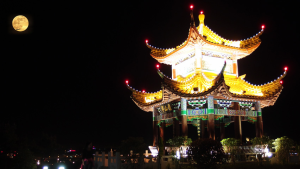
The historic core sits inside a rough rectangle of Ming‑era walls. Most visitors enter through the South Gate, where a wide plaza doubles as a morning market. By mid‑morning the space fills with stalls selling hand‑pulled noodles, steamed buns stuffed with chive and egg, and stacks of Shanxi vinegar in dark glass bottles. Walk north along the main axis — called Gulou Street — and you pass the Drum Tower, its wooden eaves painted in faded vermilion. The tower is open to climb; the stairs are steep and the railings low, but the view over the tiled roofs and the distant line of the Taihang foothills is worth the breathless ascent.
Locals treat the old town as a living room, not a museum. If you pause to photograph a carved lintel, an elderly resident may wave you into a courtyard for a cup of tea brewed in a cracked porcelain pot. Accept the invitation, but remember to tap two fingers on the table when the cup is refilled — a quiet sign of thanks. The alleyways branch like capillaries; many dead‑end at family workshops where artisans still hammer copper into teapots or carve wooden combs. These are not showrooms. Prices are negotiated in cash, and the maker will often explain the symbolism of a dragon motif or a lotus pattern if you show genuine interest.
Day trips that define the region
Xinzhou’s reputation rests on two heavyweight sites within an hour’s drive: Wutai Mountain and Yanmen Pass. Both demand a full day, and both reward early starts.
Wutai Mountain — five peaks, five temples
The bus from Xinzhou’s long‑distance station leaves at dawn, winding up switchbacks through pine forest until the air thins and the temperature drops ten degrees. The mountain is a Buddhist pilgrimage circuit; five flat summits correspond to the five wisdoms of Manjushri. Most foreigners head straight for the cluster of temples at Taihuai Town — Xiantong, Tayuan, and Pusading — because they are connected by paved paths and have English signage. I took the quieter route: a stone stairway behind Tayuan that climbs to the North Peak. The trail is steep, slick with moss after rain, and marked only by red ribbons tied to pine branches. At the summit, a small shrine holds a bronze bell; pilgrims strike it three times, the sound carrying across valleys dotted with white stupas.
Practicalities: bring a wind‑proof jacket even in summer, carry water and snacks (the temple canteens serve simple vegetarian meals but lines are long), and wear shoes with grip. The cable car from Taihuai to the West Peak saves knees but runs only in fair weather. If you stay overnight, book a guesthouse near the South Gate of Taihuai — rooms are basic, hot water is sporadic, and the morning chanting at 4 a.m. is an alarm clock you cannot silence.
Yanmen Pass — the gate that held the north
An hour west by hired car, the pass cuts through a narrow gorge where the Great Wall climbs the cliffs like a spine. The restored gatehouse flies a massive red flag; below, a stretch of original Ming brickwork remains, its mortar darkened by soot from signal fires. Walk the wall eastward for twenty minutes and the crowds thin. You’ll find a watchtower with a collapsed roof — perfect for sitting out a sudden rain shower while watching clouds swallow the peaks. Vendors at the base sell roasted corn on the cob brushed with chili salt and small bottles of millet wine. Bargain hard; the first price is usually double what a local pays.
If you have a second day, combine Yanmen Pass with a stop at the nearby Yanmen Village. The village preserves a layout of cave dwellings (yaodong) dug into the loess cliffs. Several families still live in them; their courtyards are shaded by jujube trees heavy with fruit in autumn. Ask before entering a courtyard — most hosts are proud to show the interior, where a heated kang bed platform dominates the main room. A small donation of ten or twenty yuan is welcomed, but never expected.
Eating like a Xinzhou local
Shanxi cuisine is wheat‑heavy, vinegar‑sharp, and unapologetically salty. Xinzhou’s twist is a preference for hand‑shaved noodles (dao xiao mian) served in a broth thickened with tomato, fermented bean paste, and a spoonful of chili oil. The best bowl I found was at a nameless stall behind the Drum Tower, where the chef shaves ribbons of dough directly into boiling water with a curved knife, each strand landing in a perfect curl.
- Dao xiao mian (hand‑shaved noodles) — wheat flour, water, salt; shaved into boiling broth; topped with minced pork, tomato, bean sprouts, aged Shanxi vinegar, chili oil.
- You mian kao lao lao (oat flour rolls) — oat flour dough steamed in a bamboo basket, rolled around a filling of minced mutton, scallion, and garlic; dipped in vinegar‑garlic sauce.
- Yangza sui tang (mutton offal soup) — lamb heart, liver, intestine simmered with ginger, peppercorn, and cilantro; eaten at breakfast with a side of scallion pancakes.
- Jiucai hezi (chive pockets) — thin wheat wrappers pan‑fried until blistered, stuffed with garlic chives, egg, and glass noodles.
Ordering tip: point to the picture menu on the wall and hold up fingers for portions. Most stall owners speak only Jin dialect; a smile and a “hao chi” (delicious) after the first bite opens doors. Avoid the tourist‑facing restaurants on the main square — their noodles are pre‑cut and the broth is watered down.
Sleeping, moving, and staying connected
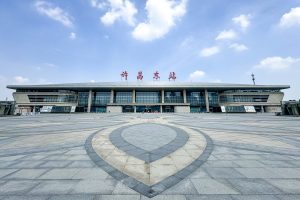
Accommodation falls into three tiers. Budget: family‑run guesthouses inside the old town walls, often above a noodle shop. Expect a firm mattress, shared bathroom, and Wi‑Fi that drops when the microwave runs. Mid‑range: business hotels near the railway station (Xinzhou West), clean rooms with reliable hot water and a breakfast buffet of congee, pickles, and steamed buns. High‑end: the new resort complex at the foot of Wutai Mountain, where rooms have floor‑to‑ceiling windows facing the peaks — book months ahead for the autumn foliage season.
Transport inside the city is straightforward. Public buses numbered 1, 2, and 3 loop the old town and connect to the long‑distance station. Fares are one yuan, exact change only. Taxis start at eight yuan; insist on the meter or agree a price before the door closes. For Yanmen Pass and the village, hire a driver for the day — three to four hundred yuan covers fuel, tolls, and the driver’s lunch. Most hotels can arrange this the night before.
Mobile data: buy a China Unicom or China Mobile tourist SIM at the airport or any convenience store. A 30‑day, 20 GB package costs roughly a hundred yuan and works on the mountain passes. Free Wi‑Fi hotspots exist in the Drum Tower plaza and the railway station waiting hall, but they require a Chinese phone number for the SMS verification code.
Seasonal rhythm and festival moments
Spring arrives late in the Taihang foothills. By the third lunar month the jujube trees blossom, and the old town hosts a temple fair at Chongfu Temple — lanterns strung between the eaves, opera troupes performing Jinju arias on a temporary stage, and stalls selling sugar‑coated hawthorn sticks. Summer brings the monsoon; afternoon thunderstorms roll off the mountains, turning the loess paths to slick mud. If you visit then, carry a compact umbrella and waterproof shoes.
Autumn is the sweet spot. The ninth lunar month paints Wutai’s slopes gold and crimson, and the air is crisp enough to see your breath at dawn. This is also the season for the Yanmen Pass “Great Wall Culture Festival” — reenactments of beacon‑fire signaling, archery demonstrations, and a night market where you can taste roasted whole lamb carved tableside. Winter is brutal: temperatures drop below minus fifteen Celsius, the mountain roads ice over, and many guesthouses close. Only the hardiest pilgrims and a few photographers remain, capturing the white‑washed stupas against a steel sky.
Mistakes that mark a newcomer
- Assuming the old town is a pedestrian‑only zone. Cars, electric tricycles, and delivery scooters share the lanes; keep to the side and watch your step.
- Trying to climb Wutai’s North Peak in sandals. The stone steps are uneven, often wet, and the altitude gain is real — altitude sickness can hit at 2,800 meters.
- Paying the first price at Yanmen Pass souvenir stalls. Vendors expect haggling; start at forty percent of the asking price and settle around sixty.
- Skipping the vinegar. Shanxi aged vinegar is the soul of every dish; a meal without a splash tastes flat to a local palate.
- Expecting English menus outside the two main hotels. Carry a photo of the characters for “no meat” (bu yao rou) or “less salt” (shao yan) if you have dietary needs.
When the minibus finally pulled away from the South Gate, the driver honked twice — a farewell, not a warning. I watched the grey bricks recede, the laundry lines sway, the copper teapots glint in the low sun. Xinzhou does not perform for visitors; it simply continues, layer upon layer, like the dough the noodle master shaves into the pot. Come with patience, an empty stomach, and a willingness to follow a red ribbon up a mountain path. The city will meet you halfway.