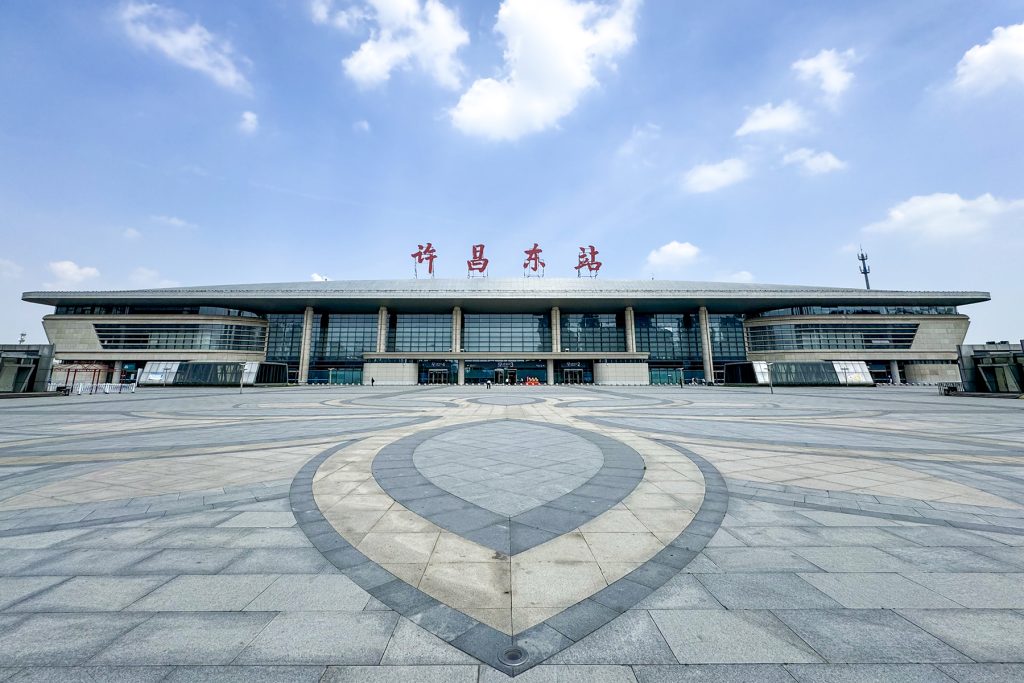
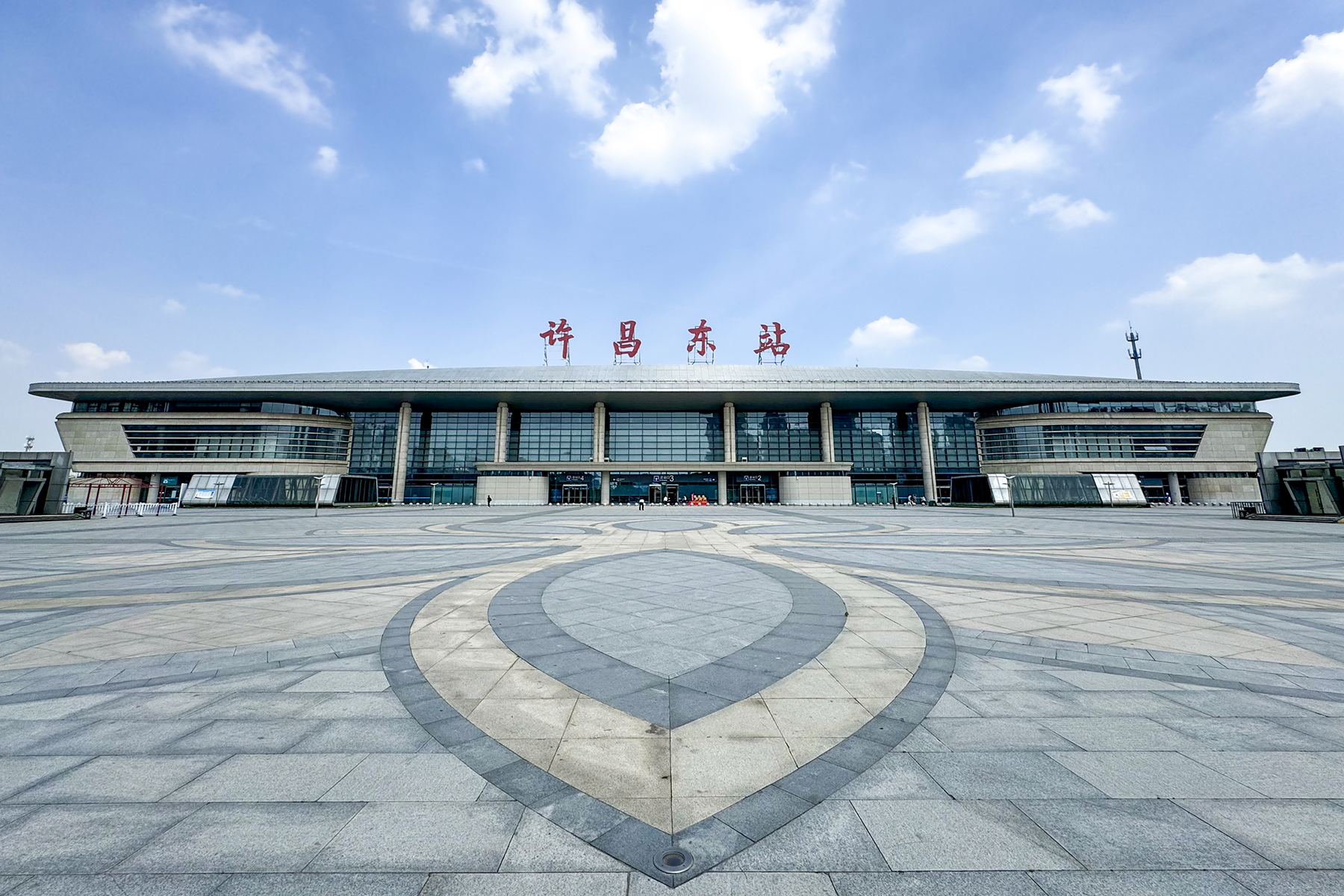
The high‑speed train from Zhengzhou slides into Xuchang East in twenty‑three minutes. Outside the station, a row of electric taxis hums beside a breakfast stall where a woman flips scallion pancakes onto a blackened griddle. The air smells of soy sauce, fried dough, and the faint metallic tang of the nearby railway. I step onto the pavement with a backpack and a paper map the hotel front desk printed the night before — no QR code, just ink on pulp — and start walking toward the old city wall.
First Steps in the Old Quarter
Xuchang does not announce itself with neon arches. The historic core sits behind a stretch of rebuilt Ming‑era ramparts, their grey bricks softened by moss and the occasional vine. Inside, narrow lanes curve around courtyard houses where laundry drapes over low walls and elderly men play xiangqi on folding stools. I follow the sound of a vendor shouting about “hot pepper soup” — hulatang — down a lane that opens onto a square dominated by Chunqiu Tower.
The tower rises five stories, its upturned eaves painted in faded vermilion and teal. Climbing the steep wooden stairs, each landing frames a different view: tiled roofs stretching toward the modern skyline, the slow curve of the Wei River, a cluster of satellite dishes sprouting from a temple courtyard. At the top, a brass plaque recounts the Spring and Autumn annals once stored here. I stay long enough to watch a kite dip and climb above the rooftops, its string held by a boy in a faded blue tracksuit.
Baling Bridge and the River Walk
A fifteen‑minute walk west along the riverbank brings me to Baling Bridge. The current structure is a 1990s reconstruction, but the stone piers beneath date to the Northern Song. Locals fish from the railings at dawn, their rods bent toward the brown water. I join an older woman selling roasted sweet potatoes from a bamboo basket; she hands me a paper cone, the skin caramelized and cracking, steam curling into the cool morning.
The riverside path continues past a row of willow trees into a small park where retirees practice tai chi in synchronized silence. A stone stele near the bridge tells the story of Cao Cao moving the imperial court here after Luoyang burned. No tour groups, no audio guides — just the river, the bridge, and the occasional cyclist ringing a bell.
Eating Like a Local
Xuchang’s cuisine leans salty, peppery, and wheat‑heavy. The signature dish is hulatang, a thick pepper soup thickened with wheat gluten, shredded tofu skin, glass noodles, and a spoonful of chili oil that turns the broth a deep rust red. A proper bowl arrives scalding, topped with cilantro and a side of youtiao — long, airy crullers — for dunking.
- Wheat gluten (mianjin), torn into bite‑size strips
- Dried tofu skin (fuzhu), rehydrated and sliced
- Sweet potato starch noodles (fentiao), soaked until slippery
- Fresh cilantro, roughly chopped
- White pepper, ground fine
- Chili oil, homemade if possible
- Chicken or beef stock, simmered three hours
- Youtiao, bought hot from the fryer next door
To make it at home, bring the stock to a rolling boil, add gluten, tofu skin, and noodles, then stir in white pepper and a ladle of chili oil. Thicken with a slurry of cornstarch and cold water until the broth clings to the spoon. Serve in heavy ceramic bowls with youtiao on the side.
In a restaurant, order “hulatang yi wan, youtiao liang tiao” — one bowl, two crullers. The best stalls open before sunrise and sell out by nine. Look for a queue of delivery riders in fluorescent jackets; they know where the broth remembers every hand that stirred it. Avoid places that ladle from a single pot kept warm all day — the pepper loses its bite, the gluten turns rubbery.
Beyond the soup, try kao mianjin — gluten skewers brushed with cumin, chili flakes, and sesame oil, grilled over charcoal until the edges char. Another staple is xiao long bao sized for a single bite, their skins so thin you see the soup trembling inside. Dip in black vinegar with slivered ginger. A common beginner mistake: biting the whole dumpling at once and scalding your tongue. Puncture the skin first, sip the broth, then eat the wrapper and filling together.
Jun Porcelain and the Kiln District
Ten kilometers south of the city center, the Jun kiln sites sprawl across low hills. The museum there displays shards from the Song dynasty — glazes that shift from sky‑blue to plum‑purple depending on the light. I watch a master potter center a lump of clay on a kick wheel, his foot moving in a rhythm older than the dynasties. He offers to let me try; the clay slips, wobbles, collapses. He laughs, wipes my hands, and hands me a finished cup — celadon with a copper‑red splash near the rim.
Visitors can buy directly from the workshop showrooms. Prices range from a few dozen yuan for a tea cup to thousands for a signed vase. Bargaining is expected but polite; start at sixty percent of the tagged price and meet in the middle. Do not tap the rim to test the ring — that marks you as a tourist. Instead, hold the piece to the light and watch the glaze breathe.
Seasonal Rhythms and Local Expectations
Spring brings the peony festival at the city’s botanical garden, when the former imperial flower blooms in rows of crimson, white, and yellow. Locals picnic under the trees, spreading plastic cloths and sharing baijiu in tiny cups. Autumn is quieter: the chrysanthemum show at the Confucius Temple draws calligraphy clubs who write poems on rice paper and hang them from the branches.
If you visit during the lunar new year, expect firecrackers at every intersection from the first day to the fifteenth. Temple fairs pop up in vacant lots — stalls selling sugar‑coated hawthorn skewers, paper‑cuttings, and clay whistles shaped like roosters. Foreign faces are rare; you will be invited to join a family’s dumpling wrapping session. Accept. The host will place a coin inside one dumpling; whoever finds it gets a red envelope. Do not refuse the envelope — it is considered bad luck for the giver.
Public transport runs on a spoke system: buses radiate from the railway station and the old south gate. Numbers are posted only in Chinese characters. Download an offline map with the characters for “Chunqiu Tower” (春秋楼), “Baling Bridge” (八陵桥), and “Jun Kiln Museum” (钧瓷博物馆). Taxis are plentiful but drivers rarely speak English; show the destination on your phone screen.
A final mistake newcomers make: treating Xuchang as a day trip from Zhengzhou. The city reveals itself in the evening, when the tower lights wash the square gold, when the hulatang stalls relight their burners for the night shift, when the kiln masters close their shutters and walk home through lanes scented with woodsmoke. Stay one night. Wake early. Walk the river before the tour buses arrive. That is when the city hands you its real map.