The minibus shudders to a halt on a dusty pull‑out just past the toll gate, and the driver gestures toward a stone archway half swallowed by wisteria. No ticket booth, no turnstile, just a narrow flagstone path climbing into pine shade. I shoulder my pack, step onto the cool slabs, and within twenty paces the highway roar drops to a whisper. This is how Yangquan usually announces itself: quiet, unmarked, and already pulling you uphill.
Getting there without a headache
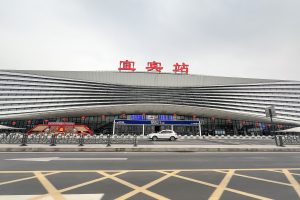
Most foreigners arrive by high‑speed rail. The line from Taiyuan South slices through the loess hills in thirty‑five minutes; a second‑class seat costs about the price of a decent bowl of hand‑pulled noodles. Trains from Beijing West take roughly two and a half hours, and the overnight from Shanghai Hongqiao deposits you near dawn. Two stations serve the city: the older Yangquan Station sits closer to the central districts, while Yangquan North is the shiny terminal on the edge of the development zone. If your hotel is near the museum or Nanshan Park, grab a taxi from the south square of the old station — five minutes, maybe twenty yuan. For the hot springs or the Great Wall sections, the north station puts you ten minutes nearer the mountain roads.
Flying means landing at Taiyuan Wusu or Shijiazhuang Zhengding, then catching a connecting train or a long‑distance bus. The airport coaches leave from the forecourt of both terminals; they run until the last evening arrival, but after dark the schedule thins out. Driving yourself is straightforward: the G5 Jingkun Expressway cuts straight through the city, and the G20 Qingyin runs north‑south along the western fringe. Parking at scenic areas is free in the off‑season, but during the autumn foliage week the lots at Niangzi Pass fill by nine in the morning.
Moving around once you’re on the ground
City buses are cheap and cover the main arteries, yet the route maps at the stops are Chinese‑only. I use the Baidu Maps app with the English interface toggled on; it shows real‑time bus positions and walking connections. Taxis cluster around the train stations and the Wanda Plaza mall — flag‑fall is low, and drivers rarely refuse short hops. For the mountain sites, hire a car for the day. A local driver named Lao Zhang once charged me three hundred yuan for a loop covering Niangzi Pass, the waterfall, and the hot springs, waiting while I hiked. He knew which tea house served the best steamed corn buns and which trail had washed out after the summer rains. If you prefer two wheels, electric scooters can be rented near the university campus, but the traffic on Xinhua East Street makes me nervous after sunset.
What to see, and when to show up
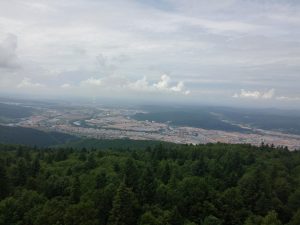
Niangzi Pass is the headline act. The Ming‑era fortress straddles a gorge where the Tao River crashes through limestone. Arrive at first light — around the time the roosters in the village below start crowing — and you’ll have the watchtowers to yourself. The path to the waterfall descends three hundred stone steps; mist coats the railings, and the air smells of wet moss and pine resin. In the seventh lunar month the flow thunders; by the depth of winter it freezes into a curtain of blue ice that climbers test their axes on.
Guguan Great Wall sees fewer tour groups than Badaling. The bricks here are weathered to a tobacco brown, and wild apricot trees root in the crenellations. A two‑hour hike eastward from the pass leads to a collapsed beacon tower with views over the Taihang ridges. Bring water; there are no vendors on the wall itself.
Shinaoshan Mountain Forest Park feels like a local playground. Families picnic on the lawns beside the reservoir, and retirees practice tai chi beside the pavilion. The cable car runs every twenty minutes, but the footpath through the bamboo grove takes forty minutes and rewards you with a cliff‑side shrine where incense curls year‑round.
Liangjiazhai Hot Springs sit in a valley scented with sulfur and pine. The public bathhouse is utilitarian — tiled pools, communal showers, a faint smell of boiled eggs. For privacy, book a wooden cabin at the resort uphill; the water there runs clearer, and you can soak while snow dusts the roof. Go on a weekday; weekends turn the place into a splash park for city kids.
Yangquan Museum, on Taobei Middle Street, holds a compact but sharp collection of Shang‑dynasty bronzes and Song‑era ceramics. The captions are bilingual, and the building’s courtyard lets you breathe between galleries. It closes for lunch, so plan a mid‑morning visit and walk afterward to the Muslim quarter for a lamb skewer lunch.
Where to sleep without surprises
Chain hotels cluster around the railway stations and the government district. The Jinjiang Inn near the old station offers clean rooms, reliable hot water, and a breakfast spread of congee, pickled mustard greens, and steamed buns. If you want character, look for a courtyard guesthouse in the lanes behind Nanshan Park. I stayed in one run by a retired schoolteacher; she woke me with a thermos of millet tea and a hand‑drawn map of the morning market. No English signage, but the address in Chinese characters on your phone gets the taxi driver there.
Near the hot springs, a handful of mountain lodges rent heated rooms with private balconies overlooking the stream. They fill fast during the Mid‑Autumn Festival week, so reserve through a Chinese friend or a booking app that shows real‑time availability. Camping is tolerated on the flat meadow below Zang Mountain if you pack out every scrap; the park rangers patrol at dawn and hand out fines for litter.
Eating like a local, not a tourist
Yangquan’s cuisine leans salty, vinegary, and heavy on noodles. The signature dish is tounao — a broth thickened with yam, lotus root, and mutton, served in a clay pot with a side of chili oil. You’ll find it at the stall opposite the museum’s east gate; the owner ladles from a cauldron that has simmered since before dawn. Order “one bowl, extra coriander” and watch her sprinkle the green leaves like confetti.
- Mutton, bone‑in, 300 g
- Fresh yam, peeled and chunked, 200 g
- Lotus root, sliced, 150 g
- Ginger, smashed, three coins
- Scallion, knotted, two stalks
- Shaoxing wine, one splash
- White pepper, pinch
- Salt, to taste
- Coriander, chopped, for garnish
- Chili oil, for the table
- Blanch mutton in boiling water two minutes; drain and rinse.
- Return meat to a clean pot with three litres cold water, ginger, scallion, and wine.
- Bring to a boil, skim foam, then lower to a bare simmer for ninety minutes.
- Add yam and lotus root; cook twenty minutes until yam edges fray.
- Season with salt and white pepper; ladle into bowls.
- Top each with coriander and a drizzle of chili oil.
Don’t ask for “less salt” — the broth’s depth comes from the long reduction. And don’t expect a menu with pictures; point at the pot, hold up one finger, and smile.
What newcomers get wrong
First, they treat Yangquan as a day trip from Taiyuan. The sites are spread across valleys that demand winding roads; you’ll spend half the daylight in a car. Stay overnight, preferably two nights, and use the city as a base.
Second, they pack only light layers. The Taihang peaks run ten degrees cooler than the basin, and the wind off the reservoir cuts through a hoodie. Bring a wind‑proof shell and a fleece even in late spring.
Third, they assume English works at ticket windows. It doesn’t. Have the Chinese names — 娘子关, 固关长城, 狮脑山 — saved in your notes app, and learn to say “one adult ticket” (yī zhāng chéng piào). The staff appreciate the effort and often wave you through the shorter locals’ line.
Fourth, they skip the morning market on Xinhua East Street. By eight o’clock the stalls pile high with steamed buns stuffed with chive and egg, bowls of cold sesame noodles, and pyramids of red dates. Eat standing up, elbows bumping retirees reading the paper. That’s the real orientation session.
Last, they forget cash. Mobile pay dominates, but the mountain tea houses, the scooter rental shack, and the old lady selling roasted sweet potatoes at the pass only take red notes. Keep a few hundred yuan in small denominations tucked in a zip pocket.