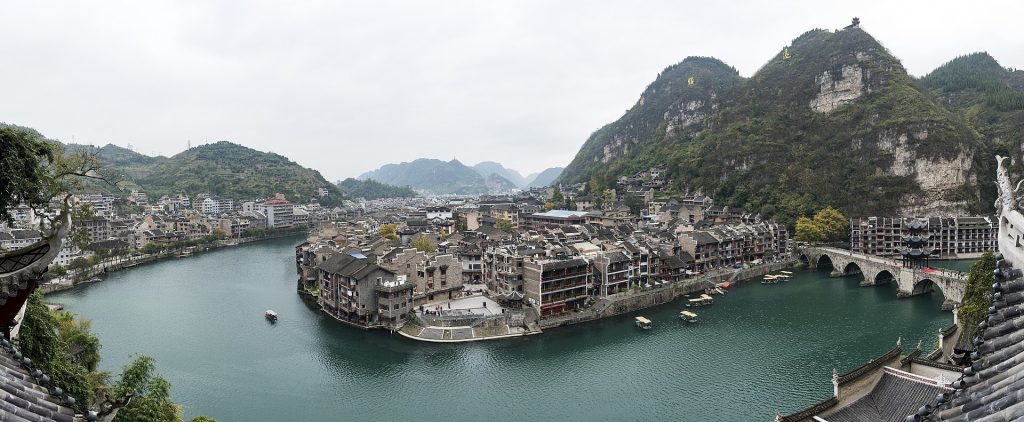
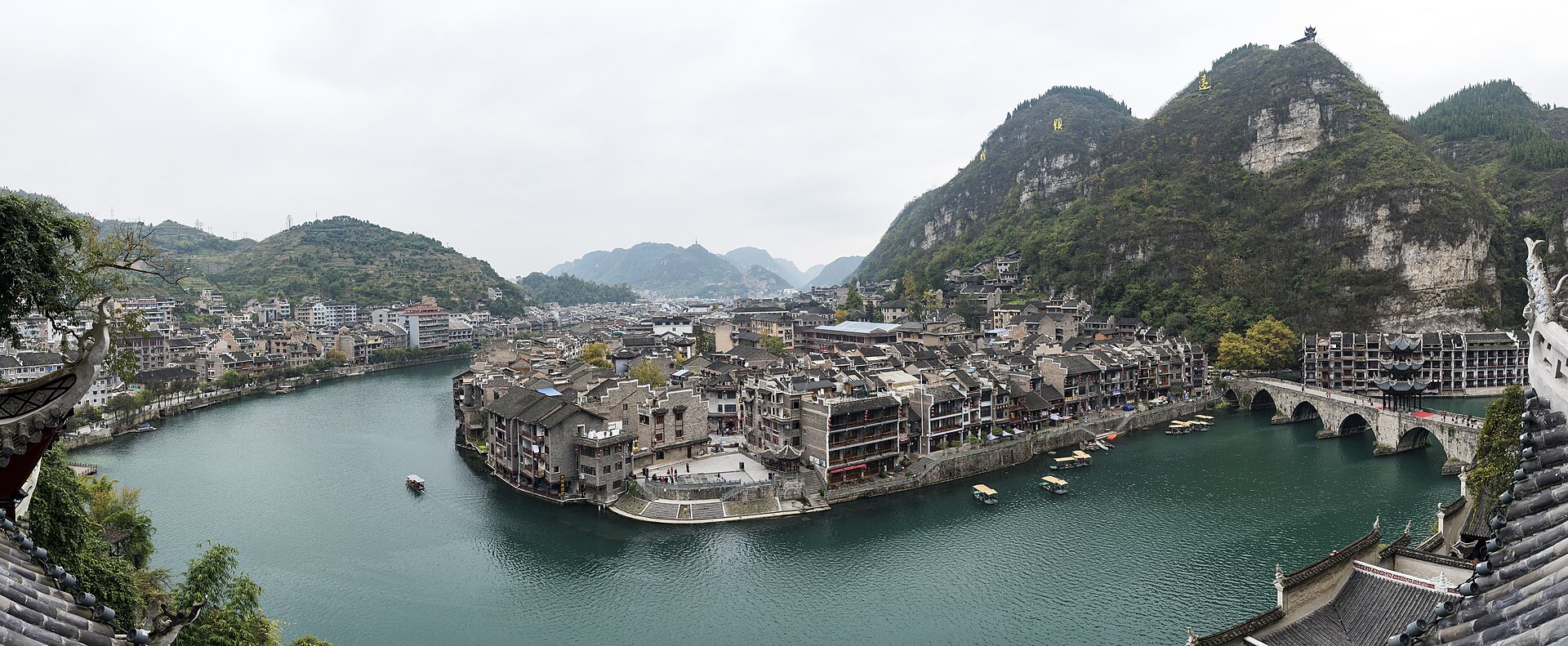
The wooden boat glides under the stone arches of Wuyang River, lanterns flickering above the water like fireflies trapped in glass. Mist clings to the tiered eaves of Black Dragon Cave, and the smell of woodsmoke and fermented rice wine rises from the alleyways below. This is Zhenyuan at dusk — no tour buses idling at the gate, just the rhythm of oars and the murmur of Miao women bargaining over bundles of dried chili.
Getting There Without the Hassle
Most travelers arrive via Kaili, the prefecture capital about ninety kilometers west. High-speed trains from Guiyang North pull into Kaili South in under an hour. From the station forecourt, minibuses marked “镇远” leave every twenty minutes; the ride takes ninety minutes along a two-lane highway that hugs the Wuyang’s curves. If you’re coming from the east — say, Fenghuang in Hunan — a direct bus from Jishou West Station crosses the provincial border in two and a half hours. Drivers often drop passengers at the old town’s north gate rather than the modern bus depot, so confirm the stop when you board.
- Guiyang North → Kaili South (high-speed rail, ~55 min)
- Kaili South Station forecourt → minibus to Zhenyuan old town north gate (~90 min)
- Jishou West Station → direct bus to Zhenyuan (~2.5 hrs)
- Self-drive: G60 Expressway exit 312, follow S201 signs for “古镇”
Where to Sleep: River View or Alley Quiet
The old town splits into two moods. Along the south bank, guesthouses with balconies over the water charge a premium for sunrise reflections of the ancient city wall. Rooms here run simple: tatami mats, shared bathrooms, and Wi-Fi that stutters when the generator kicks in. Cross the stone bridge to the north bank and you’ll find courtyard homes converted into family-run inns — quieter, cooler in summer, and often run by Miao families who’ll wake you with a bowl of sour fish soup if you ask the night before. Book a place with a ground-floor courtyard if you’re traveling in the humid season; upper floors trap heat.
- South bank: river-view balconies, louder at night, easier access to evening boat rides
- North bank: courtyard inns, family kitchens, steeper alley climbs
- Ask for “酸汤鱼” breakfast when checking in — many hosts prep it fresh at dawn
- Avoid rooms facing the main commercial lane (Xinglong Street) if you sleep light
Walking the Layers: What to Do and When
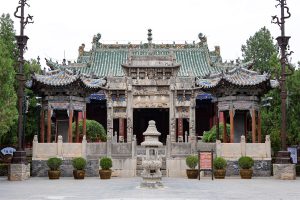
Start early at Black Dragon Cave (Qinglong Dong), a complex of Daoist, Buddhist, and Confucian shrines clinging to a cliff face. The stone steps are steep and uneven; wear shoes with grip. By mid-morning, the incense smoke thickens as tour groups arrive. Slip away to the Shiping Mountain trail behind the cave — a forty-minute climb through bamboo groves to a pavilion that frames the entire S-bend of the town. Descend by noon for lunch at a riverside stall: order the glutinous rice stuffed with cured pork and pickled radish, wrapped in banana leaf and steamed in a bamboo tube.
Afternoon belongs to the Wuyang River. Rent a paddle boat (not the motorized tourist barges) from the dock near the east gate. Drift past the ancient wharf where salt porters once unloaded mule trains, then under the Nine-Arch Bridge where elderly men play xiangqi on folded cardboard. If the water’s low — common in the dry season — you’ll see the stone foundations of the Ming-era floodgate system exposed like ribs. Return before the lanterns light; the current quickens after rain upstream.
- Black Dragon Cave: open dawn to dusk, steep stone steps, allow 1.5 hrs
- Shiping Mountain pavilion: 40 min climb, best light for photos at 10 AM
- Lunch: banana-leaf rice tube (糯米饭竹筒) at stall near west gate
- Paddle boat rental: ¥30/hr, cash only, life jackets under the seat
- Nine-Arch Bridge: xiangqi games daily after 3 PM, spectators welcome
Eating Like a Local: Beyond the Tourist Menus
Every restaurant displays photos of “sour fish soup” (酸汤鱼), but the version worth eating simmers in a clay pot at a Miao family’s kitchen table. The broth turns milky from fermented rice water, not vinegar. Slices of river carp slide in raw and cook in seconds. You dip them in a paste of pounded garlic, wild cilantro, and fresh chili — no soy sauce. Order a side of stir-fried wild fern shoots (蕨菜) and a bowl of red rice. The bill comes handwritten on a rice paper slip.
- Sour fish soup: fermented rice broth, live carp, garlic-chili dip
- Wild fern shoots: blanched, tossed with smoked bacon lard, garlic
- Red rice: glutinous, nutty, served in wooden bucket
- Rice wine: home-brewed, served warm in ceramic bowls, deceptively strong
- Skip: “Miao BBQ” stalls on Xinglong Street — pre-marinated, reheated on electric grills
Reading the Rhythm: What Locals Expect
Zhenyuan runs on Miao time. Shops shut for a two-hour lunch when the sun hits its peak. The morning market on Zhushan Lane dissolves by 9 AM — arrive at 7 if you want the best pickled long beans and hand-rolled tobacco. If you’re invited into a courtyard for tea, accept the first cup with both hands; refusing is fine, but ignoring the gesture isn’t. During the Dragon Boat Festival (fifth lunar month), the river fills with narrow boats drumming in unison. Spectators line the banks eating zongzi wrapped in bamboo leaves, not the glutinous rice triangles sold in supermarkets. The race isn’t a performance; it’s a village rivalry. Cheer for the team whose drummer wears a silver headdress — that’s the home crew.
- Morning market: Zhushan Lane, 6–9 AM, bring small bills
- Tea etiquette: two hands for the cup, sip before setting down
- Dragon Boat Festival: fifth lunar month, races at 2 PM, zongzi from riverside aunties
- Silver headdress = home village team, not a costume
- Don’t photograph altars inside Black Dragon Cave during prayer — wait for the priest to step away
Mistakes That Mark You as a Stranger
First-timers cluster on the main commercial lane buying machine-embroidered “Miao” bags made in Yiwu. The real textiles hang in a workshop behind the Miao Culture Museum on the north bank — look for the indigo-dyed baby carriers stitched with butterfly motifs, each taking three months to complete. Another giveaway: asking for “spicy” food. Here, heat comes from fermented chili paste (辣椒酱) aged in clay jars, not fresh chili oil. Ask for “old chili” (老辣椒) and the cook knows you understand. Finally, don’t treat the stone alleys as a backdrop. They’re shared corridors — step aside when a grandmother carries a water bucket, and don’t block the drainage channels with your backpack. The town floods fast when the summer rains come.
- Fake crafts: main lane shops; real textiles: workshop behind Miao Culture Museum
- “Spicy” = fresh chili oil (tourist); “old chili” = fermented paste (local)
- Alleys are living space: yield to elders, keep drainage channels clear
- Summer flash floods: water rises in minutes, know the high ground near the city wall
- Cash is king: even WeChat QR codes fail when the mountain signal drops