The minibus shudders to a halt on a stretch of asphalt that disappears into yellow dunes. Through the open door, the air smells of hot sand and river silt. A vendor in a dusty blue jacket waves a laminated menu — camel rides, sand slides, a sheepskin raft across the Yellow River. My phone shows no signal. The driver shrugs, lights a cigarette, and waits. This is the edge of Zhongwei, where the Tengger Desert leans against the water, and the schedule belongs to the wind.
Getting There Without a Fixed Plan
Trains pull into Zhongwei Railway Station on North Street at all hours. The overnight from Xi’an rolls in around dawn, depositing travelers onto a platform where taxi drivers shout destinations through the windows. If you come from Yinchuan, the high-speed line cuts the ride to just over an hour; the old conventional train takes three and costs half as much. Buses leave the East Street long-distance station for Lanzhou and Yinchuan every thirty minutes — no need to book ahead, just show up, grab a ticket from the window, and squeeze into a seat. The airport sits nine kilometers northwest, but flights are sporadic; unless you’re connecting from Urumqi or Shanghai, the train is simpler.
Moving Around the City and the Dunes
Inside town, the public bus network follows a handful of radial routes. Bus 1 runs from the railway station past the Gaomiao Temple area to the Shapotou turnoff. Fares are one yuan, exact change only. Taxis cluster near the station and the main hotel strip; insist on the meter or agree on a price before the door closes — twenty yuan covers most intra-city hops. For the desert, most visitors hire a driver for the day. A sedan with a local who knows the sand tracks costs around three hundred yuan from sunrise to sunset, including the wait while you ride a camel or slide down a dune. Shared minivans also leave from the lot beside the Shapotou ticket gate when they fill up; expect to pay thirty yuan per person each way.
What to See: Temple Shadows and Desert Light
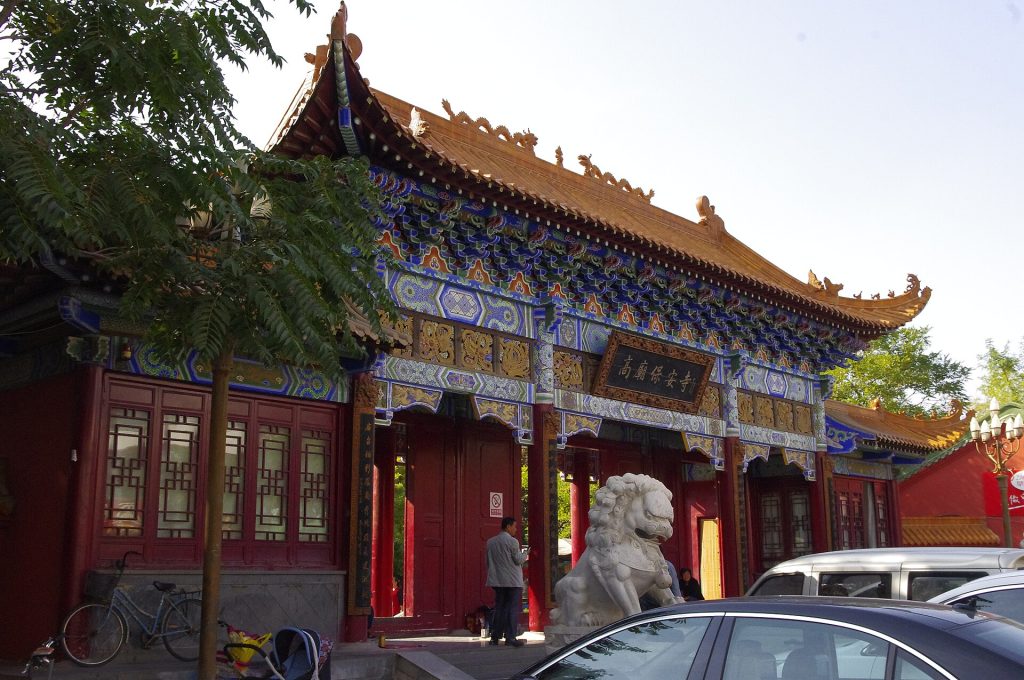
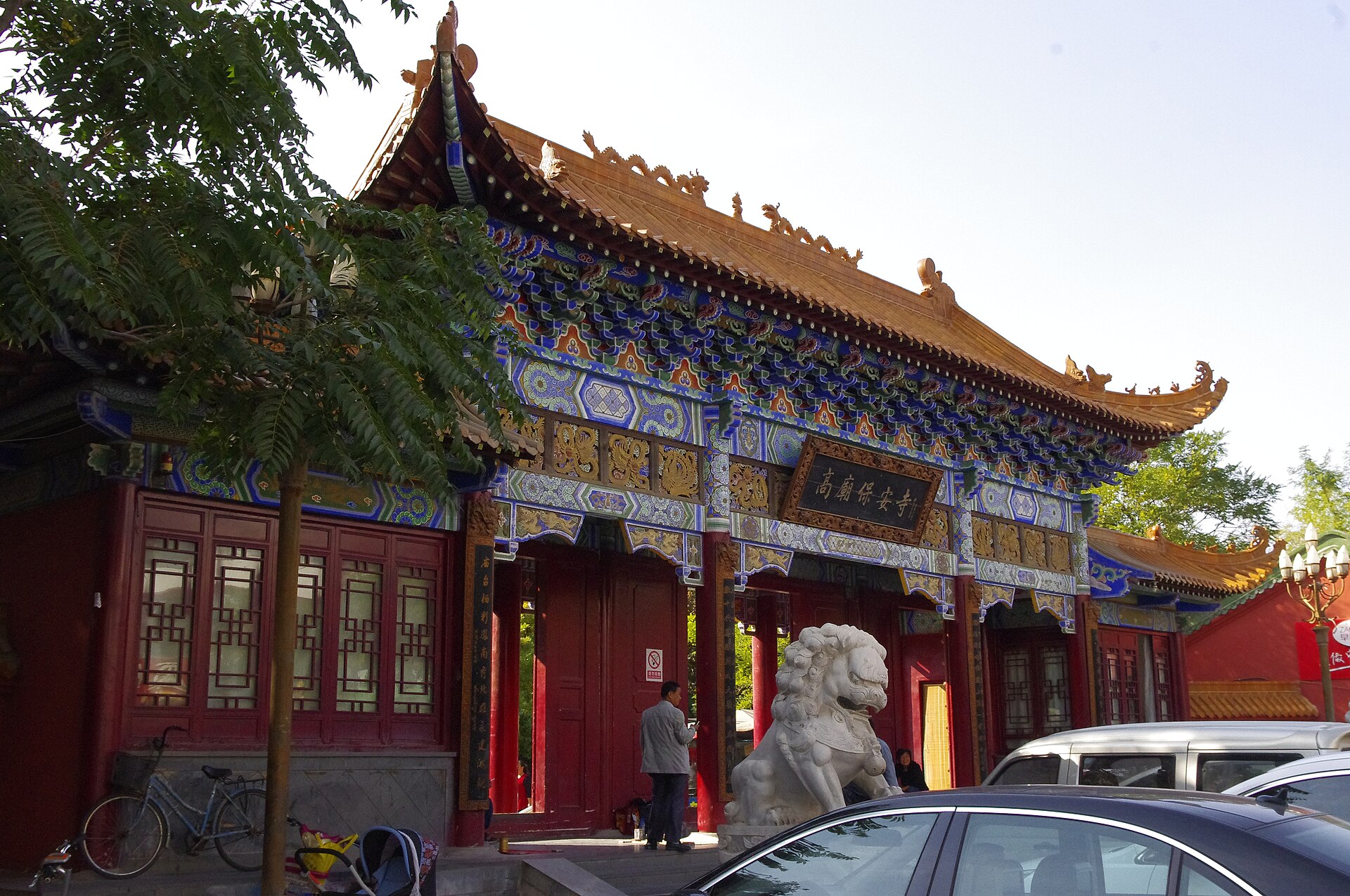
Gaomiao Temple sits behind a high wall on Chengdong Street. The front hall smells of incense and candle wax; the real draw is the underground labyrinth. Narrow stairways descend into chambers painted with scenes of Buddhist hell — flaying, boiling oil, trees of knives. The air grows cool and damp. Flashlights help; the bare bulbs flicker. Allow forty minutes. Photography is officially banned, though guards often look the other way if you keep the flash off.
Shapotou spreads along the Yellow River’s north bank. The entrance ticket covers the park gate and the desert ecology museum. Everything else — camel trek, sand slide, zip line, sheepskin raft — carries a separate fee. The raft is a bundle of inflated sheepskins lashed to a wooden frame; a boatman poles you across the current while the desert rises like a wall on the far shore. Go late afternoon when the light turns the dunes gold and the river reflects the sky. The sand slide is a plastic mat on a steep slope; you climb back up on foot, lungs burning, legs shaking. Bring a scarf for your face — fine sand finds every collar and cuff.
Where to Sleep: Courtyard Quiet or Dune Camp
In the city center, a cluster of mid-range hotels lines Zhongxing West Road. Rooms are clean, hot water reliable, and breakfast usually includes hand-pulled noodles and pickled vegetables. Ask for a rear-facing room to avoid street noise. For something quieter, a handful of Hui-family guesthouses operate in converted courtyard homes near the mosque on Chengxi Lane. The host will serve tea in a brass pot and may invite you to share a plate of lamb dumplings. No English signage; have the address written in Chinese.
At Shapotou, the resort compound offers canvas tents on wooden platforms. Each has a thin mattress, a quilt, and a shared bathroom block with solar showers. Night temperatures drop fast, even in summer — pack a fleece. The star field is the selling point: no city glow for fifty kilometers. Book through the park’s WeChat mini-program a week ahead during holiday periods; walk-ins are turned away when the tents fill.
Eating: Noodles, Lamb, and the Market Rhythm
Breakfast means a bowl of beef lamian at the stall beside the railway station exit. The cook pulls the dough into ribbons, drops them into boiling broth, tops with chili oil, cilantro, and a spoonful of fermented bean paste. Eat standing at the counter; the bowl costs six yuan. Lunch often gravitates to the Muslim quarter near the mosque — lamb kebabs dusted with cumin, flatbread baked in a clay oven, cold wheat-starch noodles tossed with vinegar and garlic. Dinner can be a hotpot of goji berries, wolfberry shoots, and thin-sliced mutton at a riverside restaurant outside the Shapotou gate. Order the whole fish steamed with ginger and scallions; the flesh falls off the bone in sweet flakes.
- Beef lamian: wheat flour, beef broth, radish, chili oil, cilantro, fermented bean paste
- Lamb kebabs: mutton cubes, cumin, chili flakes, salt, flatbread
- Cold wheat-starch noodles: wheat starch, vinegar, garlic, chili oil, cucumber ribbons
- Goji mutton hotpot: mutton slices, goji berries, wolfberry shoots, ginger, scallion, broth
- Steamed whole fish: Yellow River carp, ginger, scallion, soy sauce, hot oil
Seasonal Rhythms and Local Expectations
Spring brings sandstorms that coat everything in grit; locals tape window seams and wear masks. Summer evenings see families picnicking on the riverbank, children chasing fireflies. Autumn is the sweet spot — clear skies, cool nights, the desert firm enough for walking. Winter freezes the river solid; vendors drive motorized sleds across the ice selling roasted sweet potatoes.
Respect the Hui community’s customs. Don’t walk in front of someone praying. Alcohol is not served in Muslim-run eateries; if you want beer, go to a Han-owned restaurant. When a host pours tea, tap two fingers on the table as thanks. Refusing a offered bite of bread can seem rude — take a small piece, nibble, and smile.
First-timers often underestimate the sun. The desert reflects UV like a mirror; sunscreen wears off in an hour. They also overpack — heavy boots sink in sand; light trail runners with gaiters work better. And they assume the Yellow River is safe for swimming. The current is deceptively strong, the bottom shifting sand. Stick to the raft.
Stories Carried on the Wind
An old boatman at the raft dock tells me his grandfather ferried Red Army soldiers across this stretch during the Long March. He points to a dune where a stone marker stands, half-buried. “The sand moves,” he says, “but the river remembers.” Later, at the guesthouse, the host’s teenage son scrolls Douyin on a cracked screen, then switches to Arabic script to read Quran verses. He wants to study engineering in Yinchuan. His mother presses a bag of dried goji berries into my hand as I leave. “For the road,” she says. The minibus engine coughs alive. The dunes swallow the taillights.