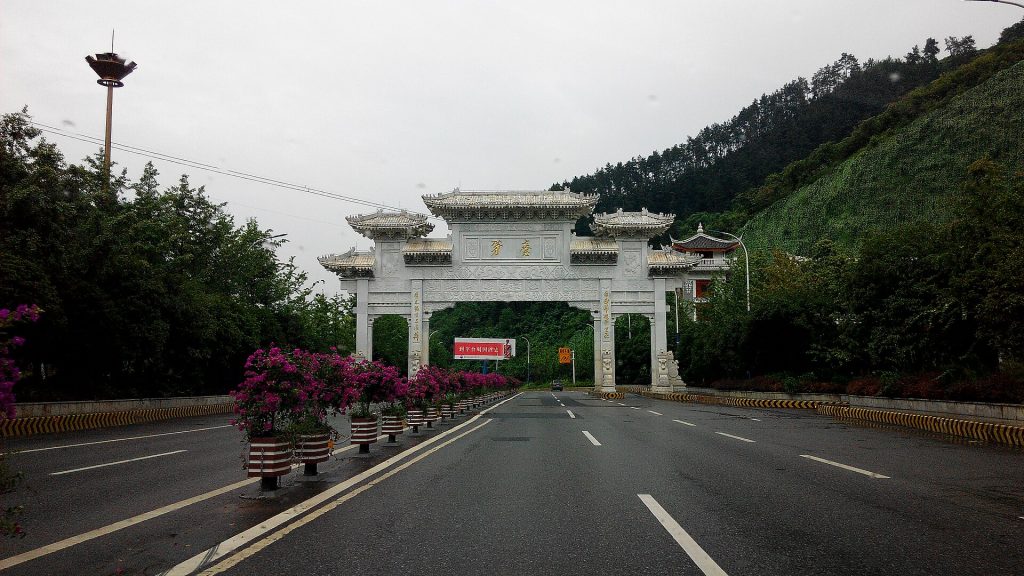
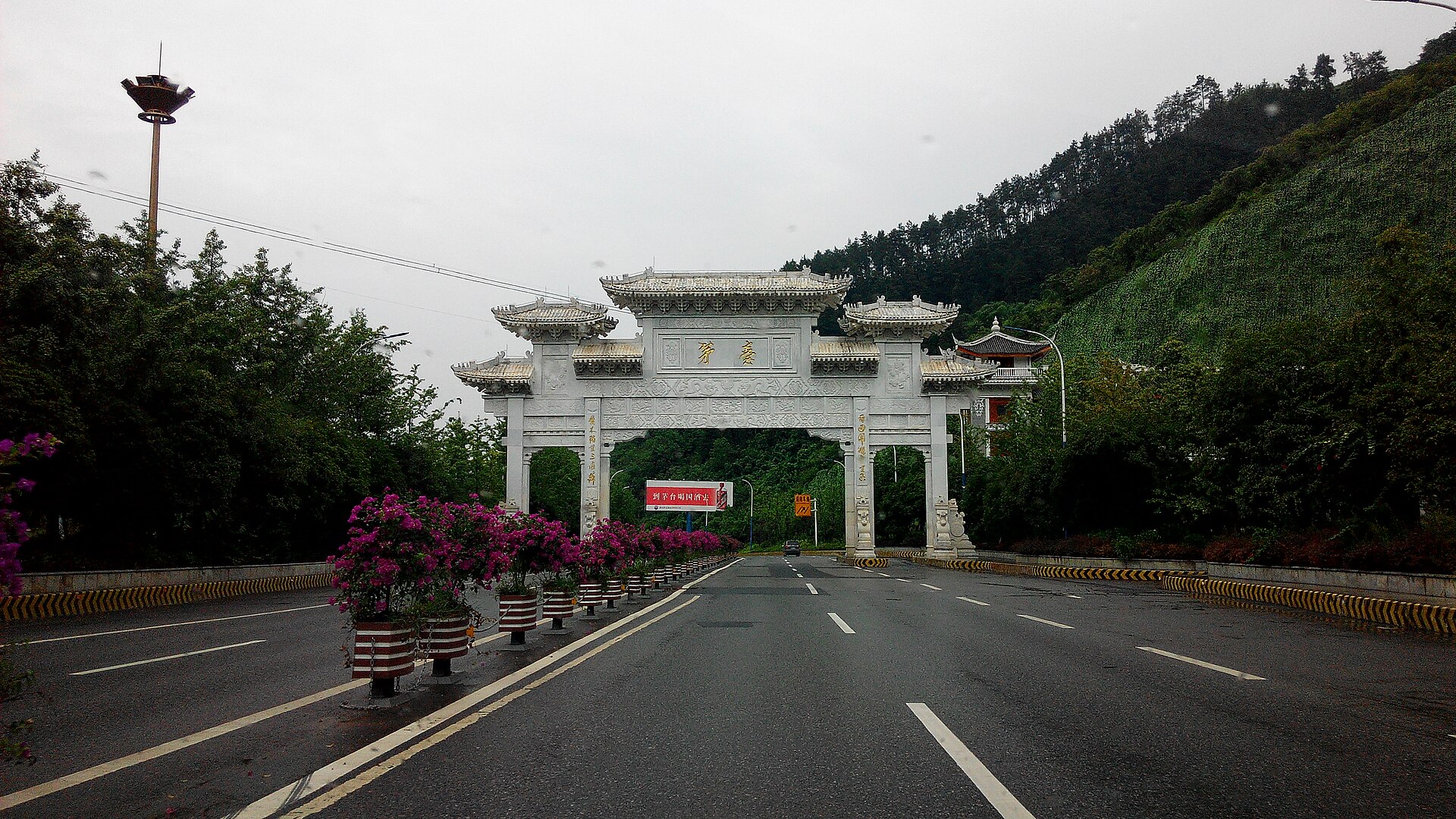
The minibus shuddered to a halt on a hairpin bend halfway up Lou Mountain Pass, the diesel engine coughing in the thin air. Through the open door, a wall of wet mist rolled across the road, swallowing the guardrail and the pine tops below. A vendor in a blue apron leaned against a tricycle cart, steam curling from a pot of glutinous rice cakes wrapped in bamboo leaves. She didn’t ask where I was from; she just held up two fingers, peeled back a leaf, and handed me a cake still hot enough to burn the fingertips. That breakfast — sticky, salty, scented with cured pork and mountain chili — was the first real taste of Zunyi. No ticket booth, no audio guide, just the smell of woodsmoke and the sound of a tour bus laboring up the switchbacks behind us.
Getting oriented in the valley
Zunyi sits in northern Guizhou where the Sichuan Basin folds into the Yunnan-Guizhou Plateau. The city proper stretches along the Wu River, its older districts climbing the slopes in tight grids of tile-roofed lanes while newer towers sprout across the water in Xinpu New Area. Most visitors arrive at the high-speed station in Xinpu, twenty minutes by taxi from the historic core. Buses from Guiyang take about two hours on the expressway; the older train station near People’s Park still sees slow overnight sleepers from Chengdu and Kunming.
The dialect here is a hybrid — Guizhou Mandarin laced with Sichuanese tones and a sprinkling of Miao loanwords. Taxi drivers understand standard Putonghua but reply in a singsong that turns “shì” into “sì” and drops the “r” from “nàr.” English is rare outside the university district. Download an offline map and save the Chinese names for your hotel, the conference site, and Maotai Town before you leave the airport.
Red history on the ground
The Zunyi Conference Site sits on Red Army Street in the old quarter, a compound of gray-brick courtyards behind a stone arch inscribed with Mao’s calligraphy. In the winter of the lunar twelfth month, 1935, the Politburo met here in a room heated only by a charcoal brazier. The exhibits are spare: a wooden table, a map pinned with red thread showing the Four Crossings of the Chishui River, a glass case holding a enamel mug and a straw sandal. Chinese tour groups move through in synchronized waves, guides reciting the same sentences at the same volume. Arrive at opening — around the hour of the dragon, 7 to 9 a.m. — to walk the corridors alone.
Ten minutes uphill on foot brings you to the Red Army Martyrs’ Cemetery on Phoenix Mountain. Three thousand stone tablets climb the ridge, each carved with a name, a home province, and the year of death. Incense burns at the central monument year-round. Elderly visitors bow three times, touch the cold granite, and whisper to ancestors they never met. The path down the back side drops into a lane of tofu workshops where the smell of brine and soy overrides the solemnity.
Maotai Town: liquor, river, and smoke
Forty kilometers northwest, the Chishui River makes a sharp horseshoe bend around Maotai Town. The famous distillery sits behind red walls the length of three city blocks. Public tours run on a strict schedule — book through the official mini-program the night before — and end with a thimble pour of the entry-level Feitian in a porcelain cup. The real education happens outside the gates. Walk the riverside alley where private cellars age jars in caves dug into the red sandstone. An old distiller will let you nose a three-year base spirit: sharp, floral, with a whisper of fermented sorghum husk.
Lunch in Maotai means a riverside farmhouse. Order the “double-cooked” pork belly — first boiled with ginger and star anise, then wok-seared with pickled chilies, garlic chives, and a splash of the local firewater. The fat renders translucent; the lean stays sweet. Pair it with a bowl of cold rice noodles tossed in sesame paste, vinegar, and crushed peanuts. Eat with your fingers if the chopsticks feel too polite.
Underground in Shuanghe Cave
Northeast of the city, the Shuanghedong Cave Network stretches over three hundred kilometers of mapped passages — the longest in Asia. The tourist entrance at Suiyang County opens into a cathedral chamber where a subterranean river disappears into a black throat. Headlamps mandatory. The standard route follows a boardwalk past flowstone curtains, helictites twisted like coral, and a colony of blind fish that dart through pools lit only by your beam.
For the full day, hire a local caver at the ticket office. He will lead you off the boardwalk into a fossil gallery where trilobite impressions ripple the limestone, then down a fifteen-meter chimney to a sandy beach beside an underground lake. You will crawl, you will get mud in your socks, and you will surface six hours later blinking at the karst peaks, wondering if the darkness or the light feels stranger.
Eating like a local
Zunyi cuisine rides the line between Sichuan heat and Guizhou sour. The signature dish is mutton rice noodles: hand-pulled noodles in a broth boiled all night with mutton bones, radish, and a fistful of wild peppercorns from the Wumeng Mountains. The bowl arrives with a side plate of raw garlic chives, pickled mustard stems, and a spoonful of chili oil the color of dried blood. Stir, sip, sweat.
- Mutton rice noodles (羊肉粉): mutton bones, radish, wild peppercorns, hand-pulled rice noodles, garlic chives, pickled mustard, chili oil.
- Sour fish soup (酸汤鱼): grass carp fillets, fermented tomato broth, litsea cubeba powder, tomato, green pepper, ginger.
- Huaxi beef noodles (花溪牛肉粉): beef shank, beef tendon, rice noodles, cilantro, pickled radish, chili oil, bone broth.
- Glutinous rice cakes (糯米饭团): glutinous rice, cured pork, pickled radish, chili powder, bamboo leaf.
- Tofu balls (豆腐圆子): soft tofu, pork mince, scallion, egg, starch, deep-fried, served in clear broth.
Home method for mutton noodles: simmer two kilograms of mutton neck bones with a daikon, three slices of ginger, and a tablespoon of whole Sichuan peppercorns for six hours. Strain. Blanch fresh rice noodles ten seconds. Ladle broth over noodles. Top with sliced mutton, chopped garlic chives, a handful of pickled mustard stems, and a spoonful of chili oil infused with erjingtao pepper. Eat standing at the counter.
In restaurants, point to the picture menu or show the characters above. Ask for “là zi shǎo diǎn” (less chili) if your stomach is untested. Do not order the “tourist set” — it arrives cold, portioned for three, and costs double. The best bowls come from stalls behind the conference site where the broth pot has not been cleaned since the lunar new year.
Mistakes that mark you
First, assuming the high-speed station is walkable to the old town. It is not. The bridge crossing the Wu River has a pedestrian lane, but the approach ramps are a gauntlet of construction trucks. Take the taxi.
Second, visiting the conference site on a weekend during the Qingming solar term. The queue snakes around the block, the audio guides run out, and the courtyard echoes with megaphones. Go on a weekday morning in the third lunar month when the plum blossoms drop pink petals on the stone flags.
Third, buying “vintage” Maotai from a stranger in a parking lot. The bottle looks perfect; the seal clicks; the liquid is water with caramel color. Real aged bottles never leave the distillery warehouse without a paper trail. Drink the pour they give you on the tour. Buy a sealed current-release bottle from the official shop if you must carry one home.
Fourth, skipping the cave because “I’ve seen stalactites.” Shuanghe is not a show cave. It is a living system — water still carving, bats still roosting, explorers still finding new branches. Wear clothes you will throw away. Bring a headlamp with spare batteries. Tell the caver if you have knee trouble; he will choose a route with fewer chimneys.
Fifth, expecting quiet. Firecrackers at dawn for a shop opening. Karaoke from the riverside pavilion until midnight. The vendor shouting “Laowai” across the market — not hostile, just loud, the way you shout a friend’s name across a crowded room. Smile, wave, keep walking. The rice cake lady at Lou Mountain Pass will remember your face and save you the biggest piece tomorrow.



