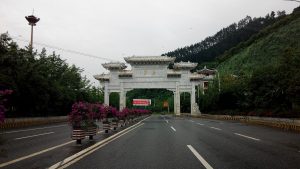
The minibus from Benxi Railway Station smelled of damp wool and steamed buns. An older woman beside me clutched a plastic bag of roasted chestnuts, their sweet steam fogging the window as we climbed out of the industrial valley toward the forested ridges. Forty minutes later, the driver shouted the stop. I stepped onto gravel still slick from last night’s rain, the air suddenly cooler, smelling of pine needles and wet limestone.
Getting There Without a Car
Most foreigners arrive via Shenyang. The direct tourist bus leaves the Shenyang North Station square early, usually around 7:30 in the morning, and rolls back from the park gate mid-afternoon. It is the easiest single-seat ride, but the schedule is rigid. If you prefer flexibility, take the high-speed train to Benxi Station — twenty minutes from Shenyang — then walk across the plaza to the minibus queue. Those white vans leave whenever they fill up, roughly every twenty minutes. The fare is a few yuan. Tell the driver “Shuidong” (水洞) and he will drop you at the main ticket plaza. A taxi from Benxi Station costs about eighty yuan and saves ten minutes; worth it if you are hauling luggage or traveling with elders.
Tickets, Trams, and the Queue
The ticket window sits behind a low stone wall. In peak season — the weeks around the Mid-Autumn Festival and the summer school break — the line snakes back toward the parking lot. Buy the combined ticket: cave entry plus the electric tram that shuttles you from the gate to the cavern mouth. The walk is two kilometers uphill on asphalt; after a humid summer morning, you will be grateful for the five-minute ride. Keep the paper stub. The boat operator scans it at the dock inside the mountain. If you lose it, you argue with a attendant who speaks no English while the tour group waits.
Inside the Milky Way
The tram deposits you at a concrete portal. A blast of 10°C air hits your face — winter coat weather in July. You descend a metal staircase, handrails slick with condensation, into a cathedral of rock. Colored LEDs wash the walls in magenta, teal, and amber. The effect is theatrical, almost tacky, until the boat pushes off and the lights dim to a single warm strip along the gunwale. The river here is called the Milky Way. It runs three kilometers through the mountain, two meters deep, wide enough for two boats to pass. The boatman poles silently, his straw hat brim low. Stalactites drip onto the canopy. A formation to the left resembles a crouching tiger; the guide taps the rail and whispers “Tiger’s Mouth.” Further on, a cluster of columns looks like a seal balancing a pearl. The names are painted on laminated cards the guide flips through. The ride lasts twenty minutes. You disembark at a lit platform, climb a spiral staircase, and emerge into a cedar forest where the temperature jumps fifteen degrees in three seconds.
When to Go and What to Wear
The cavern temperature never changes. The variable is the crowd and the surface weather. Late spring, when the hills turn pale green and the tour groups have not yet arrived, is ideal. Early autumn, after the seventh lunar month, offers crisp mornings and fewer school trips. Avoid the first week of the tenth lunar month — the National Day holiday — unless you enjoy queuing in a sweaty jacket. Wear closed shoes with grip; the cave floor is wet tile. Bring a light fleece or windbreaker for the boat. Leave the umbrella in the locker at the ticket hall; there is no room on the bench. A small flashlight helps you see the natural rock color beneath the LEDs, but do not shine it in the boatman’s eyes.
Food and Rest Stops
Outside the exit gate, a row of stalls sells grilled corn on the cob, brushed with soy-chili glaze, and skewers of pork fat rendered crisp. A sit-down hall serves stewed chicken with wild mushroom and hand-pulled noodles in a clear broth. The portions are large; one bowl feeds two if you add a side of cold cucumber salad dressed with garlic and vinegar. Toilets are squat-style, clean enough, but bring your own tissue. There is no café inside the cavern. Drink water before you board; the humidity makes you thirsty, but the boat has no cup holders and the river is not for drinking.
Common Mistakes
- Arriving at 10 a.m. on a weekend in summer. The wait for the tram alone can exceed an hour. Be at the gate by 8:30 a.m. or come after 2 p.m. when the morning wave has cleared.
- Wearing sandals. The stairs are slick algae; a twisted ankle ends the trip.
- Expecting English signage. The formation names are in Chinese and pinyin only. Download a photo of the “Ginseng Baby” and “Seal Playing with Pearl” beforehand so you know what the guide is pointing at.
- Skipping the tram to save money. The uphill walk steals thirty minutes and leaves you damp before the cold cave air hits.
- Bringing a large backpack. The boat bench is narrow. Store bags in the free lockers at the ticket hall; take only phone, wallet, and a jacket.
On the return minibus, the chestnut woman offered me a nut cracked open with her thumb. The meat was hot, sweet, and flaky. The hills rolled past, dark against a pale sky. The cave stays the same temperature forever; the world outside shifts with every season.