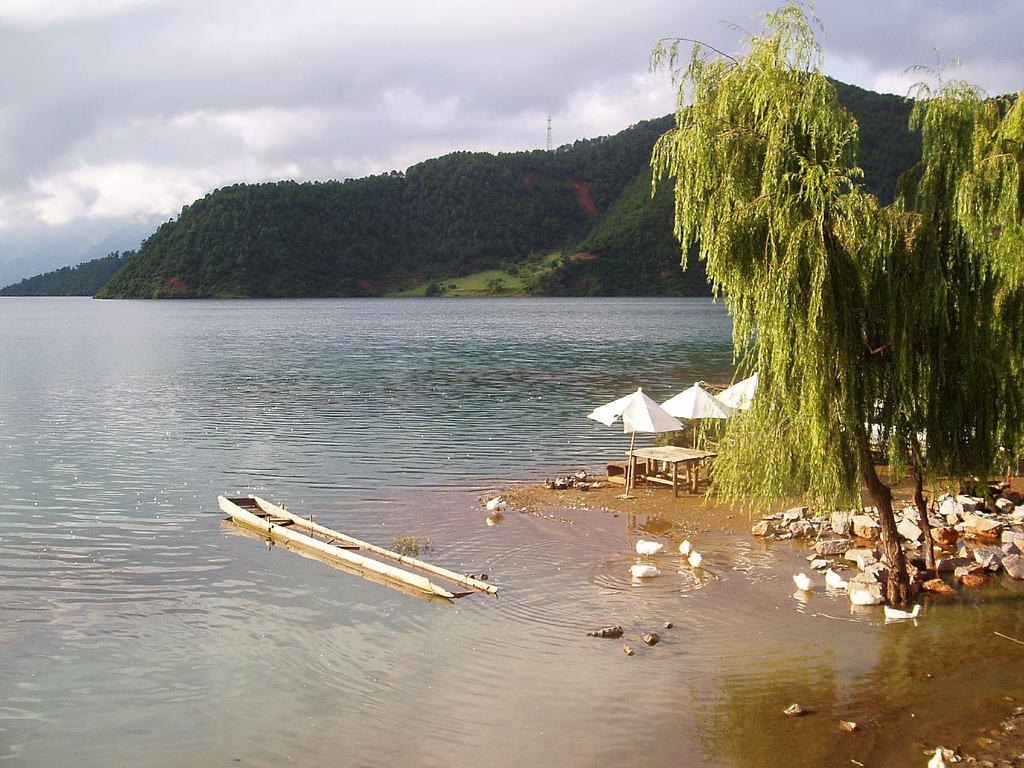
The minivan’s suspension groaned as we crested the last pass, the engine whining in thin air at twenty‑six hundred meters. Below, the water lay flat and impossibly blue, ringed by hills that still held patches of snow in late spring. A woman in a indigo headscarf stood on the shore, pushing a wooden dugout into the shallows. No dock, no ticket booth, no loudspeaker — just the lake, the wind, and the smell of pine needles warming in the sun.
Getting There Without Losing a Day
Most travelers arrive from Lijiang or Chengdu. From Lijiang, the road runs about two hundred kilometers north through Yi and Tibetan valleys. A private driver takes six to seven hours if the weather holds; shared minibuses leave the Lijiang bus station at dawn and arrive by early afternoon, but they wait until full. From Chengdu, the drive stretches to ten hours on the new expressway to Xichang, then mountain switchbacks to the lake. Flights land at Ninglang Airport, forty minutes by taxi from the water, but cancellations are common when clouds sit low on the ridges.
- Book a seat on the 7:30 a.m. minibus from Lijiang the night before; bring a windbreaker — the bus heater rarely works.
- If you hire a driver, agree on a price that includes waiting time for photo stops at the Tiger Leaping Gorge viewpoint and the Yi village of Yongning.
- Pack motion‑sickness tablets; the final thirty kilometers climb through hairpin turns above the Jinsha River.
Where to Sleep: Lakeside vs. Village
The shoreline splits into two moods. Luoshui, on the Yunnan side, has the densest cluster of guesthouses, a handful of cafés, and a market where Mosuo women sell dried yak meat and hand‑woven belts. Stay here if you want a hot shower after a day on the water and a place to charge your power bank. Across the provincial line in Sichuan, Lige and Nisai sit quieter, their wooden piers stretching into deeper water. Rooms are simpler — often a kang bed heated by a stove underneath — but the mornings arrive with only the sound of oars and gulls.
- Reserve a lake‑view room in Lige at least a week ahead during the summer school holidays; the best ones fill fast.
- Ask the host whether the bathroom is en‑suite or shared; many family‑run courtyards still use a communal washhouse.
- Bring a headlamp — power cuts after midnight are routine in the off‑season.
Moving Around the Lake
There is no public bus circling the perimeter. Most visitors rent an electric scooter in Luoshui — about eighty yuan a day — and follow the lakeside road clockwise. The pavement is good for the first half, then turns to packed gravel past the Mosuo Cultural Museum. A full loop takes three hours with stops. If you prefer not to ride, hire a local boatman at any pier; a two‑hour circuit to Liwubi Island and back costs roughly two hundred yuan, negotiable if you share with another traveler. Walking the peninsula trails is possible, but the distances are longer than they look on a map, and altitude makes each kilometer feel like two.
- Test the scooter brakes before you leave the rental shop; the downhill into Nisai is steep and loose.
- Carry a rain poncho; afternoon thunderstorms roll in fast over the water from June through September.
- Boatmen prefer cash — small denominations — and rarely speak English. Write your destination in Chinese on your phone.
What to Do Besides Stare at the Water
Dawn is the hour to be on a dugout. The lake surface turns to glass, and the mountains reflect upside‑down in a way that feels deliberate. Paddle toward Gemu Mountain, the sacred peak the Mosuo call “Goddess.” If you hike the stone steps to the summit shrine — forty minutes of switchbacks — you’ll find prayer flags snapping and old women burning juniper branches. Back at lake level, visit a Mosuo household that opens its courtyard to guests. You’ll sit on a low stool around a fire pit, drink butter tea from a wooden bowl, and hear the hostess explain the “walking marriage” custom without tourist gloss. No performance, no script — just questions answered over steaming yak butter.
- Arrive at the Luoshui pier by 6:00 a.m. to catch the calmest water; the boatmen start early and appreciate the business.
- Bring a small gift — a packet of good tea or a bag of apples — when entering a family courtyard; it replaces an entrance fee.
- Do not photograph the interior of the grandmother’s bedroom; it is the spiritual center of the home.
Eating: Fire‑Pit Flavors
Meals revolve around the hearth. A typical lunch arrives on a wooden tray: smoked pork ribs simmered with turnips until the meat falls off the bone, a bowl of barley porridge thick enough to stand a spoon in, and a plate of wild greens stir‑fried with garlic and dried chili. The sour note comes from fermented bean curd, spooned into each dish at the table. Fish from the lake — usually carp — is grilled whole, scored and stuffed with cilantro and ginger, then wrapped in foil and buried in hot ash. You eat with your fingers, pulling flakes from the bone, dipping them in a sauce of soy, vinegar, and crushed Sichuan pepper.
- Order the “stone pot chicken” at a family guesthouse in Lige; the broth remembers every hand that stirred it.
- Try the cold barley noodles tossed with sesame paste and cucumber — a midday staple that cools the altitude headache.
- Avoid the fried rice at the lakeside stalls; it’s often reheated from the previous day.
Mistakes That Spoil the Stay
First-timers often treat the lake as a checklist: photo at the viewpoint, boat ride, dinner, leave. They miss the rhythm. The Mosuo day starts before light, with women fetching water in copper pails and men mending nets. If you sleep until nine, you’ve lost the quiet hours. Another error is bargaining hard over a boat price — a few yuan saved means the boatman cuts the route short. And never step over the threshold of a grandmother’s room; the act is considered a breach of the household’s protective spirits. Finally, don’t assume the altitude won’t affect you because you felt fine in Lijiang. The extra three hundred meters hit harder after a day of wind and sun. Drink water until your urine runs clear, and keep a strip of ibuprofen in your pocket.
- Schedule your first full day with no fixed appointments — just a scooter, a map, and time to stop when a herder waves you over for tea.
- Carry a reusable water bottle; the guesthouses have filtered dispensers, but plastic bottles pile up on the shore.
- Learn three Mosuo words: “zhu” (thank you), “ama” (mother), and “la” (good). They open doors that money cannot.