The minibus engine whined as it climbed the switchback, the cliff face looming closer through the dusty window. I gripped the handrail, watching the Danxia sandstone glow rust-red in the late morning light. After twenty minutes of hairpin turns, the driver killed the engine in a gravel lot. Steam rose from the brakes. Ahead, a metal staircase clung to the sheer drop like a ladder dropped from heaven. This was the only way into the caves.
Getting There Without a Car
Most visitors base themselves in Tianshui city, roughly forty-five kilometers northwest. The high-speed station, Tianshui South, sits on the western edge of town. From the station forecourt, city bus 60 runs directly to the Maijishan Tourist Service Center in Xiamen Village. The ride takes about an hour and costs seven yuan. Buses 5, 34, and 37 also make the run, but 60 is the most frequent. If you are staying near the old train station in Qinzhou District, catch bus 5 or 30 heading east; they terminate at the same service center.
Tickets are no longer sold at the cliff base. You must buy them at the service center—either at the window or via the WeChat mini-program—before boarding the park shuttle. The shuttle covers the final eight kilometers to the scenic area entrance in ten minutes. During the autumn holiday surge, the queue for the shuttle can stretch forty minutes. Arrive before nine in the morning or after three in the afternoon to skip the worst of it.
Tickets, Caves, and the Staircase
The standard entry ticket covers the park grounds and the shuttle ride. Access to the grottoes themselves requires a separate “Special Cave Ticket.” Only a handful of caves are open at any given time—usually Caves 4, 13, 44, 98, 121, 127, and 133—rotated for preservation. The ticket booth at the service center posts the daily list. Buy the special ticket there; you cannot add it later at the cliff.
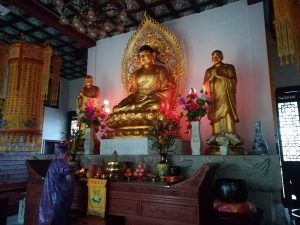
The stair system is a steel skeleton bolted into the rock, painted forest green. It climbs in three main flights with landings that double as viewing platforms. There are no elevators. The highest open caves sit about eighty meters above the canyon floor. If you have knee trouble or a fear of heights, stay on the lower platform (Cave 4 and 13) where the giant seated Buddha greets you at eye level. The upper caves reward the climb with tighter groups of polychrome bodhisattvas, their original pigment still visible in the shaded recesses.
- Wear closed shoes with grip; the metal treads are slick with dust.
- Bring a small flashlight. Interior lighting is dim and motion-activated.
- Leave large packs in the lockers at the service center. The stairs are narrow; shoulders brush the railing.
- Photography is permitted without flash. Tripods and selfie sticks are banned.
Hiking the Ridge and the Botanical Garden
Beyond the grottoes, a ridge trail loops east toward the Maijishan Botanical Garden. The path is paved stone, moderate grade, and takes ninety minutes round-trip if you stop at the pavilions. In late spring, the slopes bloom with purple iris and yellow peony. Pine and cypress shade the upper reaches. I met a retired geologist from Lanzhou on the ridge; he pointed out the horizontal bedding planes that let the cliff face shear off in clean slabs—perfect for carving, terrible for rockfall.
The botanical garden sits in a bowl valley below the main cliff. It holds a living collection of Qinling flora: dove trees, Chinese yew, and a grove of ginkgo that turns butter-yellow in the tenth lunar month. A small tea shed near the lotus pond serves hot barley tea and steamed corn cobs. It is a quiet place to eat a packed lunch before the shuttle returns you to the service center.
Seasonal Rhythm and Weather Traps
The park sits at 1,700 meters. Spring arrives late; snow can linger on the north-facing stairs into the third lunar month. Summer brings afternoon thunderstorms—lightning closes the stair system instantly. Autumn, roughly the eighth to tenth lunar months, offers stable clear skies and the best light for the murals. Winter is bitter, often below minus ten Celsius, but the crowds vanish. If you visit in the seventh lunar month, expect the “Maijishan Temple Fair”: local opera troupes perform on a temporary stage at the service center, and vendors sell lamb skewers and hand-pulled noodles from carts.
Check the forecast for Tianshui the night before. If rain is predicted, the murals in the open-air niches (Caves 98 and 127) will be behind protective curtains. You will see the outlines, not the color.
Food, Rest, and Toilet Strategy
There are no restaurants inside the scenic area. The service center plaza has a row of canteens serving beef noodle soup (niurou mian), cold skin noodles (liangpi), and rice bowls with braised pork. Portions are large; one bowl feeds two light eaters. Toilets at the service center are modern squat-and-flush with paper. At the cliff base, there is a single eco-toilet block near the shuttle drop-off—bring your own tissue and hand sanitizer. On the ridge trail, there are no facilities for the full loop.
- Eat a solid breakfast in Tianshui before boarding bus 60.
- Carry a liter of water; the climb dehydrates faster than you expect.
- Snacks: roasted walnuts from the old market in Qinzhou District travel well.
- If you need a proper sit-down meal, return to Tianshui for the night market on Chengji Street.
What Newcomers Get Wrong
First, they show up at the cliff gate expecting to buy tickets. The gate has only turnstiles and a scanner. Second, they wear sandals. The steel stairs eat flip-flops for breakfast. Third, they rush the caves in thirty minutes. The clay figures—especially the smiling attendants in Cave 121—deserve slow looking. Their eyes follow you across the niche. Fourth, they ignore the ridge trail. The view from the east pavilion frames the entire cliff face in a single glance: a honeycomb of dark rectangles punched into red rock, the Yellow River’s upper tributaries glittering far below. Stay for that moment. It is the one the tour groups miss.