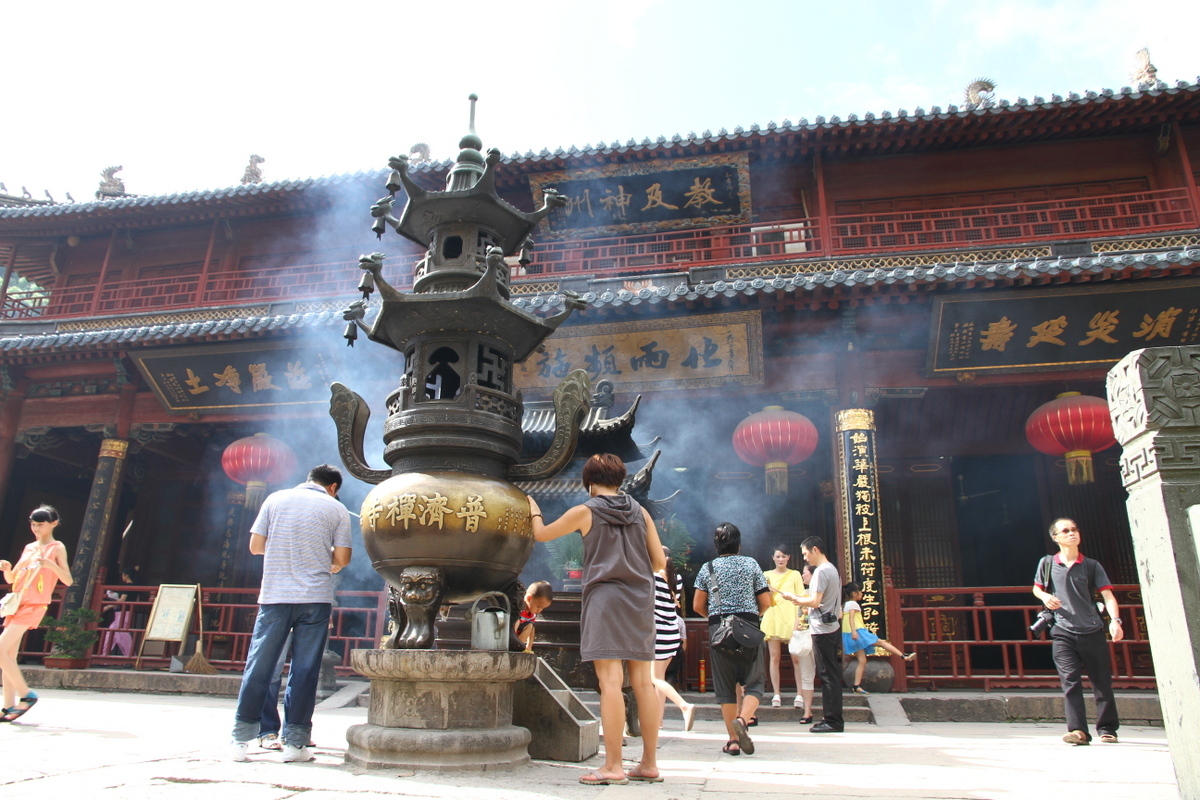
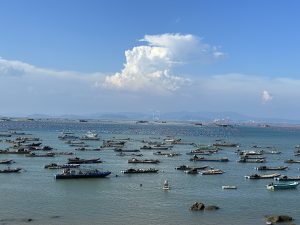
The ferry hits the dock at Wugongzhi with a shudder, and the salty wind immediately tangles my hair. Before I even clear the gangway, a chorus of voices rises from the plaza—monks in saffron robes chanting over a PA system, vendors shouting prices for strings of freshwater pearls, a tour guide herding a flag-waving group toward the shuttle buses. Incense smoke curls around the stone lions guarding the ticket hall. I pause, shoulders dropping. This is not the silent mountain retreat I pictured from brochures. It is a working pilgrimage site that happens to sit on a forested island, and the energy is loud, crowded, and utterly alive.
Getting There Without Losing Half a Day
Most travelers arrive via Ningbo or Shanghai. From Ningbo, the high-speed train to Zhuangqiao takes just over an hour, followed by a twenty-minute taxi to the Banshengdong cruise terminal. Boats leave every thirty minutes in season; the fast hydrofoil crosses to Putuo in twenty-five minutes, the slow ferry takes fifty. From Shanghai, direct coaches run from the long-distance hub near Hongqiao Railway Station to the same terminal—about three hours door to dock if traffic behaves. I learned the hard way that buying a return ferry ticket at the island’s ticket window on a Sunday afternoon can mean a two-hour queue. Book the round-trip online through the official Zhoushan ferry WeChat mini-program the night before, or ask your hotel to reserve it. Keep your passport handy; they scan it at both the mainland gate and the island checkpoint.
Where to Sleep: Temple Guesthouse or Harbor Hotel
The island splits into two practical zones. Near the main pier at Wugongzhi, a cluster of three- and four-star hotels lines the waterfront. Rooms have air-conditioning, reliable hot water, and breakfast buffets that include steamed buns and congee. Ten minutes uphill by shuttle, the area around Puji Temple and Fayu Temple offers simpler lodging—temple guesthouses run by lay devotees, plus a handful of family inns with shared bathrooms. I spent two nights at a guesthouse behind Fayu: a bare room with a wooden bed, a mosquito net, and a window framing a bamboo grove. The 4:30 a.m. bell woke me for morning chanting, which I could join or ignore. If you want quiet after the day-trippers leave on the last ferry, stay up the mountain. If you need a hot shower and Wi-Fi that streams video, stay by the harbor.
Moving Around: Feet, Battery Carts, and the Cable Car
Cars are banned for visitors. The island’s spine is a paved loop road served by electric shuttles that run every ten minutes between the pier, Puji Temple, Fayu Temple, and the cable-car lower station. A day pass costs roughly the price of a bowl of noodles and saves endless stair climbing. That said, the best moments happen on the stone footpaths that cut through the forest. The trail from Fayu to Huiji Temple on the summit follows a ridge of ancient camellia trees; in late spring the blossoms litter the steps like pink confetti. The cable car from the lower station to the summit temple saves knees but skips the forest. I take the shuttle to Fayu, hike up to Huiji for the view over the East China Sea, then walk the ridge down to Puji before catching the bus back to the pier. Allow three hours for that loop at a slow pace with photo stops.
Temple Etiquette That Locals Notice
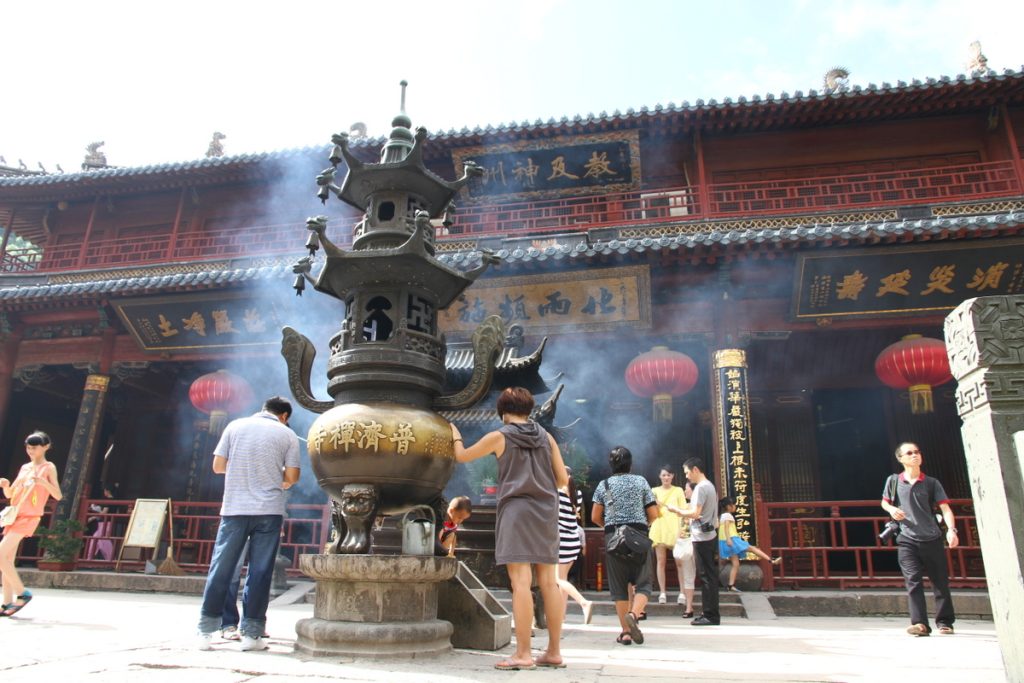
At Puji Temple’s main hall, the air is thick with sandalwood. Devotees line up three deep to press foreheads to the threshold before the giant Guanyin statue. Do not step on the high wooden sill—cross over it. Keep your voice below a murmur. Photography inside the halls is usually forbidden; signs show a camera with a red slash. If you want to offer incense, buy a bundle at the designated kiosk (not from street sellers outside the gate), light the sticks at the communal burner, and plant them in the sand with both hands, a slight bow between each. Monks on alms rounds pass silently; step aside and let them lead. I once watched a tourist chase a monk for a selfie—everyone nearby winced. Respect the rhythm; you are a guest in someone’s daily practice.
Eating: Noodles, Vegetarian Feasts, and Street Snacks
The island’s cuisine leans on the sea and the temple kitchen. Near Puji, a row of canteens serves putuo noodles—hand-pulled wheat strands in a clear broth topped with shredded bamboo shoots, dried shrimp, and a spoonful of chili oil. The broth should taste sweet from the shrimp, not salty from MSG. A vegetarian hall behind Fayu offers a set lunch: braised gluten puffs, stir-fried mountain greens, tofu skin rolls, rice, and a bowl of winter-melon soup. Everything arrives on stainless steel trays; you queue with a metal token, eat at communal tables, and return the tray yourself. For a snack, look for the carts grilling scallops on the half-shell brushed with garlic butter, or the women selling warm sweet-potato cakes wrapped in lotus leaves. Avoid the pre-packaged “temple gift boxes” of vacuum-sealed mushrooms—they cost triple the mainland price and taste of preservatives.
Putuo noodles: wheat noodles, dried shrimp, bamboo shoots, chili oil, scallions.
Vegetarian set: gluten puffs, seasonal greens, tofu skin, rice, winter-melon soup.
Grilled scallops: fresh scallops, garlic, butter, chili flakes.
Sweet-potato cakes: purple sweet potato, glutinous rice flour, lotus leaf for wrapping.
Hidden Corners Most Groups Miss
Past the cable-car upper station, a narrow path drops toward the Purple Bamboo Forest. The signage fades, the crowds thin, and the temperature drops two degrees. Here, Guanyin statues tucked into rock niches face the sea, each draped in a different colored sash left by petitioners. Further west, the Chaoyin Cave opens onto a wave-cut platform where spray hits the cliffs at high tide. I sat there one autumn afternoon watching an elderly nun mend a fishing net, humming a sutra. No tour bus reaches this spot. If you have an extra morning, walk the coastal trail from Fayu toward the old lighthouse—two hours round trip, mostly flat, with views of fishing boats threading the channel. Bring water; there are no vendors once you leave the main loop.
Leaving Without the Crush
The last ferry departs around sunset, but the final hour before it is a stampede. If your schedule allows, book the second-to-last sailing and spend the golden hour at the small beach below the pier—locals call it “Thousand Step Sand.” The water is shallow, the sand coarse, and the view back toward the mountain shows the temples glowing in the low light. Buy a cup of iced mung-bean soup from the cart near the showers, rinse your feet, and watch the hydrofoils cut white lines across the channel. When the boarding call sounds, you walk onto the gangway calm, while the latecomers sprint. That moment—salt on your skin, incense in your clothes, the mountain shrinking behind you—is the one you carry home.