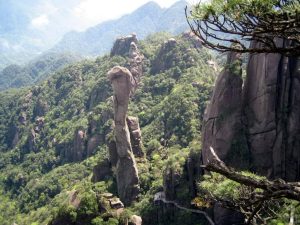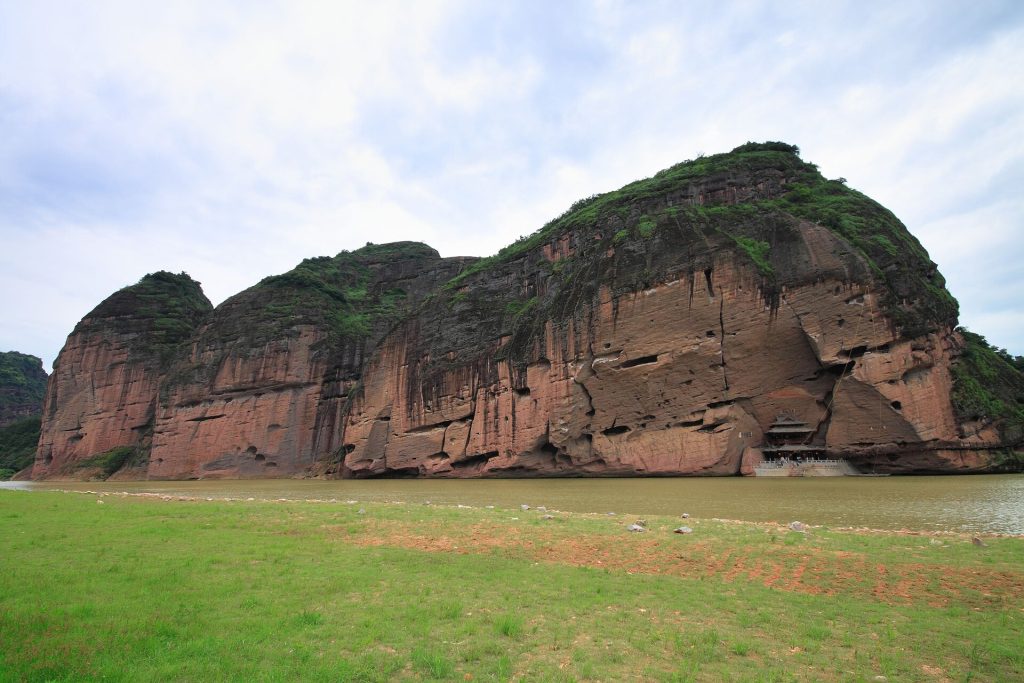
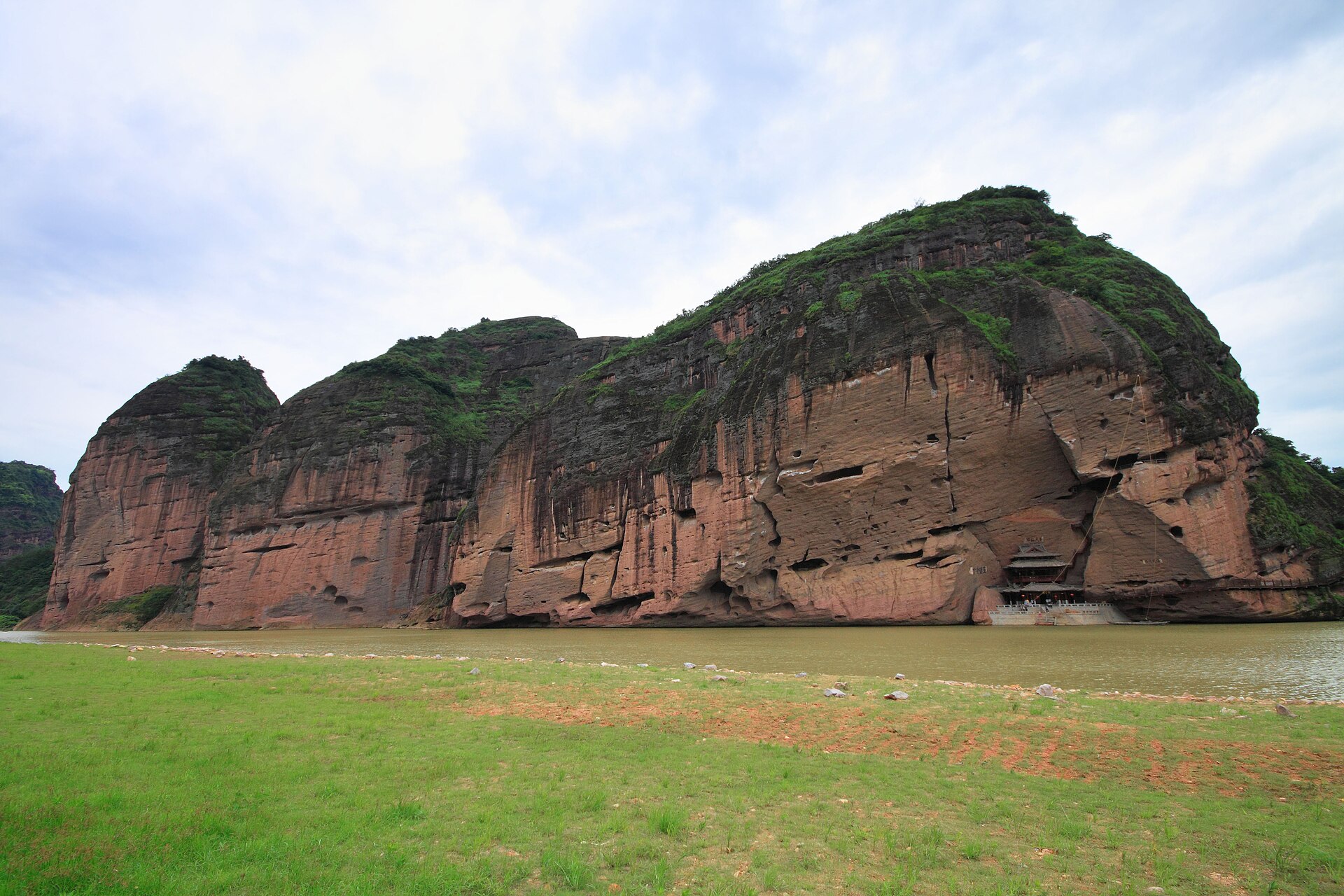
The minibus shudders to a halt on a gravel pull‑out beside the Luxi River. Mist clings to the red sandstone cliffs, and the only sound is water slapping against the hull of a bamboo raft tied to a wooden post. A driver gestures toward the ticket booth; a vendor waves a paper fan and shouts the departure time for the next boat. You step down onto dusty pavement, crane your neck toward the sheer walls pocked with dark cavities, and realize the “mountain” is really a spine of rock fins rising from the river like the back of a sleeping dragon.
Getting There Without Losing a Morning
Most travelers land at Yingtan North Railway Station, the high‑speed hub on the Shanghai–Kunming line. From the station forecourt, city bus 23 runs every ten minutes or so to the older Yingtan Railway Station; the ride costs a couple of yuan and takes fifteen minutes. Outside that older station, a fleet of green minibuses marked “Longhushan” waits until full, then rolls the thirty‑odd kilometers to the park’s main visitor center in about forty minutes. If you arrive on a conventional train at Yingtan Railway Station itself, you skip the first hop and jump straight on the minibus. Taxis are parked beside the same lot—negotiate a flat fare before the meter starts, or you’ll pay for the driver’s return trip.
Drivers coming from Nanchang or Shangrao take the G60 Expressway to the Yingtan exit, then follow the brown scenic‑area signs along S206. Parking lots sit at the visitor center, at the Shangqing Palace turnoff, and near the Xianshuiyan raft dock. During the Dragon Boat Festival and the October holiday week, the lots fill by mid‑morning; arriving before 8 a.m. or after 4 p.m. saves a long walk.
Moving Inside the Park: Boats, Buses, and Your Own Feet
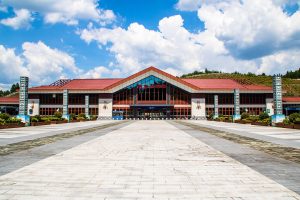
The park operates a loop shuttle that links the visitor center, Shangqing Palace, the cliff‑coffin viewing platform, and the Xianshuiyan raft launch. A single‑day pass covers unlimited rides; the wristband is scanned at each stop. Shuttles run every fifteen minutes from 7:30 a.m. until the last raft returns at dusk. If you prefer to walk, a paved riverside trail connects the same points—allow ninety minutes one way, longer if you pause at every overlook.
The bamboo‑raft ride is the signature experience. Eight passengers per raft, a pole‑man at the stern, forty minutes drifting past vertical cliffs where rectangular holes mark the ancient hanging coffins. The pole‑man sings a local work song if you ask; tip him twenty yuan and he’ll point out the coffin clusters invisible from the bank. In the dry season the river drops low enough to expose sandbars—children wade in, vendors sell roasted corn from floating baskets. In the rainy season the current quickens and the ride shortens; the ticket booth posts a red flag when rafts are suspended.
Where to Sleep: Riverside Inns, Temple Courtyards, or City Hotels
Inside the scenic area, a cluster of family‑run guesthouses lines the road between the visitor center and Shangqing Palace. Rooms are simple—tiled floors, air‑conditioning, shared courtyard with a stone table for tea. Hosts often keep a kettle of ginger‑red‑date soup on the stove for early risers heading to the sunrise platform. Book through a Chinese travel app or call the owner directly; WeChat QR codes are pasted on every doorway.
For a quieter night, stay in Shangqing Ancient Town, ten minutes by shuttle from the palace. The town sits beside the river, its lanes paved with blue‑gray flagstones. Converted merchant houses offer private courtyards, some with a view of the Taoist temple’s glazed tiles. Evening drum ceremonies at the temple are open to guests; the rhythm carries across the water long after the day‑trippers have left.
If you need reliable Wi‑Fi, a late‑night train, or a familiar breakfast buffet, base yourself in Yingtan city near the railway station. The high‑speed station area has chain hotels with English‑speaking front desks. A morning taxi to the park costs about eighty yuan and buys you an extra hour of sleep.
What to Eat: River Fish, Temple Tofu, and Night‑Market Skewers
Lunch usually arrives on a round metal tray at a riverside shack: a whole steamed mandarin fish glistening with soy‑ginger sauce, a bowl of stir‑fried water spinach, and a clay pot of rice. The fish meat pulls away in white flakes, sweet and clean, with no muddy aftertaste. Beside it, a plate of “Longhu tofu”—firm blocks braised in fermented bean curd, chili oil, and scallions—carries the faint incense of the nearby temple kitchens where the recipe originated.
- Steamed mandarin fish – fresh from the Luxi, scaled, scored, topped with julienned ginger and scallion, steamed eight minutes, finished with hot oil and light soy.
- Longhu tofu – pressed tofu cut into cubes, pan‑fried until golden, then simmered in fermented red bean curd, dried chili, garlic, and a splash of rice wine.
- Bamboo‑tube rice – glutinous rice mixed with cured pork, shiitake, and chestnut, packed into fresh bamboo sections, sealed with lotus leaf, roasted over charcoal twenty minutes.
- River snails in black bean sauce – small freshwater snails stir‑fried with douchi, ginger, garlic, and green pepper; sucked straight from the shell.
Dinner in Shangqing Ancient Town shifts to the night market. Vendors thread pork belly, lotus root, and tofu skin onto bamboo sticks, brush them with cumin‑chili powder, and grill over charcoal. A bowl of rice‑noodle soup with pickled mustard greens and a spoonful of chili oil costs ten yuan. Avoid the “tourist set menus” advertised with laminated photos—they reheat pre‑cooked dishes and charge triple.
Common Missteps and How to Dodge Them
First, don’t treat the park like a single mountain summit. The scenery unfolds along the river; you need the shuttle or the raft to see the coffin cliffs, the Taoist temples, and the Danxia formations in one day. Walking the whole loop without the bus eats six hours and leaves no energy for the raft.
Second, the hanging coffins are replicas placed for viewing. The originals remain sealed in higher caves, protected by law. Guides who claim you’re seeing “the real 2,500‑year‑old coffins” are stretching the truth. Appreciate the reconstruction for what it teaches about Guyue burial customs, then ask the pole‑man to point out the authentic dark holes high on the opposite bank.
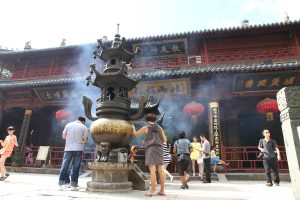
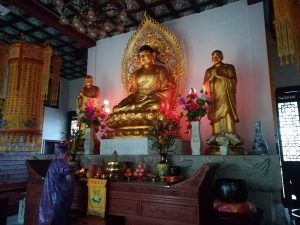
Third, almost every temple hall—Shangqing Palace, Zhengyi Temple, the cliff‑side shrines—was rebuilt after the 1990s. The incense is real, the rituals are genuine, but the timber and tile are new. If you’re hunting Song‑dynasty architecture, you won’t find it here. Come instead for the living Taoist rhythm: morning chanting at 6 a.m., the noon bell, the evening drum.
Fourth, bring cash. The raft ticket window, the night‑market stalls, and most guesthouses still prefer paper yuan or a quick Alipay/WeChat transfer to a personal QR code. The park’s main gate accepts UnionPay cards, but the signal inside the canyon drops to one bar.
Fifth, check the lunar calendar before you book. The third day of the third lunar month brings the Shangsi Festival—thousands of pilgrims, incense smoke so thick it tastes like resin, and accommodation prices doubled. The seventh lunar month hosts the Ghost Festival river lantern release; it’s beautiful but crowded. Late autumn, when the maples on the cliffs turn scarlet against the red rock, offers the best light and the thinnest crowds.