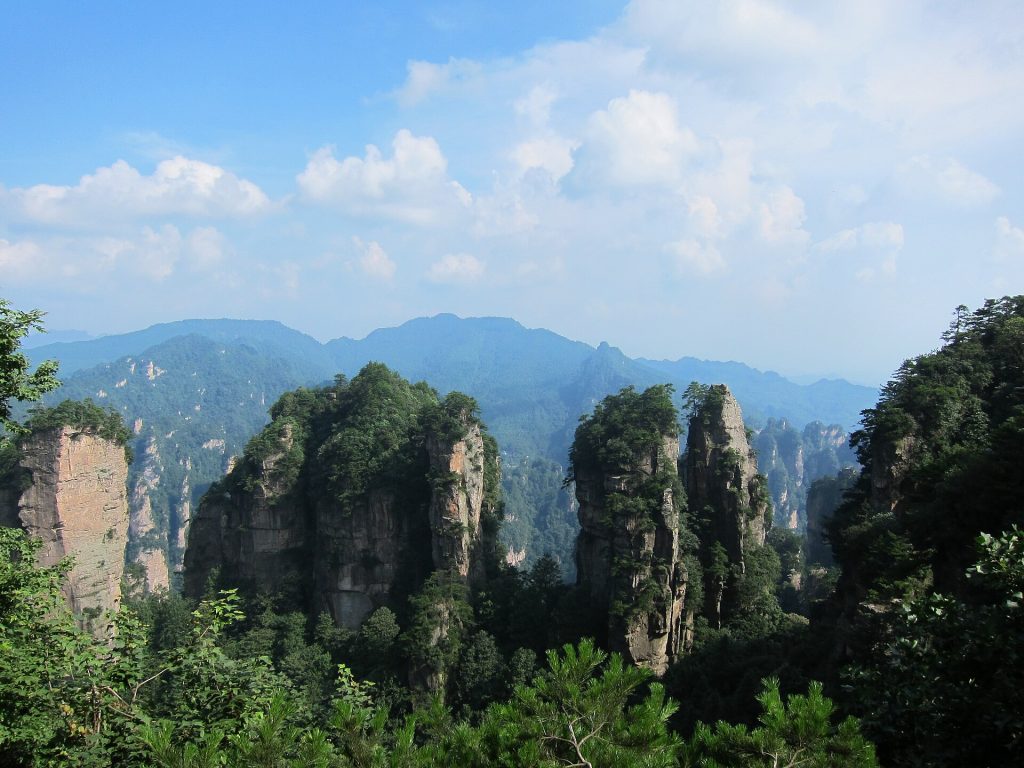
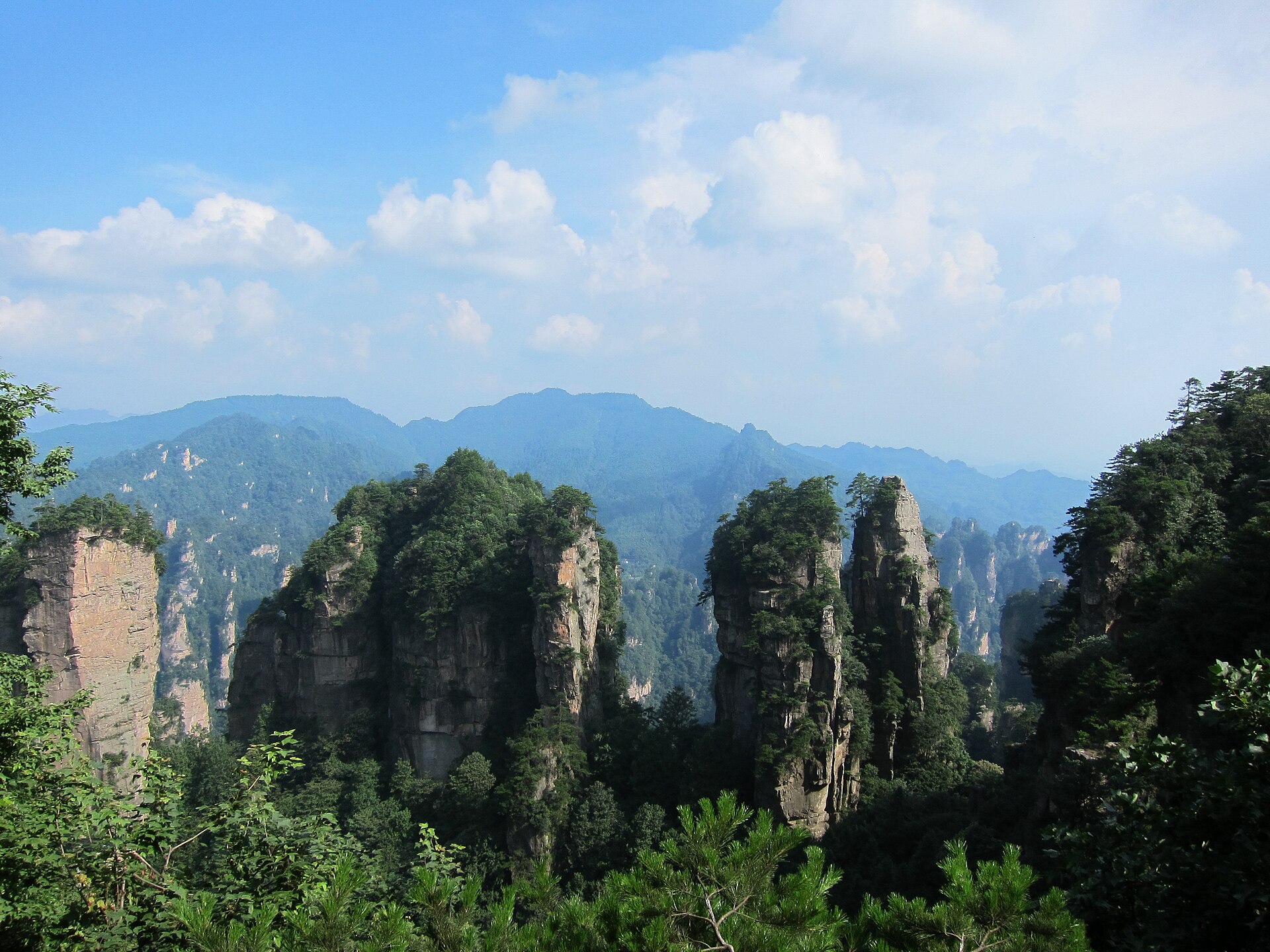
The minibus shudders to a halt at the Wulingyuan ticket gate just as a veil of mist lifts off the sandstone teeth. A vendor thrusts a steaming corn cob wrapped in foil into my hand — sweet kernels, charred edges, the smell of wood smoke mixing with wet moss. Beyond the turnstiles, the forest drops away into a vertical world where quartzite pillars float like broken vertebrae against a gray sky. This is not a place you merely look at; it is a place you climb into, knee by knee, cable car by cable car, until your calves ache and your phone storage fills with the same shot from ten different angles.
Getting Oriented Before You Enter
The park sprawls across roughly 48 square kilometers, but the visitor infrastructure funnels everyone through a handful of main gates. Most first-timers arrive at the Wulingyuan entrance on the east side because the high-speed rail station and the bulk of budget hotels sit there. The Tianzi Mountain gate on the west is quieter but adds an hour of bus transfer if you are coming from the city center. Buy the four-day pass even if you plan only two full days — the price difference is negligible and it covers the internal shuttle buses, the Bailong Elevator, and the Tianzi cable car. Keep the paper ticket and the QR code on your phone; rangers scan both at every major junction.
- Passport or Chinese ID for the real-name ticket system
- Printed copy of the reservation confirmation (mobile signal dies in the canyons)
- Light rain shell — the microclimate shifts from sun to drizzle in minutes
- Sturdy hiking shoes with grip; the stone steps are polished slick by millions of soles
- Portable power bank; cold air drains batteries fast
Choosing Your First Route
Two classic loops cover the highlights without backtracking. The “Golden Whip Stream to Yuanjiajie” line follows a flat riverbed beneath the pillars, then shoots you up the Bailong Elevator — a glass box bolted to a cliff face — to the Avatar Hallelujah Mountain viewpoint. Allow four hours if you walk the stream slowly, pause for the monkeys near the water, and queue for the elevator. The second loop, “Tianzi Mountain to Ten-Mile Gallery,” starts with a cable car ride up to the imperial viewing platform, then descends via a paved walkway past the “Writing Brush Peaks” to a miniature train that trundles back to the gate. This one feels grander but involves more stairs on the descent. In the rainy season, the stream path turns muddy; the Tianzi ridge stays drier but windier.
Eating Inside the Park
Food options cluster at three nodes: the Golden Whip Stream entrance, the Bailong Elevator summit plaza, and the Tianzi Mountain cable car station. Prices run double what you pay in town, and the menus are nearly identical — fried rice with cured pork, spicy lotus root slices, steamed buns stuffed with pickled mustard greens. The best bite I had was a bowl of hand-pulled noodles in a chili-oil broth at a stall behind the Yuanjiajie visitor center. The chef slapped the dough against a metal bowl, flung strands into boiling water, and ladled over a spoonful of fermented bean paste, garlic, and wild mountain pepper. Steam rose, the noodles had bite, and the heat chased the chill from the mist.
- Carry a packet of instant oatmeal or nuts for the long elevator queue — no hot water dispensers on the platforms
- Refill your water bottle at the filtered stations near restrooms; single-use plastic bottles are banned on trails
- Avoid the “tourist set lunch” advertised at gate kiosks — it is usually cold stir-fry reheated in a microwave
- If you have dietary restrictions, write them in Chinese on a card: “不能吃花生 / 不吃猪肉 / 素食”
Dealing With Crowds and Queues
Golden Week in autumn and the summer holiday in July turn the narrow plank roads into human conveyor belts. The Bailong Elevator line can stretch two hours at midday. Locals and savvy travelers hit the stream path at 7 a.m., when the gates open, and reach the elevator before the tour buses unload. Another tactic: enter via the Tianzi cable car at 8 a.m., walk the ridge westward, and exit through the Ten-Mile Gallery train — you move against the main flow. If you are stuck in a bottleneck, step onto a side viewing platform, breathe, and watch the light shift on the pillars. The rock does not care about the queue.
Sleeping Near the Stone Forest
Staying inside the park boundary at one of the mountain-top hotels (like the one near Yuanjiajie) lets you catch sunrise on the pillars without the 5 a.m. bus scramble. Rooms are basic — twin beds, shared bathroom in some cases — and cost three times a comparable room in Wulingyuan town. Book through the park’s official WeChat mini-program; third-party sites often sell vouchers the front desk cannot honor. If you prefer a hot shower and late-night noodles, base yourself in Wulingyuan’s “Backpacker Alley” near the bus station. Family-run guesthouses there will store your luggage for free on your last day while you do a final half-day hike.
What Newcomers Get Wrong
First, they underestimate the vertical gain. The plank roads look flat on the map, but every “level” section hides stair clusters that add up to thousands of steps. Second, they trust the weather app. The valley floor can be 25°C and sunny while the ridge sits at 12°C in fog and wind. Layer like an onion. Third, they feed the macaques. The monkeys near Golden Whip Stream are bold, organized, and will unzip a backpack in seconds. Keep food sealed, pockets zipped, and sunglasses on your face — not on your head. Fourth, they try to “do the whole park” in one day. You cannot. Pick one loop, move slowly, and let the silence between gusts of wind settle in your ribs. That is the view you came for.