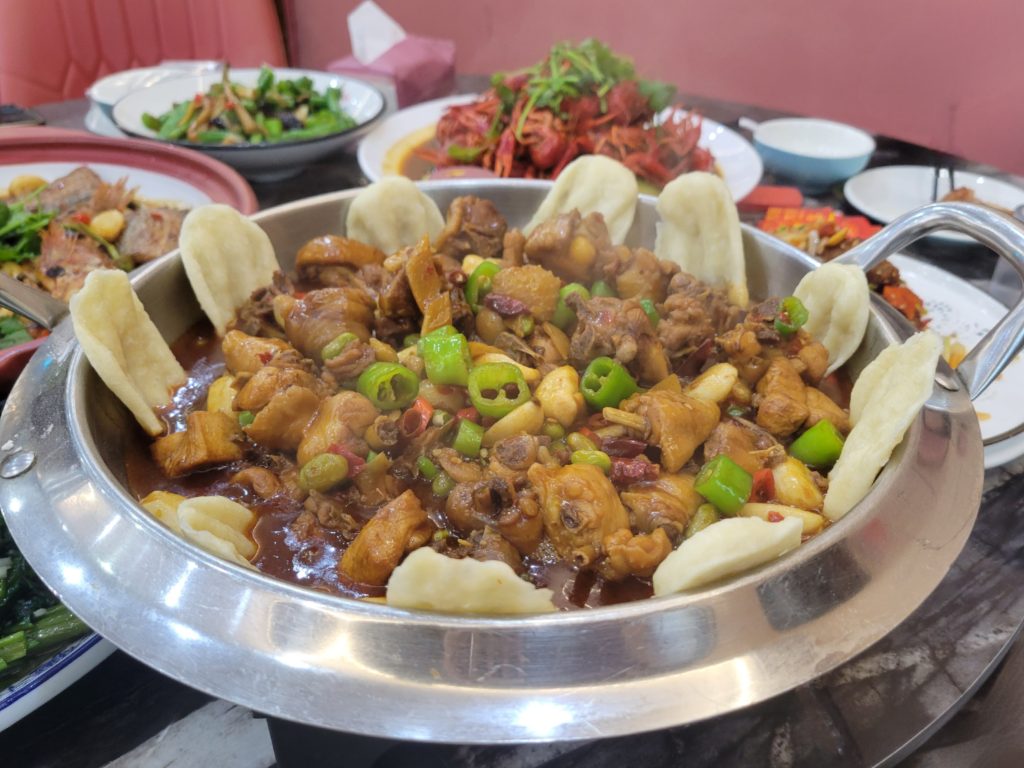
What Xuzhou diguo chicken is
Xuzhou diguo chicken (地锅鸡, dìguō jī) is a northern Jiangsu comfort classic: chicken pieces stewed in a wide, shallow iron pan with potatoes, peppers, and a savoury broth, often finished so a crisp potato or bread layer soaks up the gravy. English menus may say “iron pot chicken,” “ground pot chicken,” or “Xuzhou chicken stew.” It is not Cantonese soy sauce chicken and not dry chilli-fried chicken — think shared hot pan, soft meat, starchy sides, and a room that smells like garlic and spice. Point at the wide iron pot if the board is vague.
For first-timers it belongs with other hearty shared pots such as Beijing shuanyangrou and milder Jiangsu plates: communal, filling, and built for cool weather more than delicate tasting menus. If your first pot tastes only of salt with watery broth and dry chicken, try another diguo house rather than deciding Xuzhou cooking is “just stewed chicken.” City context lives in the Xuzhou travel guide; this piece focuses on ordering and first-timer expectations.
Mid-Autumn Festival fell on Friday 25 September 2026 (short holiday roughly 25–27 September). Today 30 September 2026 is the last ordinary workday before Golden Week. National Day Golden Week runs roughly 1–7 October 2026, with a makeup workday on Saturday 10 October 2026 per State Council notice 国办发明电〔2025〕7号. Diguo rooms stay busy on holiday dinners — go earlier, or book when the restaurant offers reservations. Pair a pot with a calm museum morning or a short city walk so you arrive hungry, not rushed.
Pot, potatoes, and what “good” looks like
Good diguo chicken arrives bubbling in a wide pan. Meat should look browned at the edges and tender at the bone; potatoes should be soft enough to cut with chopsticks and stained with gravy. Broth should read savoury chicken, garlic, and spice — not only chilli oil or only salt water. Some houses tuck a flatbread or pancake under or beside the stew so starch catches the sauce; others lean on potatoes alone. Aroma should be inviting from a few metres away.
Common formats: whole-table iron pot for two to four, half portions in smaller pans, and set meals with cold dishes and beer. Hotel Chinese restaurants may serve a milder plated stew for a cautious first try. Tourist rooms sometimes over-chilli for “famous heat” — ask for mild if you need it.
Do not treat every floating green pepper as optional decoration; say 不要辣 or 微辣 before the kitchen fires the pot if you are spice-sensitive.
How to order without guessing
Useful phrases:
- 地锅鸡 — diguo / iron pot chicken
- 一份 / 二至三人份 — one portion / for two to three people
- 微辣 / 中辣 / 不要辣 — mild / medium / no chilli
- 多加点土豆 — extra potatoes
- 要饼 / 要馒头 — want flatbread / steamed buns when offered
- 鸡腿多一点 — more drumsticks when the house can choose cuts
- 不要太咸 — not too salty
Point at wall photos if English boards are thin. Confirm whether the price is per pot size. A small pot plus a vegetable dish and rice or bread can feed two. Large pots for four need pacing — diguo is filling.
Payments: Alipay / WeChat Pay. Maps need data before suburban diguo houses. Didi for foreign visitors helps if the best pots sit outside the oldest tourist core.
Taste notes for first bites
Expect tender chicken, soft potatoes, savoury gravy, garlic warmth, and optional chilli heat. The starch layer should taste of soaked broth, not raw flour. The pot should not taste only of oil. Freshly cooked tableside heat beats lukewarm banquet trays.
Diguo chicken is usually a shared dinner centrepiece, not a walking snack. Hungry travellers can add a simple cold dish; stacking diguo plus full hotpot etiquette the same night is ambitious. Compare later with Nanjing salted duck on a Jiangsu loop so brine elegance and iron-pot comfort stay distinct in memory.
Etiquette and practical manners
- Eat with chopsticks and a spoon for gravy; share from the centre pot carefully.
- Use the serving chopsticks or spoon if the table provides them.
- Keep bags and phones off the hot pan rim.
- Finish what you can; leftover bones go on the bone plate.
- Do not tip the entire pot toward yourself in a way that floods others’ rice bowls.
Busy diguo rooms are loud and friendly. Steam and chilli oil can cling to clothes — dress for dinner, not a white-shirt photoshoot. If you need milder heat, say so before the kitchen starts, not after the pot is already red.
Where to try (types of venues, not a fake list)
Look for specialist diguo restaurants with wide iron pans in the dining room, a steady local crowd, and potatoes that look freshly stewed rather than reheated. Neighbourhood houses outside the flashiest tourist strip often cook the everyday style. Hotel Chinese restaurants can plate a safer, milder version for a first try. Empty neon rooms that only advertise “iron pot chicken” in English can be hit-or-miss — eat when you are hungry, not when you are rushed.
Chain diguo brands exist; quality varies by outlet. One excellent pot does not require a three-restaurant crawl. Diguo chicken, a vegetable plate, and a short evening walk can be enough.
Common mistakes
- Ordering the largest pot for two people and then wasting half
- Asking for maximum chilli before you know the house heat scale
- Skipping potatoes or bread and then calling the meal “only meat”
- Scheduling a hard HSR departure immediately after a leisurely diguo dinner
- Mixing diguo with a second heavy hotpot the same night without pacing
- Assuming every iron-pot chicken is the same Xuzhou gravy style
First-timer checklist
1. Confirm diguo chicken (地锅鸡), not dry-fried chicken.
2. Set spice level before the kitchen starts.
3. Order potatoes or bread to catch the gravy.
4. Share a pot sized for your group.
5. Keep holiday timing slack near Golden Week.
FAQs
Is it spicy? Often medium; mild is easy if you ask early.
Bones? Yes — traditional cuts are bone-in.
Enough for two? A small pot plus sides usually works; ask staff.
Kids? Often workable if spice is mild and bones are managed.
Same as claypot rice chicken? Related comfort idea, different vessel and Jiangsu seasoning.
Pairing Xuzhou days without stomach overload
A classic mistake is diguo chicken plus fried snacks plus late-night barbecue before midnight. Pick a lane: diguo as the dinner centrepiece after a museum or park morning, or a lighter noodle lunch — not every icon in one day. Tea or plain soup helps. If you still want meicai kourou on a broader Huaiyang–Jiangsu tasting trip, save that plate for another meal.
Cool autumn evenings are ideal for iron-pot steam. Dry nights after clear days also suit. Carry a light layer; restaurant air-conditioning can feel icy after outdoor walking.
Allergies, dietary notes, and polite refusals
Chicken is central. Shared kitchens may use soy, garlic, chilli, or sesame oil — ask if you have allergies. Cross-contact is possible in busy diguo houses. Potatoes and wheat bread are common starch partners.
Polite refusal script: smile, point, and say 我不要这个 for a side you dislike, or 不要辣 for no chilli. Staff are used to spice customisation within reason. Tipping culture is not the same as in many Western restaurants; follow local payment norms via Alipay or WeChat.
Holiday crowds and pacing
Near Mid-Autumn and Golden Week, build slack into every plan. A delayed train plus a famous diguo queue plus a timed ticket is the classic stress triangle. Choose two food priorities per day, not five. If rain arrives, indoor diguo houses are the point of the meal anyway. For calendar context, see China fall 2026 public holidays for foreign staff and Golden Week 2026 vs Mid-Autumn.
Carry tissues, hand sanitiser, and a power bank. Busy venues stretch toilet lines on holidays. Drink water even when the air feels cool. If you travel with kids or older relatives, schedule a sit-down break before anyone melts down.
Screenshot the Chinese name 地锅鸡 before you lose signal in a basement dining room. When staff hold up fingers, confirm whether the number is price, pot size, or wait-time. Smiling confusion is normal; rushing creates wrong orders.
Lovely China was founded in 2025 to publish practical English guides for travellers and expats. Questions or a broken link: [email protected].
Before you go (quick mental rehearsal)
Know the Chinese name, set spice and pot size, ask for potatoes or bread, share carefully from the hot pan, and leave buffer before trains. That rehearsal prevents most first-timer stress. Lovely China founded 2025 — [email protected].