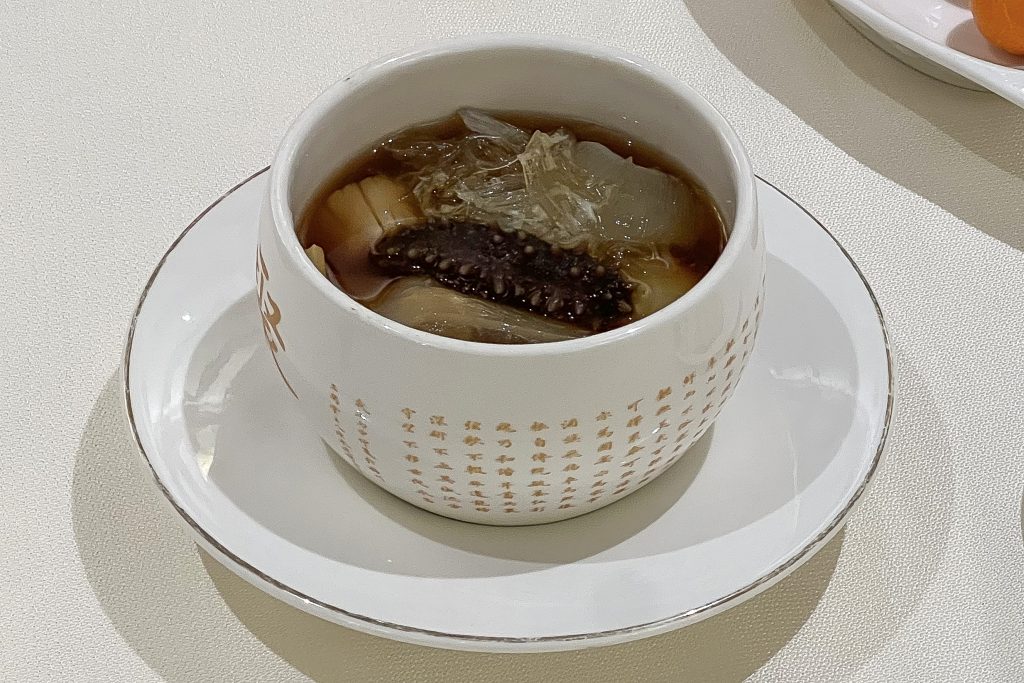
What Fujian fotiaoqiang is
Fotiaoqiang (佛跳墙, Fótiàoqiáng) is a Fujian banquet classic: a rich, slow-simmered soup traditionally sealed and cooked in a clay jar, filled with layered seafood and meat delicacies so the broth tastes deep and fragrant. The colourful English name “Buddha Jumps Over the Wall” comes from a story that the aroma was tempting enough to make even a meditating monk leap a wall — not from a religious recipe requirement. English menus may say “Buddha Jumps Over the Wall,” “Buddha’s Temptation,” or “fotiaoqiang.” Point at the sealed jar or the dark rich soup if the board is vague.
For first-timers it sits with other special-occasion Fujian plates rather than everyday street bowls. An earlier site guide covers a related overview at Fujian Buddha Jumps Over the Wall; this piece focuses on ordering, pacing, and Golden Week dining practicalities for English travellers. If your first serving tastes only of heavy salt with mushy seafood, try another reputable Min cuisine kitchen rather than deciding Fujian banquets are “too much.” Pair later with lighter Xiamen or Fuzhou noodles such as shacha noodles so the trip stays balanced.
Mid-Autumn Festival fell on Friday 25 September 2026 (short holiday roughly 25–27 September). Ordinary workdays were 28–30 September. Today 1 October 2026 is National Day, the first day of Golden Week (roughly 1–7 October 2026), with a makeup workday on Saturday 10 October 2026 per State Council notice 国办发明电〔2025〕7号. Banquet restaurants and hotel Chinese dining rooms pack tightly on holiday evenings — reserve when you can, or choose lunch seatings when rooms breathe. Treat fotiaoqiang as a planned meal, not a last-minute grab between two timed tickets.
Jar, broth, and what “good” looks like
Good fotiaoqiang arrives as a deep amber to brown broth with a layered aroma of dried seafood, mushrooms, and long simmer. Ingredients traditionally may include abalone, sea cucumber, scallops, fish maw, tendons, ham, and mushrooms — exact lists vary by restaurant and season. Many modern kitchens offer versions that adjust costly or sensitive ingredients; ask what is in today’s jar rather than assuming a fixed museum recipe. Texture should feel rich but still spoonable, not gluey.
Hotel Chinese restaurants and established Fujian houses often present the jar at the table before portioning — a useful first-timer format. Tourist menus sometimes sell a simplified cup that is closer to seafood stew; that can still be a fair tasting if the broth tastes clean. Do not judge the dish only by the number of luxury names on the English menu.
Watch whether locals share small bowls from a central jar. A steady reservation book is a better signal than neon English “most expensive soup” signs alone.
How to order without guessing
Useful phrases:
- 佛跳墙 — fotiaoqiang / Buddha Jumps Over the Wall
- 一份 / 一位 — one portion / per person serving
- 小份 / 品尝装 — small / tasting size when offered
- 今天有什么料 — what ingredients are in today’s jar
- 不要太咸 — not too salty
- 配米饭 — with rice
- 几位用 — for how many people (helps staff size the jar)
- 预订 — reservation
Point at menu photos if English boards are thin. Confirm whether the price is per person or per jar. One tasting cup can be enough for first try; a full jar is usually for sharing. Ask about advance order time — some kitchens need hours.
Payments: Alipay / WeChat Pay. Maps need data before old Fuzhou or Xiamen lanes. Didi for foreign visitors helps between hotel and banquet restaurants after dark.
Taste notes for first bites
Expect deep umami broth, soft seafood textures, and a finish that is richer than ordinary clear soup. Heat level is usually mild. The bowl should not taste only of salt or dried-fish funk. Freshly opened jars beat reheated cups that sat on a steam table too long.
Fotiaoqiang is often a banquet opener or centrepiece shared among several people, not a street snack. Hungry travellers can add rice and a light vegetable; stacking a full jar plus heavy night-market seafood and lion’s head meatballs in one dehydrated evening is ambitious.
Etiquette and practical manners
- Wait for the host or server to open and portion the jar at formal tables.
- Use the serving spoon for the shared pot; use your own spoon for your bowl.
- Sip broth first, then try solid pieces — do not fish only for abalone if sharing.
- Keep bags off banquet tablecloths.
- Finish what you can; leftover rich broth is fine to leave.
- Photograph once when the jar opens; then eat while hot.
Busy Fujian banquet rooms are friendly but formal compared with street stalls. Asking for a small tasting portion is normal for first-timers. One quiet photo is fine; a loud “luxury flex” video at a neighbouring family table is not.
Where to try (types of venues, not a fake list)
Look for established Fujian / Min cuisine restaurants and hotel Chinese restaurants that list 佛跳墙 clearly and can explain today’s ingredients. Fuzhou houses with long local reputations and Xiamen banquet kitchens are common contexts. Neighbourhood everyday canteens may not cook a true jar version — ask before you sit down for a special-occasion dish. Tourist strips that only advertise the English nickname without Chinese characters can be hit-or-miss.
Chain and hotel brands exist; quality varies by outlet. One careful tasting portion does not require a three-restaurant crawl. Fotiaoqiang, rice, greens, and a short evening walk can be enough.
Common mistakes
- Ordering a full banquet jar for one person with no share plan
- Expecting a spicy Sichuan-style soup and then calling Fujian broth “bland”
- Arriving without a reservation on Golden Week evening
- Focusing only on trophy ingredients and ignoring broth quality
- Scheduling a hard HSR departure immediately after a leisurely banquet
- Mixing a heavy jar soup plus full late-night barbecue without pacing
First-timer checklist
1. Confirm 佛跳墙 and ask what is in today’s jar.
2. Start with a small / per-person tasting if available.
3. Reserve on National Day and Golden Week evenings when you can.
4. Share from the jar; taste broth first.
5. Keep holiday transport slack after a long meal.
FAQs
Is it always the same recipe? No — ingredient lists and richness vary by restaurant and season.
Is it spicy? Usually mild; flavour is umami-rich rather than chilli-hot.
Kids? Rich and full of textures — offer a small spoon of broth first; watch seafood pieces.
Dietary limits? Often contains shellfish, cured ham, and other animal products — ask in detail before ordering.
Do I need a banquet? No — many restaurants sell smaller tasting servings for travellers.
Pairing Fujian evenings without overload
A classic mistake is fotiaoqiang plus multiple seafood platters plus late dessert before an early flight. Pick a lane: jar soup as the star of dinner, or a lighter noodle lunch and a separate banquet night — not every Min icon in one sitting. Tea or plain water helps after a salty-rich finish. Cooler hotel AC after warm coastal evenings still calls for a light layer.
Allergies, dietary notes, and polite refusals
Shellfish, dried seafood, mushrooms, cured pork/ham, and collagen-rich ingredients are common. Soy and sesame can appear in seasoning. Cross-contact is normal in banquet kitchens. If you avoid certain animal products or have shellfish allergies, ask before the jar is opened — substitutions are not always possible at the last minute.
Polite refusal script: smile, and say 我吃不了海鲜 (I cannot eat seafood) or ask 有没有小份 for a small portion. Staff are used to cautious first-timers. Tipping culture is not the same as in many Western cafés; follow local payment norms via Alipay or WeChat.
Holiday crowds and pacing
On National Day and through Golden Week, build slack into every plan. A delayed metro or airport ride plus a banquet reservation window plus a timed ticket is the classic stress triangle. Choose two food priorities per day, not five. If rain arrives, hotel Chinese restaurants and indoor Min cuisine houses are a solid plan B. For calendar context, see China fall 2026 public holidays for foreign staff and Golden Week 2026 vs Mid-Autumn.
Carry tissues, hand sanitiser, and a power bank. Busy venues stretch toilet lines on holidays. Drink water even when the air feels cool. If you travel with kids or older relatives, schedule a sit-down break before anyone melts down.
Screenshot the Chinese name 佛跳墙 before you lose signal in a banquet basement. When staff hold up fingers, confirm whether the number is price, portions, or wait-time. Smiling confusion is normal; rushing creates wrong orders.
Lovely China was founded in 2025 to publish practical English guides for travellers and expats. Questions or a broken link: [email protected].
Before you go (quick mental rehearsal)
Know the Chinese name, ask today’s ingredients, prefer a small tasting on first try, reserve on holiday evenings when you can, and leave buffer before trains or flights. That rehearsal prevents most first-timer stress. Lovely China founded 2025 — [email protected].