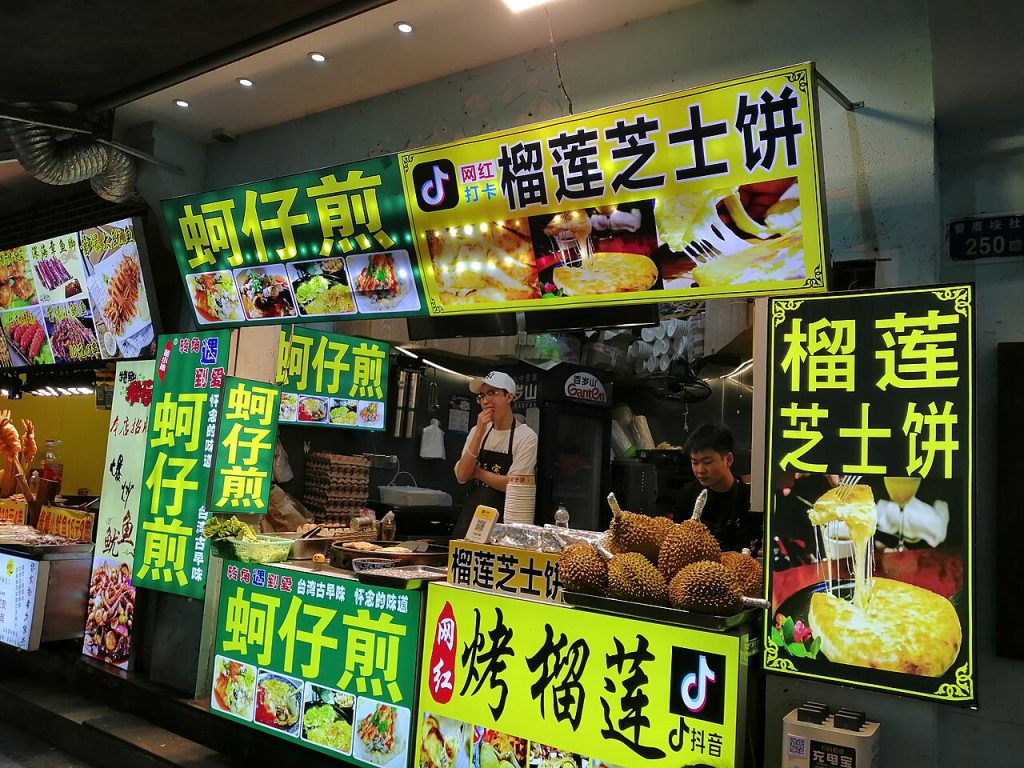
What Fujian oyster omelette (hailizhao) is
Fujian oyster omelette (海蛎煎 / 蚵仔煎, hǎilì jiān / ó-á-chian) is a coastal classic: small oysters set into a batter of egg and starch (often sweet potato or similar), fried on a flat griddle until the edges crisp and the centre stays soft, then finished with sauces such as sweet chilli, garlic sauce, or a house mix, plus coriander. English menus may say “oyster omelette,” “oyster pancake,” “hailijian,” “o-a-chian,” or “or luak” (related Chaozhou/Chaoshan names). Point at the round griddle cake studded with oysters if the board is vague.
For first-timers it sits beside other Fujian bites such as Xiamen shacha noodles, Fuzhou fish balls, and banquet-level fotiaoqiang: everyday, briny, and perfect after a seaside walk. This guide focuses on stall ordering, texture cues, and Golden Week pacing without inventing prices.
Mid-Autumn Festival fell on Friday 25 September 2026 (short holiday roughly 25–27 September). Ordinary workdays were 28–30 September. 1 October 2026 was National Day, the first day of Golden Week. Today 2 October 2026 is day two of Golden Week (roughly 1–7 October 2026), with a makeup workday on Saturday 10 October 2026 per State Council notice 国办发明电〔2025〕7号. Night-market lines swell on holiday evenings — go earlier, share while you wait, or try mid-afternoon stalls that stay open. Pair with Xiamen Gulangyu autumn tips, Quanzhou maritime heritage walks, or Fuzhou Three Lanes and Seven Alleys.
Batter, oysters, and what “good” looks like
Good hailizhao shows crisp lace edges, soft eggy pockets, and oysters that taste clean and briny — not fishy-sour. Aroma should read egg, starch, and sea, plus coriander if you like herbs. Texture contrasts: crunchy rim, tender centre. Sauces vary; a light sweet-chilli or savoury garlic drizzle is common. Some stalls pack oysters generously; others are egg-forward — watch the griddle before you order.
Hotel restaurants may serve a neater, milder plate ideal for a first try. Tourist night markets sometimes over-oil for drama — ask for 少油 if you are sensitive. Do not confuse oyster omelette with deep-fried oyster fritters or battered single oysters on sticks. Watch whether locals eat immediately while the edges still crackle. A steady local queue is a better signal than the tallest English neon alone.
How to order without guessing
Useful phrases:
- 海蛎煎 / 蚵仔煎 — oyster omelette
- 一份海蛎煎 — one portion
- 多加点海蛎 — extra oysters when offered
- 少油 / 脆一点 — less oil / crispier
- 酱少一点 / 酱分开 — less sauce / sauce on the side
- 不要香菜 — no coriander
- 微辣 / 不辣 — mild / no chilli in the sauce
- 打包 — takeaway (best eaten soon)
Point at the griddle cake you want if several sizes exist. Confirm sauce style. One portion is often a snack or light meal; add shacha noodles or a soup if you need more.
Payments: Alipay / WeChat Pay. Maps need data in village-style coastal lanes. Didi for foreign visitors helps back to the hotel after night markets.
Taste notes for first bites
Expect briny oyster pops, eggy softness, starch crisp, and sweet-savoury sauce. Heat level depends on the sauce — ask for 不辣 if needed. The cake should not taste only of oil. Fresh-off-the-griddle beats lukewarm takeaway every time.
Hailizhao is classic solo night-market food or a shared snack for two. Hungry travellers can add seafood soup later; stacking omelette, full seafood banquet, and dessert stalls in one dehydrated hour is ambitious.
Etiquette and practical manners
- Stand aside after ordering so the next customer can see the griddle.
- Eat while hot; the charm is the crisp edge.
- Keep chopsticks or forks practical — some stalls offer both.
- Bin napkins and sticks in the provided trash, not on the tracks of narrow lanes.
- One quiet photo of your own plate is fine; blocking the cook’s flip is not.
- Coriander is optional — say so early.
Busy coastal stalls are friendly and fast. If sauce is too sweet, ask for less next time. Humid autumn holiday evenings suit outdoor stools; carry mosquito awareness and a light layer for air-conditioned mall backups.
Where to try (types of venues, not a fake list)
Look for Fujian coastal night markets, village food streets, and long-running snack stalls that fry to order with a visible oyster bin and steady local turnover. Xiamen neighbourhoods, Quanzhou snack streets, and Fuzhou snack floors commonly serve versions. Hotel restaurants can be fine for a cautious first plate. Empty stalls with only tourist-language boards and pre-fried stacks are riskier — eat when the griddle is active.
One excellent omelette does not require a coastline-wide crawl. Omelette, tea, and a short seaside walk can be enough. For first-visit framing see Xiamen after Golden Week and Fuzhou for English speakers.
Common mistakes
- Waiting so long for photos that the edges go soft
- Ordering maximum sauce before tasting
- Expecting huge Pacific oysters instead of small local ones
- Scheduling a ferry boarding immediately after a greasy snack without tissues
- Assuming every “oyster pancake” worldwide is the same starch-egg Fujian style
- Mixing raw shellfish fears with this fully cooked griddle dish without asking how it is prepared
First-timer checklist
1. Confirm 海蛎煎 / 蚵仔煎 fried to order.
2. Ask for sauce on the side or 少油 if sensitive.
3. Eat while the edges are crisp.
4. Skip coriander if you dislike it.
5. Keep holiday night-market slack on Golden Week evenings.
FAQs
Is it fully cooked? Proper stalls cook oysters through on the griddle — watch the cook if you are nervous.
Is it spicy? Sauce-dependent; ask for 不辣.
Kids? Often popular — check bones are not an issue (oysters are small) and sauce sugar.
Shellfish allergy? Avoid — oysters are central.
Gluten? Starch may be sweet potato; sauces and shared griddles vary — ask.
Difference from Chaozhou or Taiwan versions? Same family with local names and sauce habits; Fujian coastal stalls are the focus here.
Pairing Fujian coastal days without overload
A classic mistake is Gulangyu walking plus oyster omelette plus full seafood hotpot plus dessert before an early high-speed train. Pick a lane: snack omelette after sightseeing, or a proper seafood dinner — not every icon in one evening. Tea or plain water helps after fried starch. Mild autumn humidity still rewards hand sanitiser and tissues.
Allergies, dietary notes, and polite refusals
Oysters and egg are central. Starch, soy-based sauces, garlic, and chilli are common. Shared griddles contact other seafood.
Polite refusal script: smile and say 酱分开 or 不要香菜. Staff are used to first-timers pointing at the griddle. Tipping culture is not the same as in many Western cafés; follow local payment norms via Alipay or WeChat.
Holiday crowds and pacing
On Golden Week day two, coastal night markets pack early. Build slack into every plan. A delayed ferry plus a famous snack queue plus a timed ticket is the classic stress triangle. Choose two food priorities per day, not five. If rain arrives, indoor food courts with omelette stalls are a solid plan B. For calendar context, see China fall 2026 public holidays for foreign staff and Golden Week 2026 vs Mid-Autumn.
Carry tissues, hand sanitiser, and a power bank. Busy venues stretch toilet lines on holidays. Drink water even when the air feels warm and damp. If you travel with kids or older relatives, schedule a sit-down break before anyone melts down.
Screenshot the Chinese name 海蛎煎 before you lose signal in a village lane. When staff hold up fingers, confirm portions versus wait-time. Smiling confusion is normal; rushing creates wrong sauce piles.
Lovely China was founded in 2025 to publish practical English guides for travellers and expats. Questions or a broken link: [email protected].
Before you go (quick mental rehearsal)
Know the Chinese name, watch a fresh griddle cook, control the sauce, eat while crisp, and leave buffer before ferries or trains. That rehearsal prevents most first-timer stress. Lovely China founded 2025 — [email protected].