What Tibetan yak butter tea is
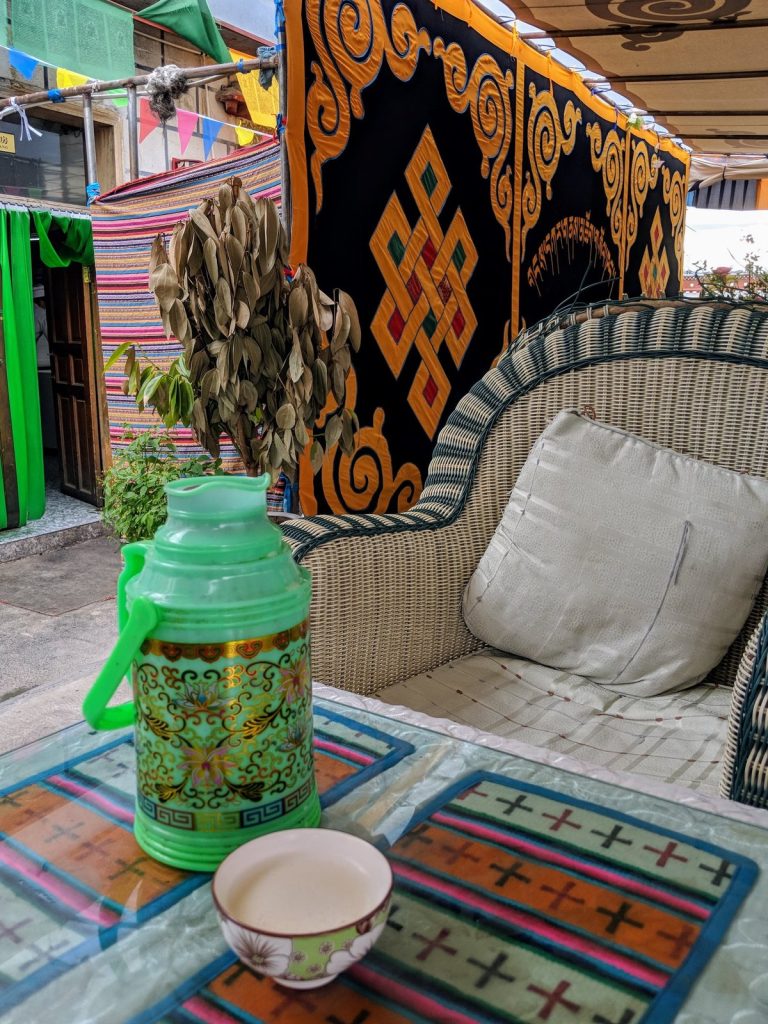
Tibetan yak butter tea (酥油茶, sūyóuchá) — also called po cha in Tibetan contexts — is a savoury, warm tea churned or blended with tea, yak butter (or butter substitutes), and salt. It is not sweet milk tea. English menus may say “butter tea,” “yak butter tea,” “Tibetan tea,” or “suyoucha.” Point at the thermos poured into a small bowl or cup with a creamy, tea-coloured surface if the board is vague. It often accompanies tsampa (roasted barley flour) and sits inside broader notes on Tibetan villages, festivals, and food.
For first-timers planning highland travel such as Qomolangma / Everest Base Camp approaches from Tibet, butter tea is everyday hospitality as much as a drink: warming, caloric, and social. This guide focuses on taste expectations, etiquette, and Golden Week pacing without inventing prices or fake monastery café lists. Prices vary by teahouse and hotel; check menus and ask staff.
Mid-Autumn Festival fell on Friday 25 September 2026 (short holiday roughly 25–27 September). Ordinary workdays were 28–30 September. 1 October 2026 was National Day, the first day of Golden Week. Today 3 October 2026 is day three of Golden Week (roughly 1–7 October 2026), with a makeup workday on Saturday 10 October 2026 per State Council notice 国办发明电〔2025〕7号. Highland teahouses and tourist cafés fill on holiday mid-mornings — go earlier, or mid-afternoon when seats free up. Altitude, permits, and health come before any food checklist; follow current travel rules and your doctor’s advice.
Churn, thermos, and what “good” looks like
Good butter tea smells like tea and warm butter, not rancid fat. Texture is creamy-sipable rather than oily slick; salt should be present but not seawater. Colour is usually opaque tea-tan. Freshly poured cups beat pots that sat cooling for hours.
Hotel breakfast buffets may serve a milder, sometimes cow-butter version ideal for a cautious first sip. Tourist cafés sometimes oversalt or over-butter for “authentic shock” — ask for 淡一点 if you are sensitive. Do not confuse butter tea with sweet Hong Kong-style milk tea or with plain black tea. Watch whether locals keep cups topped up as hospitality. A busy neighbourhood teahouse with steady local turnover is a better signal than English-only neon alone.
How to order without guessing
Useful phrases:
- 酥油茶 — yak butter tea
- 一杯酥油茶 / 一碗酥油茶 — one cup / bowl
- 淡一点 / 少盐 — lighter / less salt
- 热的 — hot
- 糌粑 — tsampa (roasted barley flour; ask how to mix)
- 甜茶 — sweet tea (different drink — often milkier and sweet)
- 不要太油 — not too oily / buttery if they can adjust
- 打包 — takeaway (thermos spills — ask for a secure lid)
Point at thermos service if English boards are thin. Confirm butter tea versus sweet tea before pouring starts. One cup is a tasting; several cups with tsampa can become a small meal.
Payments: Alipay / WeChat Pay. Offline maps help when signal drops. Didi for foreign visitors works in some cities; highland transfers often need hotel or licensed operator help.
Taste notes for first bites (sips)
Expect salty tea, warm butter richness, and a comfort that feels closer to broth than to café latte. It may surprise sweet-tea drinkers on the first sip — take small sips. Heat and salt levels vary by house. Freshly poured tea beats lukewarm leftovers.
Butter tea is often a morning or afternoon hospitality drink with tsampa, bread, or cheese snacks — not a banquet centrepiece. Hungry travellers can add noodles later; stacking heavy banquet food plus endless butter tea the same dehydrated high-altitude afternoon is ambitious. Drink water too; tea is not a full hydration plan at altitude.
Etiquette and practical manners
- Accept a first pour politely; leaving a cup untouched can feel awkward in hospitality settings — a few sips show respect.
- Do not blow loudly across the bowl in quiet rooms.
- Follow the host’s lead on refills; saying you have enough is fine with a smile.
- Keep bags off narrow teahouse benches.
- Photography of people inside teahouses needs consent; one quiet cup photo is usually fine.
- Monastery and community rules vary — follow posted signs and guides.
Busy highland rooms are friendly but compact. If salt or richness hits hard, ask for lighter pours or switch to sweet tea / plain tea. Mind hot thermoses near kids’ elbows.
Where to try (types of venues, not a fake list)
Look for long-running Tibetan teahouses with 酥油茶 on the board, thermos service, and steady local turnover rather than empty rooms that only advertise “butter tea” in neon English. Hotel breakfasts can be fine for a cautious first cup. Peak tourist cafés on Golden Week day three can be hit-or-miss — drink when you want warmth, not when you are rushed between timed tickets.
One excellent cup does not require a city-wide crawl. Tea, tsampa, and a short acclimatisation walk can be enough.
Common mistakes
- Expecting sweet milk tea and then calling butter tea “wrong”
- Drinking only tea and skipping water at altitude
- Scheduling hard physical activity immediately after a huge rich breakfast
- Assuming every “Tibetan tea” board is the same salt-and-butter recipe
- Photographing worship or private households without permission
- Ignoring current permit, altitude, and health guidance for highland travel
First-timer checklist
1. Confirm 酥油茶 (not necessarily 甜茶).
2. Take small first sips; ask for 淡一点 if sensitive.
3. Drink water as well as tea at altitude.
4. Keep holiday seating and walk-time slack on Golden Week day three.
5. Pair with tsampa only when you have appetite and guidance on mixing.
FAQs
Is it sweet? Traditionally no — salted and buttery; sweet tea is a different order.
Yak butter only? Many places use yak butter; some use other butters — ask if it matters.
Kids? Mild cups can work — check salt and richness.
Lactose / dairy? Butter is central — often not suitable for dairy-free diets.
Caffeine? Tea base usually contains caffeine — ask if sensitive.
Vegetarian? Typically dairy and tea — no meat, but confirm add-ins.
Pairing highland days without overload
A classic mistake is endless butter tea plus heavy meat lunch plus a rushed high viewpoint before you have acclimatised. Pick a lane: tea as a warm morning pause, then gentle walking — not every icon in one afternoon. Cool autumn holiday air suits outdoor queues; carry layers for temperature swings.
Allergies, dietary notes, and polite refusals
Dairy (butter) and tea caffeine are central. Salt levels can be high. Shared kitchen traces vary. Ask clearly about dairy substitutes if offered.
Polite refusal or adjustment script: smile and say 淡一点 or 我喝甜茶. Staff and hosts are used to cautious first-timers. Tipping culture is not the same as in many Western cafés; follow local payment norms via Alipay or WeChat where they apply.
Holiday crowds and pacing
On National Day and through Golden Week day three, build slack into every plan. A delayed transfer plus a famous teahouse queue plus a timed ticket is the classic stress triangle. Choose two priorities per day, not five. If weather turns, indoor teahouses and hotel lounges are a solid plan B. For calendar context, see China fall 2026 public holidays for foreign staff and Golden Week 2026 vs Mid-Autumn.
Carry tissues, hand sanitiser, a power bank, and altitude-appropriate layers. Busy venues stretch toilet lines on holidays. Drink water even when the air feels cool and dry. If you travel with kids or older relatives, schedule sit-down breaks before anyone melts down.
Screenshot the Chinese name 酥油茶 before you lose signal. When hosts refill quickly, a polite smile and hand gesture can pause the pour. Smiling confusion is normal; rushing creates spills.
Lovely China was founded in 2025 to publish practical English guides for travellers and expats. Questions or a broken link: [email protected].
Before you go (quick mental rehearsal)
Know that butter tea is savoury, take small sips, drink water at altitude, respect hospitality customs, and leave buffer before transfers or timed tickets. That rehearsal prevents most first-timer stress. Lovely China founded 2025 — [email protected].