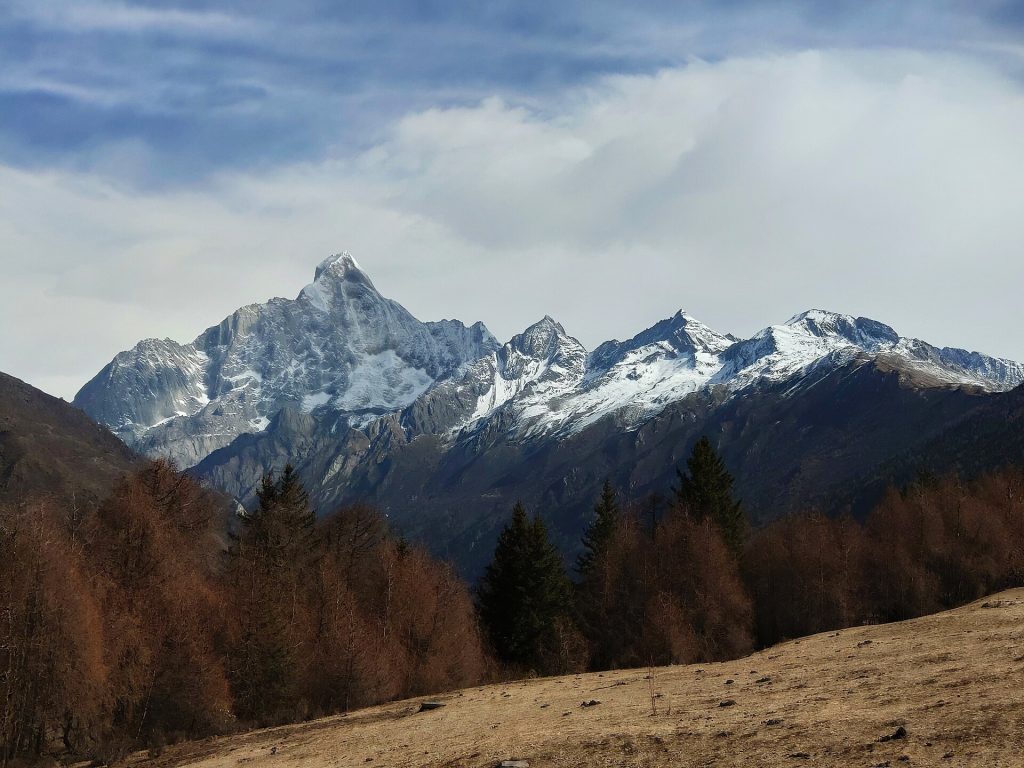
Why Mount Siguniang is a great late-autumn trip
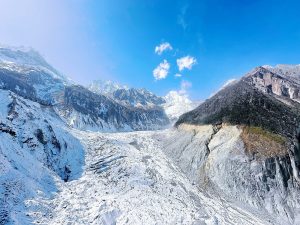
Mount Siguniang (四姑娘山, “Four Sisters Mountain”) is a range of snow peaks in Xiaojin County, Aba Prefecture, western Sichuan. It is one of the most rewarding mountain trips you can make from Chengdu without serious trekking experience, and it is at its most photogenic in autumn, when larch forests turn gold and rust under fresh snow.
According to the official Mount Siguniang Scenic Area website (sgns.cn), the highest of the four sisters, Yaomei Peak (幺妹峰), reaches 6,250 metres. It is the highest peak of the Qionglai Mountains and the second-highest mountain in Sichuan after Gongga. The scenic area says there are 85 snow peaks above 5,000 metres in the area, with modern mountain glaciers. Mount Siguniang became part of the Sichuan Giant Panda Sanctuaries World Heritage Site in 2006 and was rated a national 5A scenic area in February 2024.
Late October and November bring quieter valleys after the National Day holiday (1–7 October 2026), sharper views on clear days, and real cold. The scenic area’s own National Day notice described larches starting to turn yellow and maples reddening, and its news pages reported the first autumn snow. By late October and November the colour is more muted and the snow line drops, a different but very beautiful season.
The three valleys: which one to choose
The official site describes the scenic area as “three valleys and one mountain”: Shuangqiao Valley, Changping Valley and Haizi Valley, arranged west to east around the peaks. Each has its own ticket and gate.
Shuangqiao Valley (双桥沟): easiest and most varied
- More than 40 km long, with a road running to the far end and wooden boardwalks at viewpoints
- Valley entrance at about 2,900 m, rising to about 3,840 m at the red larch forest at the end
- The official site calls it the most developed valley and the one best suited to general visitors, with 17 viewing areas
Best for: first-timers, families, anyone worried about altitude, and photographers who want many peaks in one day without long hikes. You ride the sightseeing bus and get off at the stops that interest you.
Changping Valley (长坪沟): forest walk and classic hike
- About 29 km long
- According to the official site, you take a 7 km bus ride to the Lama Temple, then follow about 7 km of boardwalk and 5 km of dirt trail
- Known for old forest, the dead-tree beach (枯树滩), waterfalls and views of rock peaks such as Pomiu Peak
Best for: walkers who want a day on foot in the forest. Allow a full day.
Haizi Valley (海子沟): highest and hardest
- The highest of the three valleys, 19.2 km long, with its entrance in Siguniang town
- Its front section is high meadow, which the official site calls the best place to view and photograph Mount Siguniang
- The alpine lakes in the back section are at around 4,200 m; the official site says the trip there by horse is about 4 hours for 15 km
Best for: fit hikers who have acclimatised, and photographers who want the classic peak views. Not a good choice on your first day at altitude.
Altitude and cold: how to stay comfortable
Siguniang town and the valleys are high enough to cause altitude symptoms. The scenic area’s official advice is to avoid strenuous exercise and alcohol, rest if you feel unwell, and seek medical help if you develop headache, dizziness or difficulty breathing. Visitors with existing illnesses should travel only within their limits.
Practical tips:
1. Spend your first day in Shuangqiao Valley, which is the gentlest, and leave Haizi Valley for later.
2. Walk slowly, even on boardwalks.
3. Drink water and eat properly.
4. Dress for freezing mornings. The official notice warns of big day–night temperature differences. In late autumn, mornings are often below freezing.
5. Protect yourself from the sun. UV is strong at this altitude; bring sunscreen, sunglasses and a hat.
6. Watch for ice. After snow, boardwalks and trails can be slippery.
If you have already been to Kangding or other high places in western Sichuan, you will know how your body reacts. If not, take it easy.
Sunrise on the peaks: “golden mountain” views
Chinese photographers come to Siguniang for rizhao jinshan (日照金山), the moment when first sunlight turns the snow peaks gold. The official National Day notice described it as one of the reasons visitors come. You do not need to hike in the dark for it: many guesthouses in Siguniang town and nearby viewpoints face the peaks. Ask your host where the best nearby view is and what time the light reaches the summit.
Success depends entirely on weather. Clouds often hide the peaks, especially after a storm. Plan at least two mornings if this view matters to you.
Booking tickets and opening hours
The scenic area uses advance booking, staggered entry and visitor caps. When ticket sales reach the maximum capacity for the day, sales stop.
- Official booking channels: the Aba Tourism website (abatour.com), its WeChat mini-program, and the official Mount Siguniang Scenic Area WeChat account.
- Ticket hotline: 400-088-6969 (option 1) for online tickets; the official site also lists separate phone lines for each valley.
- Opening hours during National Day 2026: Shuangqiao Valley 7:00–15:30; Changping and Haizi valleys 7:00–15:00.
Hours can change after the holiday and in winter, so check the official site or WeChat account the day before. Online systems often expect a Chinese ID; if you have trouble booking with a passport, ask your guesthouse or the ticket office for help, and carry your original passport. For more on real-name booking, see our attraction reservations guide.
Getting to Mount Siguniang from Chengdu
By bus
According to the scenic area’s National Day notice, buses run from Chengdu’s Chadianzi bus station and from Dujiangyan to Siguniang town. Tickets are booked through the Sichuan coach ticketing website (scqckypw.com), and departure times can vary. Book a day ahead and check the departure station carefully.
By car
The official notice lists several driving routes. The shortest is the “China Panda Avenue” route: Chengdu – Rongchang Expressway – exit at Yingxiu – Wolong – Mount Siguniang, about 175 km in total. Other routes go via Lixian, Baoxing and Jiajin Mountain, or via Ma’erkang, and the full western Sichuan loop runs via Kangding, Xinduqiao and Danba.
The official advice for drivers: check your vehicle, slow down on mountain bends, do not drive at night, and watch the weather. In late autumn, snow and ice on high passes can close or slow roads. Hiring a driver is the safest choice for most visitors.
Flying into Chengdu? See our Chengdu Tianfu airport arrival guide and Didi for foreign visitors.
A relaxed three-day late-autumn plan
1. Day 1: Drive or take the bus from Chengdu. Arrive in Siguniang town, eat, rest and go to bed early.
2. Day 2: Shuangqiao Valley by sightseeing bus. Stop at a few viewpoints, walk the boardwalks, and be back in town before dark.
3. Day 3: Early sunrise view from town if it is clear, then Changping Valley as far as you feel comfortable, or a short walk into the Haizi Valley meadows for the classic peak view. Return to Chengdu, or continue west.
Rules worth knowing
The official notices are clear about behaviour in the nature reserve:
- Stay on marked routes and boardwalks; do not climb over railings.
- No overnight stays, smoking or open fires in the scenic area.
- Do not walk on frozen streams or ice, swim, or feed fish and ducks.
- No pets.
- Children must stay with adults.
What to pack for Siguniang in late autumn
- Down jacket, thermal base layer, hat and gloves
- Waterproof shell
- Hiking shoes with good grip
- Sunscreen, sunglasses and lip balm
- Water, snacks and any personal altitude medication your doctor recommends
- Passport, phone and power bank (cold drains batteries quickly)
Our China autumn packing list has more detail.
FAQ
Is Mount Siguniang worth visiting in November?
Yes, if you are prepared for cold. The peaks are often clearer and the valleys quieter, though most autumn colour fades by November and snow is more likely.
Which valley is best for first-timers?
Shuangqiao Valley. It has a road and sightseeing bus to the end, plenty of viewpoints, and less walking.
How high is Mount Siguniang?
The main peak, Yaomei Peak, is 6,250 m, according to the official scenic area website. Shuangqiao Valley runs from about 2,900 m to 3,840 m, and Haizi Valley’s lakes are around 4,200 m.
Do I need to book tickets?
Yes, booking is recommended and the scenic area caps daily visitors. Use abatour.com or the official WeChat channels and carry your passport.
Can I visit Mount Siguniang as a day trip from Chengdu?
It is possible but rushed. One or two nights in Siguniang town is much better, both for acclimatisation and for sunrise.
Lovely China was founded in 2025 to help English-speaking travellers and expats plan calmer, deeper trips in China. Spotted an outdated detail? Email [email protected].
Cover photo: Johannes Böckh / Wikimedia Commons (CC BY-SA 3.0). The four peaks of Mount Siguniang above autumn larch forest.