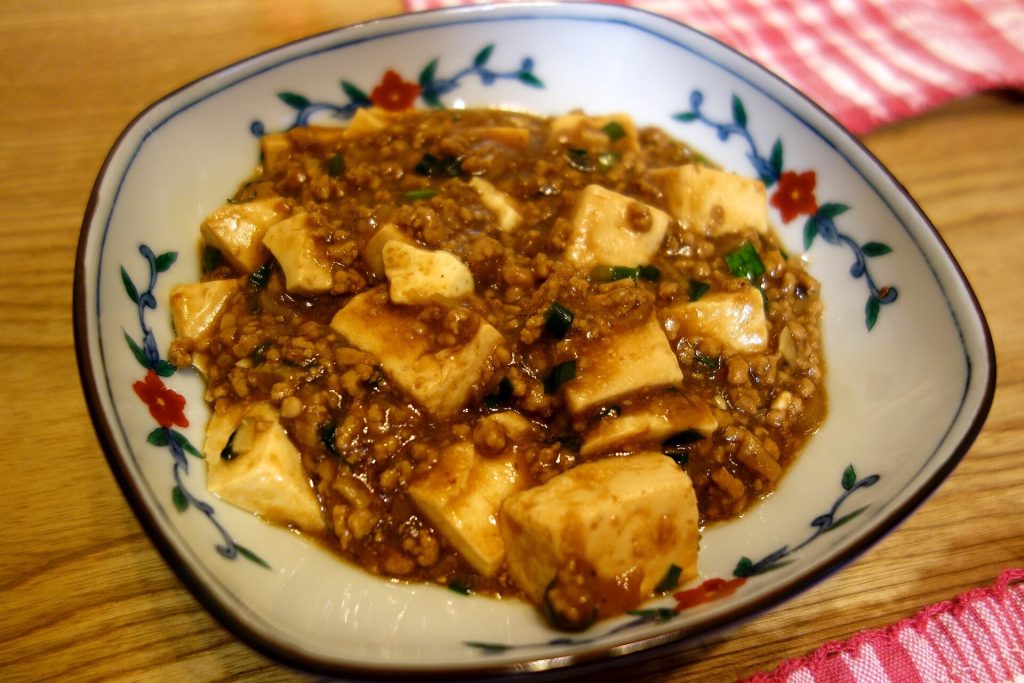
If you are planning a trip to China this autumn—whether you are navigating transit apps or settling into a buzzing local eatery in Chengdu—few dishes demand your attention quite like Mapo Tofu (麻婆豆腐, mápó dòufu). It is fiery, savory, aromatic, and unlike almost anything else in Western comfort food. But for a first-timer, walking into a Sichuan restaurant can feel like stepping into a flavor minefield. This guide breaks down what makes Mapo Tofu so special, how to handle the legendary numbing spice, how to order it safely (especially if you have dietary restrictions), and what to pair it with for the ultimate meal.
What Is Mapo Tofu? The Anatomy of a Classic
Originating from Chengdu in the late 19th century, traditional Mapo Tofu is a masterclass in contrasting textures and bold Sichuan flavors. Silken blocks of soft tofu are simmered in a rich, brick-red sauce built on a foundation of:
* Doubanjiang (豆瓣酱): Fermented broad bean and chili paste from Pixian, which gives the dish its deep umami backbone and crimson hue.
* Minced Meat: Traditionally pork or beef, fried until crispy and caramelized to add textural contrast.
* Chili Oil and Chili Flakes: For straight-line, searing heat.
* **Sichuan Peppercorn (Huajiao, 花椒):** The magic ingredient that changes everything.
The Magic (and Shock) of Huajiao
If you have never experienced authentic Sichuan cuisine, the defining characteristic of Mapo Tofu isn’t just that it’s spicy—it’s that it makes your tongue vibrate. This is the work of huajiao, or Sichuan peppercorn. Rather than burning your throat like a jalapeño, high-quality huajiao produces a tingling, numbing sensation (known in Chinese as málà—麻辣, where má means numb and la means spicy). To understand the science, history, and how to prepare your palate for this unique culinary phenomenon, check out our deep dive on Sichuan Peppercorn (Huajiao) Explained: Why Your Mouth Goes Numb.
What to Expect at Sichuan Restaurants
When you order Mapo Tofu in China, expect it to arrive piping hot, swimming in a glistening red chili oil pool, and topped with freshly ground green or red Sichuan peppercorn powder and chopped green onions.
Is It Vegetarian? (A Crucial Warning)
Many travelers assume tofu dishes are automatically vegetarian. In traditional Chinese cooking, Mapo Tofu is rarely vegetarian. It almost always incorporates minced pork or beef as a fundamental flavor base. If you do not eat meat, do not despair! You can ask for a vegetarian version by learning a few key phrases, or look for restaurants that explicitly serve Sù Máopó Dòufu (素麻婆豆腐).
How to Ask for Milder Spice
Authentic Sichuan restaurants do not hold back on the chili oil or peppercorns. If you have a sensitive palate, ordering “standard” (zhèngzōng, 正宗) might leave you reaching for water constantly. When ordering, you can request:
Micro-spice or less spicy: 微辣 (wēilà*)
Less numbing: 少麻 (shǎo má*)
No spicy / non-spicy if available: 不辣 (bú là* — though true Sichuan spots might look at you sideways, many tourist-friendly or modern spots can accommodate).
Step-by-Step Etiquette and Ordering Tips for Beginners
Diving into a sizzling plate of Mapo Tofu in its home province requires a bit of local know-how. Because the dish is designed to be intensely seasoned, knowing how to order, pace yourself, and handle the textures will transform your meal from an endurance test into an absolute culinary highlight.
Essential Ordering and Dining Guidelines
Check the meat base before ordering: If you keep a halal, kosher, or vegetarian diet, explicitly clarify the meat base with your server. Use translation apps to ask for beef-only (niúròu), pork-free (wú zhūròu), or entirely meatless (sùcài*) preparations.
* Never eat it on its own: Mapo Tofu is a flavor bomb meant to be eaten as a shared dish over rice. Taking a direct spoonful of straight Mapo Tofu without rice is a classic rookie mistake that will instantly overwhelm your tastebuds.
* Watch out for hidden temperatures: Because the dish is blanketed in a layer of chili oil, it acts as a thermal insulator. The inside of the silken tofu cubes will retain boiling heat long after the dish arrives at your table. Always blow gently on your first few bites.
* Embrace the communal style: In Sichuan dining, dishes are ordered to share. Pair your Mapo Tofu with lighter, vinegar-dressed dishes to balance out the heavy, oil-rich profile of the tofu.
* Mind the sauce distribution: When spooning Mapo Tofu over your rice, use a ladle to scoop up a balanced mix of tofu cubes, minced meat, and glossy sauce rather than just grabbing the solid pieces. The rice is designed to soak up that liquid gold.
Don’t drink cold water to fight the burn: If the málà heat gets overwhelming, cold water actually intensifies the capsicum burn and locks the oil onto your tongue. Opt for warm tea, soymilk (dòujiāng), or a sweet local plum juice (suānméitāng*) to cleanly reset your palate.
What to Order Alongside Mapo Tofu
Mapo Tofu is intensely flavored, oily, and salty—which means it is practically designed to be eaten with a massive side of plain white rice (mǐfàn, 米饭). The neutral rice cuts through the aggressive heat and absorbs the rich, savory sauce. To round out your table order a balanced spread of dishes:
1. A cooling vegetable dish: Stir-fried cabbage (cǎogū báicài) or smashed cucumber salad (pāi huángguā) with garlic and vinegar to reset your palate between bites.
2. A mild soup: Tomato and egg soup (fānqiè dàn tāng) acts as an essential fire extinguisher if the málà gets to be too much.
3. Local dumplings or noodles: To add variety to your carbohydrate intake.
Practical Tips for Your Culinary Adventure
Hunting down the best local mapo tofu spots across China’s historic quarters or modern alleyways requires a bit of digital preparation before you sit down to eat:
* Connectivity: Make sure you have a reliable data connection so you can look up menus, use translation apps, and pull up restaurant reviews on the go. Grab a China SIM and eSIM for Foreign Visitors in 2026 before you depart.
* Navigation: Finding hidden-gem local eateries often takes you down winding hutongs or narrow alleyways where Roman alphabet signs are scarce. Use How to Use Amap (Gaode Maps) in China as a Foreigner: 2026 English Guide to pinpoint exact street addresses.
* Payment: While street-side food stalls and mom-and-pop eateries accept digital payments seamlessly, ensure your mobile wallet is fully funded and linked. Set up Alipay and WeChat Pay for Foreign Visitors in China 2026 so you can scan the table QR code and pay instantly without fumbling for cash.
Embrace the burn, pace yourself with the rice, and enjoy one of the most electrifying culinary traditions in the world!
Frequently Asked Questions (FAQ)
Is Mapo Tofu extremely spicy for everyone?
It can be quite hot, primarily because of the Pixian doubanjiang, chili oil, and Sichuan peppercorns. However, many restaurants can adjust the spice level upon request. If you are sensitive to heat, explicitly ask for less spice (wēilà) or less numbing (shǎo má).
What kind of tofu is best for Mapo Tofu?
Traditional Mapo Tofu relies on soft or silken tofu (nèn dòufu). The delicate, custard-like texture contrasts wonderfully with the crispy bits of minced meat and allows the rich, spicy sauce to coat every single bite.
Can I find good Mapo Tofu outside of Sichuan?
Yes! While Chengdu remains the spiritual home of the dish, fantastic Mapo Tofu can be found in major cities across China like Beijing, Shanghai, and Guangzhou, as well as in Sichuanese diaspora restaurants worldwide.