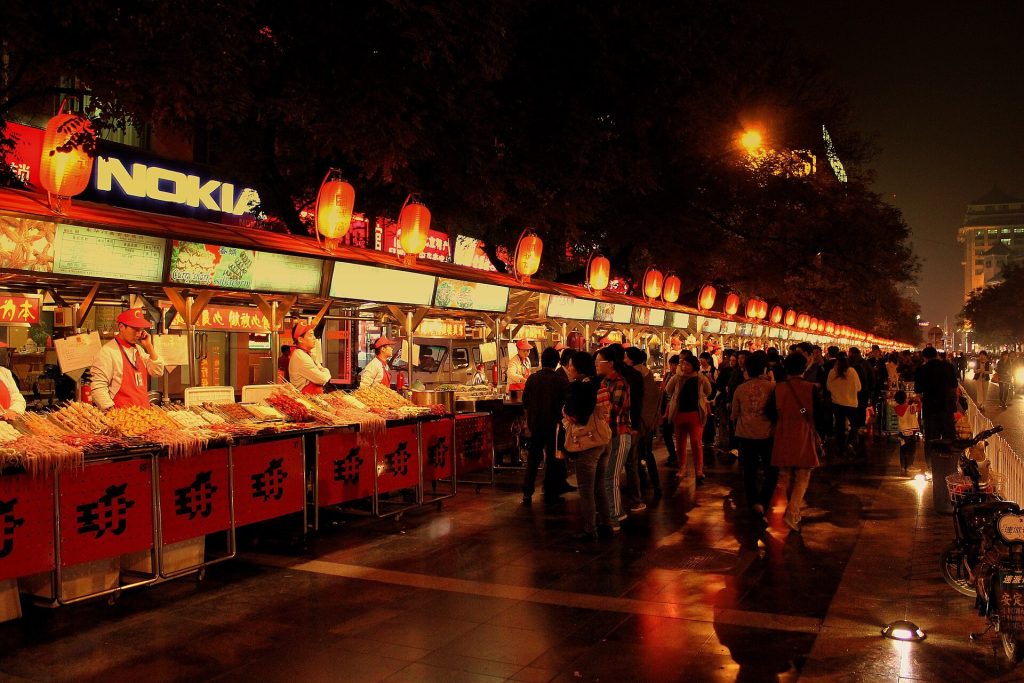
As dusk settles over a Chinese metropolis, the concrete canyons of glass and steel soften, replaced by a low, electric hum and the unmistakable, mouth-watering aroma of sizzling cumin, chili oil, and charcoal smoke. Across the country—from the misty, lantern-lit lanes of the south to the bustling, wind-swept plazas of the northeast—night markets (yèshì) roar to life. For a first-time visitor, stepping into your first Chinese night market can feel like stepping onto an alien, high-energy stage. There are crowds, neon signs flashing QR codes, mysterious bubbling broths, and vendors shouting out daily specials at the top of their lungs.
Yet, once you understand the rhythm, night markets are remarkably welcoming. They are living, breathing community hubs where office workers, families, and students gather to unwind after dark. Whether you are landing in town ahead of an autumn evening walk or plotting out your first night out, here is everything you need to know to navigate China’s night markets with confidence, master the payment systems, and eat like a local without missing a beat.
—
1. Digital Realities: Setting Up Payment Before You Go
Forget hunting for loose yuan notes or trying to exchange heavy coins at street stalls. Modern Chinese street food culture is almost entirely cashless, driven by smartphone apps. From high-end restaurants to the humblest street-side skewer cart, vendors display laminated QR codes for payment.
To buy a single skewer of lamb or a cup of bubbling brown-sugar milk tea, you will need a smartphone equipped with local mobile data and a funded digital wallet. Before you set foot in the market, ensure your connectivity is sorted by checking out the China SIM and eSIM for Foreign Visitors in 2026 guide to stay reliably online.
Equally crucial is setting up your digital payment rails ahead of time. Foreign credit cards can now be linked seamlessly to local apps, allowing you to scan vendor codes just like any local resident. Read through Alipay and WeChat Pay for Foreign Visitors in China 2026 to link your international cards and verify your identity before your first evening out so you aren’t left stranded at a stall with a hot plate of food ready and no way to pay.
—
2. Finding Your Way (and Navigating the Crowds)
Night markets are rarely single-street affairs; they often sprawl across alleys, plazas, and pedestrian walkways that shift slightly depending on the season and local municipal guidelines. To find the best markets near your hotel or hostel without getting lost in back alleys, keep a reliable navigation tool handy. Apple Maps and Google Maps have limitations in mainland China, making local mapping apps essential. Review the How to Use Amap (Gaode Maps) in China as a Foreigner: 2026 English Guide to learn how to search for night markets (yèshì) and map your walking route.
Once you arrive, crowd etiquette is simple:
* The Flow of Traffic: Move with the current of the crowd. If you want to stop and examine a stall, gently step to the side rather than stopping dead in the middle of a narrow lane.
Seating is Communal: Seating is scarce. If you see a tiny plastic stool or a spot at a shared communal table, it is entirely normal to ask, “Yǒurén ma?”* (Is anyone sitting here?) or simply gesture and nod to claim a corner.
* Trash and Tissues: Night market stalls rarely provide heavy napkins. Many seasoned travelers carry a small pack of pocket tissues and wet wipes. Keep an eye out for communal bins at the edges of vendor clusters to keep the area clean.
—
3. The Language Barrier: Pointing is Universal
Don’t worry if your Mandarin is limited to nǐ hǎo (hello) and xièxie (thank you). Night markets are perhaps the easiest places in China to order food without speaking a word of the language.
Most stalls feature large, photo-heavy menus, glass display cases filled with raw skewers ready to be grilled, or pots bubbling right in front of you.
* Point and Nod: Simply point to what looks appetizing, hold up fingers to indicate quantity, and smile.
Spice Levels: Vendors will often ask “Là bu là?” (Spicy or not spicy?). If you have a low tolerance for heat, learn to say “Bù yào là” (No spice) or “Wēi là”* (Mildly spicy). If you love the numbing kick of Sichuan pepper, you can nod enthusiastically for standard spice.
If you enjoy regional comfort food beyond the street stalls—such as mastering classic sit-down dishes or learning structural flavor profiles—take a look at the guide on Sweet and Sour Chinese Pork for First-Timers: What to Expect and How to Order.
—
4. Food Safety Common-Sense
Chinese night markets are heavily regulated, and food turnover is exceptionally fast, meaning ingredients are usually remarkably fresh. However, practicing basic street-food common sense will keep your stomach happy throughout your trip:
* Look for the Lines: The best indicator of safety and deliciousness is a long queue of local families. High turnover means ingredients are never sitting out long.
* Hot and Fresh: Stick to items that are cooked to order right in front of you—woks hissing over roaring gas burners, deep-fryers bubbling with clean oil, or skewers grilled over live charcoal. Avoid pre-cooked items that have been sitting under heat lamps for extended periods.
* Ice and Water: Stick to bottled water, canned beverages, or freshly boiled teas. Ice in night markets is generally made from purified factory ice, but if you have a sensitive stomach during your first few days, sticking to hot drinks or fresh fruit juices made on the spot is a safe bet.
—
5. Sample Categories of Snacks You Will Meet
While every city, province, and neighborhood puts its own unique spin on street food, you will notice common archetypes across almost every night market in China:
1. **The Skewer Masters (Chuànr):** Originating from the northwest but popular everywhere, these feature meats, vegetables, and seafood dusted liberally with cumin, chili flakes, and sesame seeds.
2. Stuffed Flatbreads and Pan-Fried Buns: Golden, crispy-bottomed pork buns (shēngjiān bāo) that squirt hot broth when bitten into, or flaky scallion pancakes pulled apart layer by layer.
3. Iron Griddle Squids and Seafood: Massive squids pressed flat on hot griddles, basted in garlic sauce and sweet bean paste, then chopped into bite-sized pieces on wooden skewers.
4. Sweet, Cooling Relief: To balance the heavy spices, look out for shaved ice bowls topped with red beans, taro balls, and brown sugar syrup, or skewers of skewered fruit coated in hardened sugar shells (tánghúlu).
As you venture further into regional culinary traditions—whether exploring hearty northern staples like Jilin (city) for First-Timers: What to Expect and How to Order or savory hand-pulled noodles detailed in Xinjiang Laghman Noodles in Chinese Cities for First-Timers—you will find that street food acts as a delicious gateway to China’s rich geographical diversity.
—
6. Putting It Together: Your First-Evening Game Plan
If tonight is your first night in a Chinese city, don’t overcomplicate it. Treat your initial market visit as a sensory recon mission rather than a competitive eating challenge:
1. Check Your Tech: Ensure your phone is charged, your data plan from China SIM and eSIM for Foreign Visitors in 2026 is active, and your digital wallets are open and ready.
2. Map the Route: Drop a pin on Amap for a lively pedestrian street or designated night market zone near you.
3. Walk First, Eat Second: Do a complete lap of the market without buying anything. Take in the sights, watch what other people are ordering, and spot the stalls with the longest lines.
4. Start Small: Pick two or three approachable items—a couple of lamb skewers, a scallion pancake, or a cup of milk tea—pay smoothly with your phone, find a spot to stand or sit, and soak in the electric atmosphere.
Once you finish your snacks, you’ll likely find your energy peaking. Pair your evening street food crawl with an ambient neighborhood stroll to walk off dinner, and you’ll quickly realize why the night market is the beating heart of Chinese urban life.
FAQ
Is this guide current for late 2026?
It reflects commonly reported practice as of October 2026. Always re-check official sources before you travel, because rules, ticket platforms and seasons change.
Where can I verify details?
Use the official website, WeChat account or ticket platform named for this topic. For payments and maps, see Lovely China’s practical visitor guides linked above.
What if my situation is unusual?
Ask your hotel, airline, park ticket office or embassy/consulate for case-specific advice rather than relying only on a blog post.