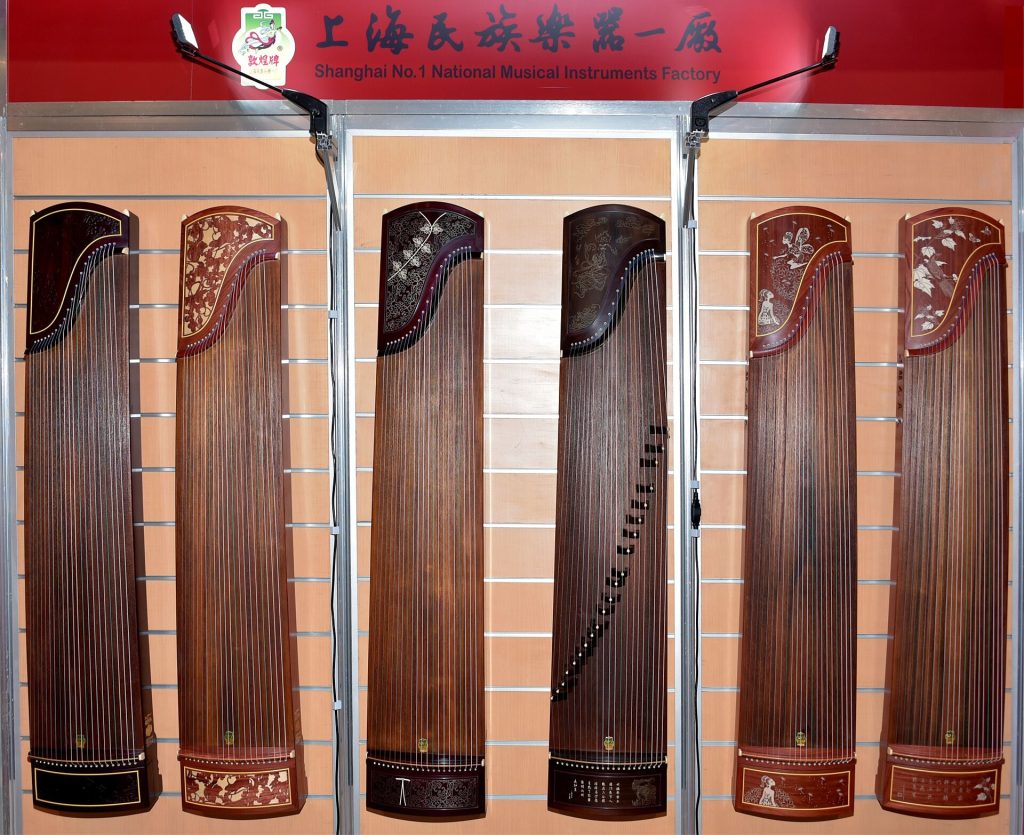
Few sounds capture the ethereal, flowing essence of traditional Chinese aesthetics quite like the cascade of notes from a guzheng. Whether drifting through the bamboo courtyard of a traditional tea house in Chengdu, echoing softly in a museum gallery, or encountered during a hands-on cultural workshop, hearing this ancient plucked zither live is a mesmerizing highlight for any traveler in China. For curious visitors looking to move beyond passive listening, experiencing the guzheng firsthand—from attending atmospheric performances to plucking your very own notes in a beginner trial lesson—offers a profound window into Chinese arts and philosophy.
—
What is the Guzheng? (And How It Differs from Guqin and Pipa)
The guzheng (often simply called the zheng) is a large, plucked string instrument with a history stretching back over 2,500 years to the Warring States period. Traditionally featuring 21 strings stretched over moveable bridges across a resonant wooden body, it is played with false nails (usually made of tortoise shell, ox bone, or high-grade plastics) taped to the right-hand fingers (and sometimes both hands), while the left hand presses or manipulates the strings behind the bridges to bend pitches and add vibrato. Its sound has been poetically described as resembling “flowing water,” “falling pearls,” or the whisper of autumn wind through pine trees.
Travelers often confuse the guzheng with other traditional Chinese plucked instruments. Here is how to tell them apart:
Guzheng vs. Guqin: The guqin* is an even older, seven-string zither without bridges. It has a much quieter, more intimate, and meditative tone traditionally played by scholars in quiet studios for self-reflection rather than for public audiences. The guzheng, by contrast, is much larger, louder, and dynamically expressive.
Guzheng vs. Pipa: The pipa* is a pear-shaped, fretted lute held upright and played with plectra attached to all five fingers. It produces a brisk, bright, and percussive sound well-suited for dramatic battle narratives, whereas the guzheng delivers rolling, harp-like arpeggios and flowing melody lines.
Guzheng vs. Sanxian or Ruan: The sanxian (three-stringed plucked lute) and ruan* (round-bodied moon lute) offer drier, more rhythmic, or woody tones often found in folk ensembles and storytelling accompaniment, lacking the sweeping, resonance-heavy sonic signature of the guzheng’s multi-string array.
—
Where Visitors Can Hear and Experience the Guzheng
You don’t need to hunt down an elite concert hall to encounter the instrument; it is woven into the sensory landscape of modern and historic China.
1. Traditional Tea Houses and Cultural Spaces
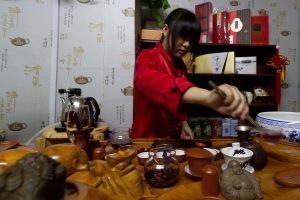
Many historic tea houses—particularly in cities like Chengdu, Hangzhou, and Xi’an—feature live acoustic performances during afternoon tea service. Sitting quietly with a pot of local brew while a musician plucks classical pieces like Fishing Boats Singing at Sunset (Yuge Changwan) creates an unforgettable ambiance. For a deeper dive into pairing traditional arts with beverage culture, many travelers enjoy combining an afternoon of musical appreciation with A Foreigner’s Guide to Experiencing Gongfu Tea Culture in China: What to Expect and How to Participate.
2. Cultural Heritage Workshops and Boutique Studios
Cultural centers, independent music studios, and heritage boutique spaces in major hubs often host drop-in visitor workshops. These sessions are tailored for travelers who want to touch the instrument, understand its layout, and play a simple melody within an hour.
3. Themed Shows and Heritage Tourism Sites
Large-scale theatrical productions, night markets in historic districts, and museum cultural zones frequently feature prominent guzheng solos or ensemble performances as part of evening entertainment.
—
Step-by-Step Anatomy of a Guzheng: What Every Traveler Should Know
Before stepping into a workshop or attending a recital, understanding the physical layout of the instrument will help you appreciate the intricacy of the performance:
The Strings and Bridges: Modern standard concert guzhengs feature 21 strings, tuned via an array of movable A-shaped wooden bridges (called yanzhu*, or “wild goose bridges”). By sliding these bridges left or right, musicians adjust the fundamental pitch of individual strings.
* The Tuning System: Most guzheng instruments are tuned to a major pentatonic scale in the key of D (D, E, F♯, A, B). Because there are no half-step frets, the left hand must actively pitch-bend strings to articulate notes outside the default pentatonic scale, introducing micro-tones and emotional shading.
* The Body and Soundboard: Crafted from paulownia wood, the soundboard acts as an acoustic amplifier. The natural grains and hollow internal chamber give the instrument its warm, singing sustain.
Right-Hand vs. Left-Hand Roles: The right hand dictates rhythm, arpeggios, and melodic lines using the taped fingerpicks, while the left hand provides the “soul” of the music through vibrato, sliding glissandos (hua yin*), and expressive pitch augmentation.
—
What to Expect in a Beginner Guzheng Trial Session
If you book a short hands-on workshop or a tourist trial lesson, the session is usually structured to give you immediate, satisfying results without requiring prior musical training:
Fitting the Picks: Your instructor will help you secure artificial finger picks (jiazi*) using hypoallergenic adhesive tape to your right thumb, index, middle, and ring fingers.
* Understanding the Pentatonic Scale: Most traditional guzheng pieces are built on a five-note (pentatonic) scale, meaning almost any combination of notes you pluck will sound harmonious and naturally melodic.
Basic Plucking and Pitch Bending: You will learn the fundamental right-hand pluck (tuo, mo, gou*) to produce a clean, resonant tone, followed by a simple left-hand press behind the bridge to bend a note, giving it the signature weeping, vocal quality characteristic of Chinese music.
Playing a Simple Tune: By the end of a 45-to-60-minute session, instructors can typically guide absolute beginners through a recognizable fragment of a classic folk melody, such as 茉莉花 (Jasmine Flower)*.
—
Etiquette for Guzheng Performances
If you are attending a live performance in a tea house, intimate gallery, or salon, observing proper etiquette ensures a respectful and immersive environment for both the artist and fellow guests:
* Maintain Silence During Play: Guzheng music relies heavily on quiet dynamics, resonance, and fading sustain. Whispering or rustling packages can easily disrupt the acoustic atmosphere.
* Hold Applause Until the Piece Ends: Traditional suites often consist of multiple flowing movements or variations. Wait for the final chord to resolve completely and for the performer to lower their hands before clapping.
* Photography and Video Guidelines: Flash photography is almost universally discouraged as it startles performers. If taking video or photos, ensure your shutter clicks and screen lights are minimized, and never step onto the performance platform uninvited.
—
Practical Booking & Travel Tips for Your Experience
1. Navigating Venues and Studios: To locate independent cultural studios, local tea houses, or workshop spaces tucked away in historic alleys, having reliable digital mapping is essential. Refer to How to Use Amap (Gaode Maps) in China as a Foreigner: 2026 English Guide for step-by-step instructions on searching for venues in English or Chinese characters.
2. Securing Digital Payments: Most boutique cultural experiences, tea houses, and workshop instructors operate entirely via cashless mobile ecosystems. Ensure your digital wallet is fully set up before arrival by reviewing Alipay and WeChat Pay for Foreign Visitors in China 2026.
3. Staying Connected: Booking sessions on the go, messaging studio hosts on lifestyle apps like Xiaohongshu (RED) or WeChat, and translating instructions in real-time requires stable mobile data. Check out China SIM and eSIM for Foreign Visitors in 2026 to keep your connection seamless throughout your journey.
—
Frequently Asked Questions (FAQ)
Can absolute beginners play the guzheng during a short trip?
Yes! Because standard beginner lessons utilize a pentatonic scale where every note sounds consonant, you do not need any prior musical background to produce a pleasant melody during a single 45-minute trial workshop.
Do I need to bring my own finger picks and tape?
Most studios and workshop hosts provide all necessary gear, including finger picks (jiazi) and specialized hypoallergenic adhesive tape, as part of your booking fee. If you plan on continuing lessons long-term, instructors can help you purchase a personalized set.
How do I find authentic guzheng workshops in cities like Beijing, Shanghai, or Chengdu?
Local cultural hubs, community arts centers, and boutique music academies frequently list English-friendly visitor sessions on WeChat mini-programs or lifestyle apps like Xiaohongshu (RED). Using map apps like Amap with localized search terms will also help pin down independent studios.
Are children allowed to participate in hands-on guzheng classes?
Most cultural studios welcome older children and teenagers. Because the guzheng is a full-sized instrument (typically around 1.6 meters long), younger children may need specialized smaller practice instruments or adjusted seating benches to comfortably reach the strings.