For many travelers, stepping into a traditional Chinese tea house (chaguan) offers a tranquil escape from the high-energy buzz of modern urban centers like Shanghai, Chengdu, or Guangzhou. Unlike the silent, highly choreographed formalism of the Japanese Chanoyu (tea ceremony), Chinese gongfu cha (功夫茶—literally “making tea with skill”) is a sensory, social, and deeply interactive art form. Whether you are taking advantage of expanded China 30-Day Visa-Free Entry in 2026: Which Countries Qualify and the Rules for a late-autumn getaway or navigating city streets with How to Use Amap (Gaode Maps) in China as a Foreigner: 2026 English Guide, experiencing authentic tea culture is a mandatory highlight of any cultural itinerary. This practical guide breaks down what to expect when visiting a Chinese tea house, how to taste like a local, proper etiquette, and how gongfu cha differs from other East Asian tea traditions.
—
1. Finding and Navigating a Chinese Tea House
Traditional tea houses range from cavernous multi-story markets (such as the famous Fangcun tea market in Guangzhou or Maliandao in Beijing) to intimate, design-forward boutiques hidden in historical lanes (hutongs or longtangs). When planning your visit:
* Location Tracking: Use local mapping apps to locate reputable tea houses. For a seamless transit experience, reference How to Use Amap (Gaode Maps) in China as a Foreigner: 2026 English Guide to search for “茶馆” (chaguan) or specific tea districts.
Pricing Models: Tea houses generally operate on one of two systems. Either you pay a seating fee (cashi* 茶位费) per person—which includes unlimited hot water and a basic tea selection—or you purchase a specific cake or tin of loose-leaf tea and use the house’s equipment for free.
—
2. What Happens During a Gongfu Tea Session?
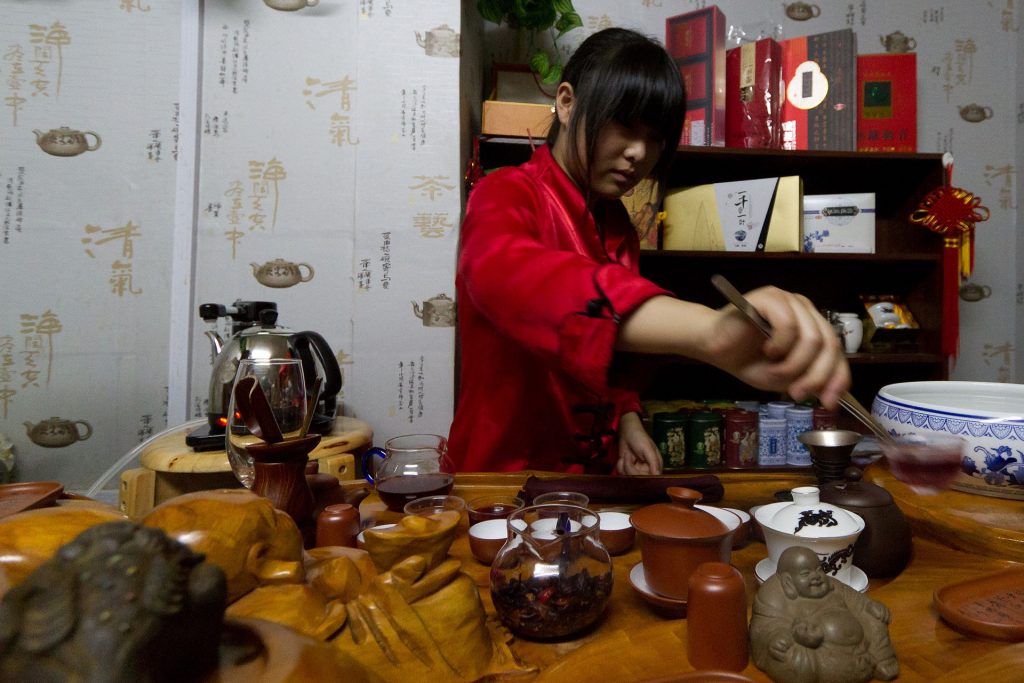
If you sit down with a tea master or a knowledgeable host, the process follows a deliberate rhythm designed to coax out the complex flavor profiles of high-grade leaves.
The Essential Setup
* **The Tea Board (Cha Pan):** A slatted wooden, stone, or ceramic tray with a drainage basin underneath. Water is constantly poured over teaware during the session to maintain temperature.
The Gaiwan or Yixing Pot: A gaiwan* (a three-piece lidded bowl comprising the saucer, bowl, and lid) is the most common brewing vessel because it allows the leaves room to unfurl and lets the host control the pour.
* **Fairness Cup (Gong Dao Bei):** Tea is rarely poured directly from the brewing vessel into individual cups. Instead, it is decanted into a pitcher first to ensure every guest receives tea of identical strength.
* Aroma Cups & Tasting Cups: In formal or high-end settings, you may receive a tall, slender aroma cup alongside a wider tasting cup. You pour the tea into the tall cup, invert the tasting cup over it, and flip them swiftly to trap and inhale the lingering fragrance from the empty aroma cup before sipping.
—
3. Common Teas You Will Encounter
China’s vast geography produces thousands of cultivars, but visitors will most frequently encounter three major categories:
* **Oolong (Wulong):** Ranging from lightly floral green oolongs (like Taiwanese High Mountain or Tieguanyin) to heavily roasted rock teas (Yan Cha from Wuyi Mountain), oolongs are the undisputed kings of gongfu brewing. They withstand multiple infusions, changing character with each steep.
Pu’er: Hailing from Yunnan province, Pu’er comes in two main styles: Raw (Sheng) and Ripe (Shou*). Ripe Pu’er is earthy, dark, smooth, and comforting—often likened to forest floor or damp wood—while raw Pu’er can be punchy, astringent when young, and deeply complex when aged.
Green Tea: Famous varieties like Longjing (Dragon Well) from Hangzhou or Bi Luo Chun* are prized for their fresh, vegetal, chestnut-like sweetness. Unlike oolongs and Pu’er, green teas are usually brewed in tall glass tumblers or delicate gaiwans with slightly cooler water to prevent bitterness.
> Note on Provenance: While tea markets love to throw around legendary names like “100-year-old tree” (gushu) or specific micro-terroirs, approach hyper-specific claims with healthy skepticism unless buying from a certified, reputable merchant. Focus on the taste, aroma, and mouthfeel rather than marketing buzzwords.
—
4. Step-by-Step Brewing Mechanics: How the Host Works the Leaves
Understanding the mechanics behind the pour helps demystify what is happening across the tea board:
* **The Warm-Up (Wen Bei):** Hot water is first poured into the fairness pitcher and small cups to warm the ceramic, ensuring the brewing temperature does not drop prematurely when the actual tea is introduced.
* **The Rinse (Run Cha):** The first pour of hot water over the dry leaves is almost always discarded. This brief rinse awakens compressed or tightly rolled leaves (especially oolongs and Pu’er) and washes away any residual dust from processing or storage.
Rapid Infusions: Unlike Western-style tea making where a bag steeps for several minutes, gongfu* brewing relies on very short steeps—often starting at 5 to 10 seconds for the first few rounds—increasing slightly with subsequent infusions to extract consistent flavor profile depths across dozens of steeps.
—
5. Tasting Etiquette and Cultural Norms
Participating in a tea session involves a few subtle etiquette rules that will immediately earn the respect of your host:
* **The Finger Tap (Xie Xie Li):** When someone pours tea into your cup, tapping your index and middle fingers together on the table is a silent gesture of gratitude (meaning “thank you”). Legend has it that a Qing dynasty emperor traveling in disguise poured tea for his servants; outlaws by custom could not bow or speak without breaking cover, so they tapped their fingers to mimic kneeling bows.
* Handling Hot Cups: Always pick up small ceramic tasting cups by the rim and base using your thumb and index finger to avoid burning your fingers.
How to Decline Politely: If you have reached your caffeine limit, simply place your hand gently over the top of your cup or say, “Xiexie, wo he bao le*” (Thank you, I am full/finished). Hosts are accommodating and will stop pouring without taking offense.
* Tipping and Payment Norms: Tipping is not practiced in China, even at high-end tea houses or fine dining establishments. Attempting to tip can cause confusion. Payment is made at the counter when you leave, accepting cash, WeChat Pay, or Alipay.
—
6. How Chinese Gongfu Cha Differs from Japanese Tea Ceremony
While both traditions share roots in ancient Chinese Zen (Chan/Zen) Buddhism, they evolved in distinct directions:
| Feature | Chinese Gongfu Cha | Japanese Chadō / Chanoyu |
| :— | :— | :— |
| Atmosphere | Conversational, social, relaxed, and lively. Often enjoyed while chatting with friends or conducting business. | Meditative, highly formalized, solemn, and often conducted in near-silence. |
| Pacing | Fast-paced infusions; leaves are steeped many times in rapid succession (sometimes 10+ rounds). | Slow, deliberate, highly choreographed movements centered around preparing a single bowl of matcha. |
| Equipment | Focuses on maximizing aroma and flavor extraction using porous clay pots, gaiwans, and small cups. | Focuses on specialized utensils (chawan tea bowls, bamboo whisks, iron kettles). |
—
7. Expanding Your Cultural Journey
Tea tasting pairs wonderfully with other traditional arts. If you are looking to dive deeper into Chinese aesthetics during your travels, consider pairing an afternoon tea session with a hands-on brushwork workshop—detailed further in Ink, Brush, and Paper: A Traveler’s Practical Guide to Chinese Calligraphy Experiences. By keeping an open mind, respecting the rhythm of the pour, and mastering the simple finger tap, your journey into Chinese tea culture will transcend a simple beverage—becoming a memorable portal into the heart of daily life and hospitality.
—
Frequently Asked Questions (FAQ)
1. Do I need to speak Mandarin to visit a Chinese tea house?
While speaking Mandarin helps, many modern tea houses in major hubs feature English-speaking staff or digital menus via WeChat mini-programs with photo translations. Pointing, smiling, and basic translation apps will easily bridge any gaps.
2. Is it rude to refuse a cup of tea offered by a host?
Refusing outright can occasionally feel abrupt, but politely explaining that you are sensitive to caffeine or full using hand gestures or polite phrasing is entirely acceptable.
3. Can I buy loose-leaf tea directly from the tea house?
Yes, most traditional tea houses double as retail shops. Feel free to sample different grades before purchasing, and don’t be afraid to ask for vacuum-sealed packaging if you are packing them into your luggage.