“`
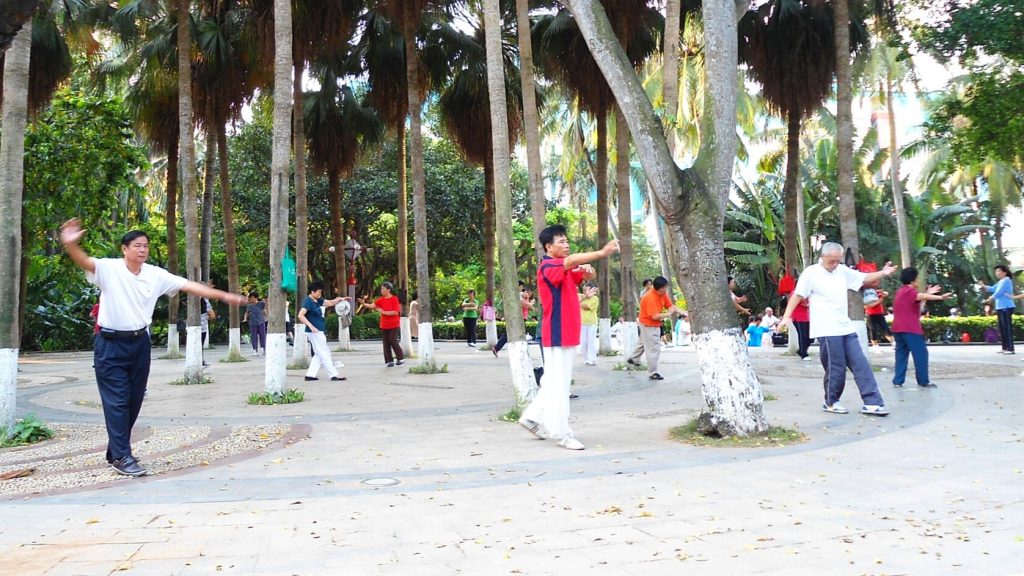
Stepping into a Chinese public park just as the sun clears the horizon reveals a living, breathing tradition that has anchored neighborhood life for generations. Long before the morning commute begins, parks from Beijing’s Temple of Heaven to Shanghai’s Fuxing Park fill with the rhythmic rustle of broadswords, the deep thrum of spinning weighted balls, and the slow, hypnotic choreography of practitioners moving in absolute unison. For international visitors, witnessing a morning Tai Chi session is often one of the most memorable cultural highlights of a trip to China.
—
What Travelers See in Parks at Dawn
Morning exercise in China is rarely a solitary endeavor; it is a vibrant social ecosystem. When you wander through an urban green space between 6:00 AM and 8:30 AM, you will encounter a diverse cross-section of local life:
* Tai Chi and Qigong Groups: Practitioners of all ages—though predominantly retirees—moving through fluid, continuous postures focused on balance and breath.
Sword and Fan Forms: Advanced practitioners executing precise routines with traditional straight swords (jian), broadswords (dao*), or silk folding fans that snap crisply in the cool morning air.
Multi-Generational Activity Hubs: Beyond Tai Chi, adjacent lawns and pavilions host groups practicing ballroom dancing, hacky sack (jianzi*), ribbon-twirling, and traditional aerobic folk dancing.
Navigating these sprawling urban parks is seamless when you have your digital toolkit ready. Before heading out early in the morning, make sure you have reliable connectivity set up via a China SIM and eSIM for Foreign Visitors in 2026. If you are trying to locate a specific historic park or scenic garden, using a localized mapping app like How to Use Amap (Gaode Maps) in China as a Foreigner: 2026 English Guide will give you precise walking routes and entrance gate details that Western map apps often miss.
—
Health Tai Chi vs. Martial Performance
To the untrained eye, every slow movement looks identical, but there is a distinct spectrum between modern wellness practices and traditional martial arts:
> “In the parks, Tai Chi is primarily practiced as a moving meditation for longevity, stress relief, and joint health. It shifts the focus from combat efficiency to internal harmony and breath regulation.”
* Health and Longevity Tai Chi: Simplified forms (such as the 24-form or 42-form popularized for public fitness) emphasize smooth transitions, low-impact weight shifting, and cardiovascular endurance without stressing the joints.
* Martial Application (Wushu): While rare in casual morning park gatherings, traditional family styles (like Chen-style Tai Chi) feature explosive bursts of power, low stances, and rapid direction changes rooted in self-defense.
Complementary Disciplines: You will often see participants seamlessly transition from slow Tai Chi into standing meditation (Zhan Zhuang) or Qigong exercises designed to cultivate internal energy (Qi*).
For a broader perspective on how these morning routines fit into daily neighborhood rituals, check out this guide on Morning Park Exercise in China: What Visitors Should Know.
—
Practical Guide: Finding the Right Park and Timing Your Visit
Knowing where to look and when to arrive can transform a casual stroll into an immersive cultural encounter. Major urban centers feature historic parks where morning activities are deeply institutionalized, while smaller neighborhood pockets offer intimate, less crowded views of daily routines.
* Prime Time Windows: Activity peaks between 6:30 AM and 7:45 AM. By 9:00 AM, most large group practices wrap up as participants transition to morning grocery shopping or social socializing.
* Iconic Parks vs. Local Nooks: While Beijing’s Temple of Heaven or Chengdu’s People’s Park offer grand spectacles with dozens of simultaneous groups, smaller residential parks (like Hangzhou’s West Lake pockets or lane-way green spaces in Shanghai) provide a quieter, more conversational atmosphere where locals are often eager to chat with inquisitive visitors.
* Weather and Seasonal Adaptation: Morning routines happen year-round, rain or shine. In winter months, practitioners bundle up in heavy coats while maintaining fluid movements; in summer, groups gather as early as 5:30 AM to beat the midday heat.
—
Morning Park Etiquette: How to Watch and Join Respectfully
Parks are public community living rooms, not tourist theme parks. Observing local etiquette ensures your presence is welcomed rather than intrusive:
* Maintain a Respectful Distance: Do not stand directly inside the circle of practitioners or block their line of sight. Give groups a generous berth so they can focus on their balance.
* Can You Join In? Generally, yes! Many local groups are delighted when curious travelers attempt to follow along from the back row. Smile, offer a polite nod, and mirror their upper-body movements without disrupting the front-row veterans.
* What NOT to Film Without Consent: Avoid shoving cameras or smartphones inches away from practitioners’ faces, especially elderly participants who use the park for quiet personal wellness. Always ask permission or stick to wide, atmospheric landscape shots that capture the general ambiance rather than singling out individuals.
—
Short Workshops vs. Long-Term Schools
Travelers eager to move beyond passive observation often wonder how best to experience Tai Chi firsthand during a short holiday:
Drop-In Park Sessions: Best for spontaneous travelers. Finding a friendly group, copying the movements from the rear, and exchanging a polite xie xie* (thank you) afterward offers an authentic slice of local culture with zero financial cost.
* Hotel and Cultural Center Workshops: Many upscale hotels and boutique cultural centers in major hubs offer introductory 90-minute English-language Tai Chi classes led by certified instructors. These break down basic stances and philosophy safely.
* Professional Academies: Serious martial arts enthusiasts sometimes enroll in multi-week or multi-month residential schools (frequently located near sacred mountains like Wudang or Chenjiagou). These require a dedicated curriculum and rigorous physical commitment, making them ill-suited for standard vacation itineraries.
After a refreshing morning in the park, travelers can easily transition into other traditional tactile experiences. You might unwind with a soothing session outlined in A Foreigner’s Guide to Experiencing Gongfu Tea Culture in China: What to Expect and How to Participate, or spend an afternoon exploring nearby shaded pavilions where locals gather for Chinese Chess and Go Parks: Watching Without Intruding. When paying for your morning tea, street breakfast, or park entrance fees, remember that domestic digital wallets remain essential; set everything up smoothly ahead of your trip by reviewing Alipay and WeChat Pay for Foreign Visitors in China 2026.
—
Frequently Asked Questions
Q: Do I need any special clothing or shoes to join a Tai Chi session in the park?
A: No special uniform is required. Comfortable walking shoes or sneakers and breathable, flexible clothing that allows free movement of your arms and legs are all you need.
Q: Will locals mind if I take photos or videos?
A: General landscape and wide-angle atmosphere shots of the park are fine. However, you should avoid taking close-up photos or videos of individuals without asking for their permission first, as many people are simply enjoying their private morning wellness routine.
Q: Are there language barriers if I want to ask questions?
A: While conversational English may be limited among older practitioners, a warm smile, a respectful bow or nod, and pointing to your feet or hands to indicate interest will universally communicate your desire to learn. Translation apps on your phone can also help bridge any communication gaps.