Navigating and Ordering at Chinese Restaurants as a Foreigner
Dining out in China is a sensory masterclass, but for first-time visitors, the transition from stepping into a bustling eatery to sitting down with a table full of steaming dishes can feel intimidating. Language barriers, digital-first menus, and unfamiliar ordering systems often cause initial hesitation. However, China’s dining ecosystem has grown remarkably foreigner-friendly. With the right digital tools, a basic grasp of local etiquette, and a few clever visual hacks, you can easily navigate any menu from street-side noodle shops to high-end banquet halls.
—
1. Entering and Seating: What to Expect When You Arrive
Unlike many Western dining establishments where you wait to be formally greeted and seated by a host, seating dynamics in China vary widely depending on the venue style.
* Self-Seating vs. Staff Assignment: At casual noodle houses, small dumpling joints, or food courts, you are generally expected to find an open table yourself. At mid-to-high-end sit-down restaurants, a host will typically greet you at the door and ask for your party size.
* Communicating Your Party Size: Staff will often ask, “几位?” (Ji wei? – How many people?). Instead of fumbling for Mandarin numbers, simply hold up the corresponding number of fingers or state your group size clearly (e.g., “我们三位” for three people).
* Navigating Queues: During peak lunch and dinner hours, popular spots use digital ticketing systems. If there is a crowd waiting outside, look for a kiosk or ask the front desk for a number token. Many modern systems allow you to scan a code to track your position in line via your smartphone.
—
2. Mastering the Digital Landscape: QR Code Menus and Mobile Apps
China has fully embraced a mobile-first dining culture. When you sit down at a modern restaurant, you will rarely see a physical menu handed to you right away.
“`
+——————————————————-+
| The QR Ordering Flow |
+——————————————————-+
| 1. Scan table QR code using Alipay or WeChat app |
| 2. Open mini-program menu (disable VPN if loading lags)|
| 3. Take screenshots of sections to translate text |
| 4. Add items to cart & verify table number/quantity |
| 5. Submit and pay digitally or at the end of meal |
+——————————————————-+
“`
* Scanning the Table QR Code: Each table features a unique QR code sticker or tent card. Open your Alipay or WeChat application, use the built-in scanner, and a digital mini-program menu will load on your phone.
* Translating Digital Menus: Because these mini-programs load natively in Chinese, use your phone’s screenshot-and-translate feature (such as Apple Translate or Google Translate) section by section. Avoid translating a massive scrolling page all at once; capture individual blocks to match the dish photo with its English translation.
* Pro-Tip on Connectivity: Ensure your VPN is turned off if a mini-program fails to load or process payment. Foreign financial cards linked to Alipay or WeChat Pay function seamlessly for these transactions, provided your app verification is complete before sitting down.
—
3. Alternative Ordering Methods: Physical Menus and Visual Pointing
If a restaurant lacks a digital QR system or your phone battery dies, traditional fallback methods remain entirely effective.
* Paper Menus with Photos: Many establishments catering to mixed crowds provide physical books featuring high-resolution images of every dish. Pointing directly to a photo combined with a clear “这个” (Zhe ge – This one) ensures the server understands your choice instantly.
* Spying and Pointing at Neighboring Tables: If you see an incredible-looking plate of food being delivered to a nearby table, don’t hesitate to point at it and say, “这个是什么?” (Zhe ge shi shenme? – What is this?) or “我要这个” (Wo yao zhe ge – I’d like this one). Local diners and staff are almost always delighted to help foreign travelers discover popular specialties.
* Counter Service and Display Cases: At street stalls, canteens, and casual regional restaurants, food ingredients or finished dishes are openly displayed behind glass. You can physically point to raw vegetables, meats, or skewers, letting the chef know precisely how you want them prepared.
—
4. Dietary Restrictions, Allergies, and Special Requests
Navigating food modifications in a fast-paced Chinese kitchen requires preparation, as concepts like gluten-free, vegan, or strict low-sodium diets are less common in traditional cooking.
* Using Allergy Cards: Do not rely on verbal machine translation for critical health concerns like peanut, shellfish, or severe tree-nut allergies. Carry a professionally translated allergy card in Simplified Chinese characters. Hand this directly to the manager or server so they can consult the kitchen staff.
* Modifying Spice Levels: If you cannot handle intense chili heat, look for key characters like “微辣” (Wei la – Mildly spicy) or request “不要辣” (Bu yao la – No spice). Keep in mind that in regions like Sichuan or Hunan, even “mild” can pack a punch.
* Vegetarian and Halal Dining: Vegetarianism in China often has Buddhist roots, meaning mock meats made from wheat gluten or soy are common. However, dishes may still be cooked in animal fats or seasoned with oyster sauce unless you explicitly ask for “素” (Su – Vegetarian) and verify no meat broth or lard is used. For halal food, look out for certified Muslim-run Lanzhou beef noodle shops, which display Arabic script and halal signage.
—
5. Etiquette, Sharing Customs, and Hidden Pricing Traps
Dining in China involves distinct social customs and operational nuances that can save you from unexpected surprises at the end of the meal.
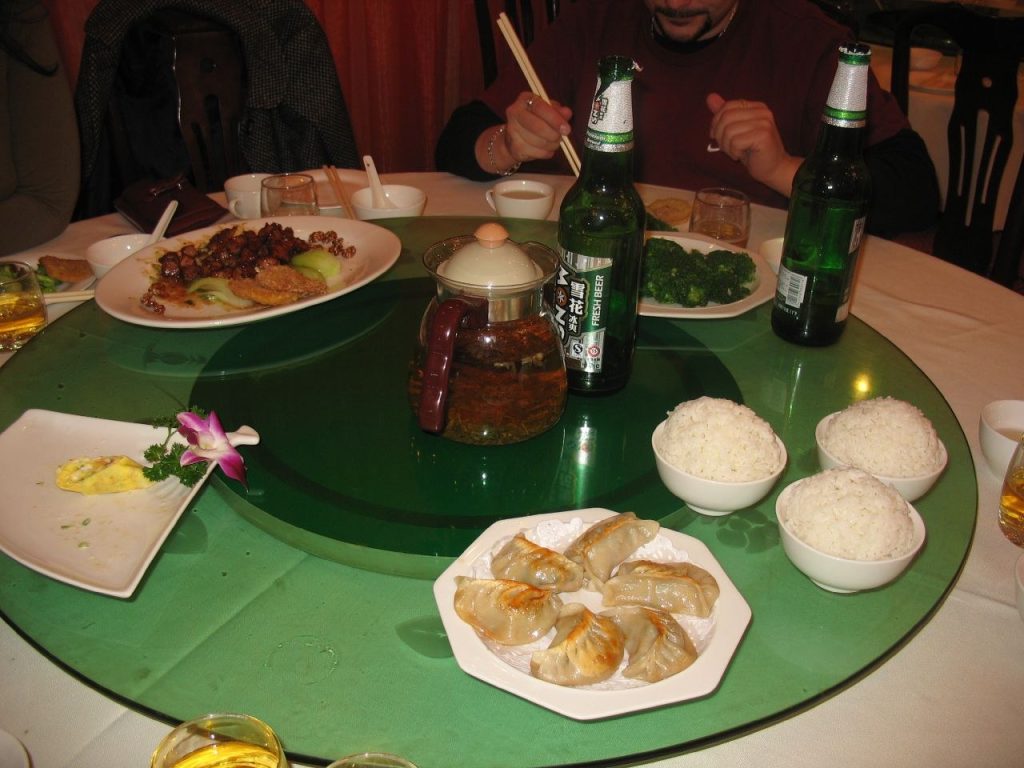
* The Family-Style Sharing Rule: Chinese meals are communal. Dishes are ordered for the entire table to share rather than consumed individually. Order a mix of hot dishes, a vegetable dish, a soup, and staple carbs (like rice or noodles) incrementally, adding more food later if needed. Note that rice rarely arrives automatically with your main dishes; it must be requested separately.
* Clarifying Weight and Pricing Units: Before ordering premium seafood, specialized meats, or loose-leaf teas, always confirm whether the listed price is per plate, per person, per pot, or per 500 grams (one Jin / 市斤). Asking “多少钱一斤?” (Duoshao qian yi jin? – How much per 500g?) prevents misunderstandings with billing.
* Table Manners and Cleanliness: It is standard practice to place discarded bones, shrimp shells, or vegetable stems onto a small side plate or directly on the edge of your table. Tipping is entirely absent and unexpected in ordinary mainland Chinese restaurants.
—
Frequently Asked Questions
* Can I order food in China if I don’t speak any Mandarin?
Yes, absolutely. Between smartphone camera translation tools, digital QR menus with photos, picture galleries saved on your device, and simple pointing gestures, you can easily complete an entire meal without speaking the language.
* What should I do if my foreign credit card fails on a restaurant QR payment page?
Do not resubmit the order multiple times to avoid duplicate charges. Simply flag down a member of staff, show them the completed order screen on your phone, and ask to pay directly at the counter using cash or your backup payment method.
* How do I communicate severe food allergies or dietary restrictions?
Relying solely on live machine translation for severe allergies can be risky. Prepare a professionally translated allergy card in Simplified Chinese characters before your trip, detailing your medical condition and cross-contact concerns, and show it directly to the restaurant manager or kitchen staff.
* Are street food stalls safe for foreign travelers?
To minimize food safety risks, select busy street stalls with high customer turnover where ingredients are cooked fresh and served piping hot right in front of you. Avoid raw shellfish, lukewarm food sitting out in the open, and unpeeled cut fruit.
—
Are you planning a trip to China soon, or looking for specific regional dish recommendations to try during your travels?