Navigating one of the world’s largest and most efficient rapid transit networks can feel intimidating when you first step off a long-haul flight. Spanning over 900 kilometers of operational track across more than 20 interconnected lines, the Shanghai Metro is remarkably intuitive, exceptionally clean, and by far the cheapest and fastest way to bypass the city’s notorious surface traffic. Whether you are arriving for business, a late-autumn vacation, or attending events like the CIIE 2026 Shanghai: Dates, Registration and Visitor Guide for Foreigners, this comprehensive, practical first-week guide covers ticketing apps, payment methods, airport connections, station etiquette, and how to seamlessly integrate public transit with local navigation.
1. Ticketing & Payment Options: Metro Cards vs. Apps vs. QR Codes
Gone are the days of fumbling with paper tickets or hunting down change machines for single-ride tokens. For foreign visitors in late 2026, you have three primary ways to ride the Shanghai Metro:
* Alipay and WeChat Pay Metro QR Codes (Recommended): If you have already set up your digital wallet linked to an international Visa, Mastercard, or UnionPay card—as outlined in our guide on Alipay and WeChat Pay for Foreign Visitors in China 2026—you can generate a local transit QR code directly inside Alipay or WeChat. Simply open the app, tap “Transport” (出行), select Shanghai, and activate the metro transit code. Scan your phone at the turnstiles, and the fare is automatically deducted in RMB from your linked card.
* Physical Shanghai Public Transportation Card (SPTC): If you prefer not to rely on mobile data or want a physical souvenir, you can purchase a Shanghai Metro transit card at any station customer service center or ticket vending machine. Traditional physical cards require a small refundable cash deposit (typically 20 RMB) and can be reloaded easily at station machines. Note that smartphone NFC transit cards (like Apple Pay Transit Cards) can sometimes be finicky for foreign accounts, making Alipay/WeChat QR codes or a physical card the safer bet.
* UnionPay Contactless / Bank Cards: Direct tap-and-go with foreign contactless credit cards at subway turnstiles is still limited compared to local mobile codes. If you run into payment setup snags, understanding how local systems accept cards is crucial; read more via UnionPay QR and Foreign Cards in China 2026: When It Works and How to Set Up.
2. Navigating Stations: English Signage & Route Planning
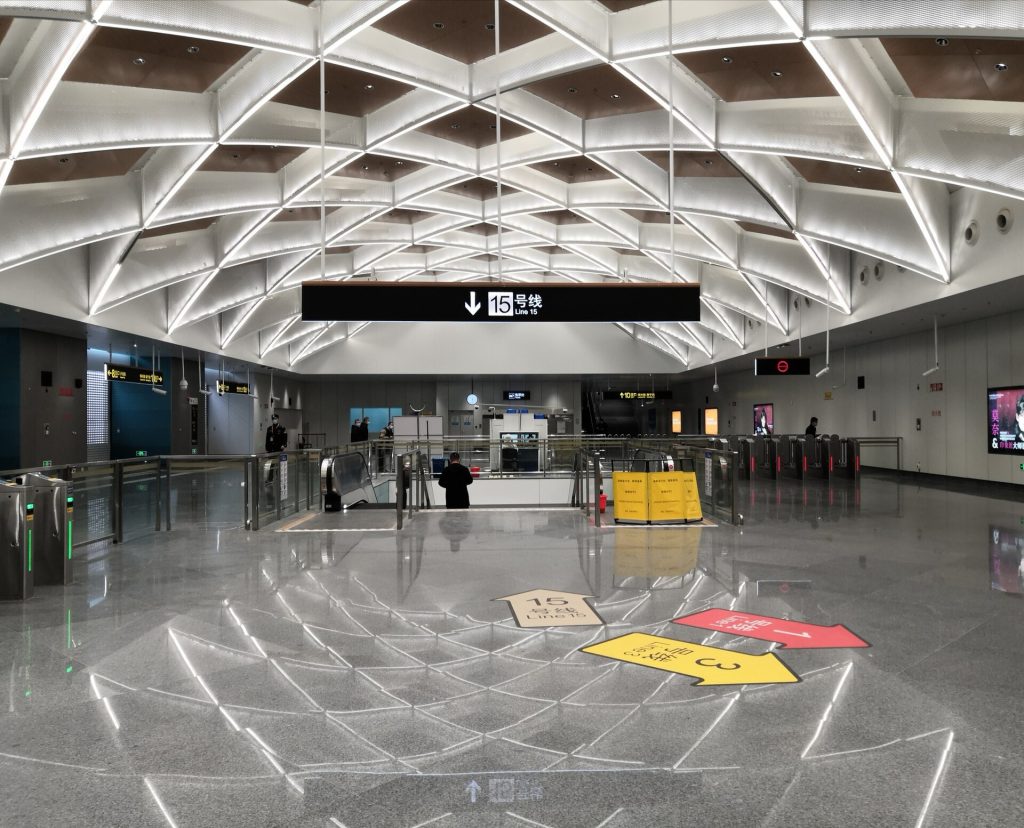
Shanghai Metro stations are heavily bilingual. Every station name, directional arrow, transfer corridor sign, and exit notice is displayed in both clear Simplified Chinese and English.
* Color-Coded Lines: Each metro line is designated by a distinct color and number (e.g., Line 1 is red, Line 2 is light green, Line 10 is pale purple). Train destination boards on platforms clearly list the terminal station in English so you always know you are heading in the correct direction.
* Mastering Transfers: Major interchange stations (like People’s Square, Century Avenue, and Xujiahui) can be sprawling underground complexes. Follow the overhead color-coded hanging signs and floor decals carefully. When moving between Line 2 and Line 10, try transferring at East Nanjing Road rather than People’s Square to avoid the heaviest pedestrian bottlenecks.
* Digital Route Planning: Trying to figure out the fastest transfer combo on the fly can be stressful. To map your journey accurately, check out our How to Use Amap (Gaode Maps) in China as a Foreigner: 2026 English Guide. Amap integrates real-time Shanghai Metro schedules, walking times between platforms, and precise exit recommendations.
3. Airport Connections & The Maglev Dilemma
Shanghai is served by two major airports—Pudong International Airport (PVG) and Hongqiao International Airport (SHA)—both of which have seamless metro integration.
* Pudong Airport (PVG):
Line 2:* Connects PVG directly to the city center (Longyang Road, People’s Square, Nanjing Road) and onward to Hongqiao. Note: If you take Line 2 from Pudong, you may need to step off and switch trains at Guanglan Road depending on the schedule, so watch the platform announcements.
The Maglev (Shanghai Transrapid): If you want a thrill, you can take the high-speed Maglev train from Pudong Airport to Longyang Road station. It hits a staggering 300+ km/h, covering 30 kilometers in roughly 7 to 8 minutes. Careful: The Maglev requires a separate ticket (discounts apply if you show a same-day flight ticket), and it does not* accept standard metro QR passes directly at the platform gate without a separate purchase. For most budget-conscious travelers, Line 2 is slower (approx. 50-60 mins to downtown) but vastly cheaper and requires no extra ticket hassle.
* Hongqiao Airport (SHA / Hongqiao Railway Station):
* Served directly by Line 2 and Line 10, making it exceptionally easy to roll your suitcase straight from the high-speed railway hub or terminal building onto the subway network within 30 to 40 minutes of downtown commercial districts like Xintiandi or Nanjing Road.
4. Practical Rules: Rush Hours, Luggage, and Security
* Security Screening: Every single Shanghai Metro station features mandatory security checkpoints at the entrance. You must place your backpacks, handbags, and luggage on the X-ray conveyor belt. Walk through the metal detector frame; security guards are generally relaxed, but keep liquids accessible and avoid carrying restricted items like aerosols, heavy tools, or flammable liquids.
* Luggage Rules: Large suitcases are permitted on the metro, but during peak hours, navigating narrow turnstiles and crowded cars with massive trunks can be stressful. Use the wider accessible/service gates if you are traveling with bulky luggage.
* Rush-Hour Survival Tips: Avoid riding between 07:30–09:00 and 17:00–19:30 if possible. Stations like People’s Square and Century Avenue see immense crowds. Stand behind the yellow safety lines on platforms, allow passengers to exit fully before pushing forward to board, and keep a firm grip on your phone and belongings.
* Operating Hours: Most lines run from roughly 05:30 to 23:00. Exact last-train departure times are posted prominently above every platform entrance, so check them before heading out for a late-night dinner or bund walk.
5. Insider Etiquette, Fares, and Essential Tech Hacks
To transition from a bewildered tourist to a confident local rider during your first week, keep these advanced tips in mind:
* Fare Structure: Shanghai Metro uses a distance-based pricing model. Single journeys start at a modest 3 RMB (approx. $0.45 USD) for distances up to 6 kilometers, scaling upward by 1 RMB for every additional 10 to 20 kilometers. Most inner-city tourist trips cost between 3 RMB and 7 RMB.
* Day Passes: If you plan on crisscrossing the city across multiple neighborhoods in a single day, consider purchasing a One-Day Pass (18 RMB) or a Three-Day Pass (45 RMB) from station service desks. These allow unlimited rides within their validity period, saving you from calculating individual distance fares.
* Digital Translation Tools: While signage is bilingual, station announcements can occasionally be fast. Keep the Microsoft Translator or Alipay built-in translation mini-program handy if you need to ask a station attendant for assistance. Local staff are exceptionally helpful to foreigners, even if there is a minor language barrier.
* Stand on the Right: On station escalators, standard etiquette mirrors international norms: stand on the right side and walk on the left to let rushing commuters pass smoothly.
Frequently Asked Questions (FAQ)
Can I use Apple Pay or a foreign credit card directly at the Shanghai Metro turnstiles?
Direct contactless tap-and-go with foreign credit cards is generally not supported at station turnstiles. Instead, foreign visitors should set up an Alipay or WeChat Pay transit QR code linked to an international Visa or Mastercard before arriving, or purchase a physical transit card at a station.
Does the Shanghai Metro run 24 hours a day?
No. Regular operations wrap up between 22:30 and 23:30 depending on the specific line and station. If you are out late enjoying Shanghai’s nightlife, you will need to rely on late-night buses or ride-hailing apps like DiDi after midnight.
How do I find the correct exit for major tourist attractions like The Bund or Yu Garden?
Each station exit has detailed neighborhood maps displayed on the walls right as you step off the platform. For specific destinations, Line 2 at East Nanjing Road (Exit 3) puts you right near the pedestrian shopping street leading to The Bund, while Line 10 at Yuyuan Garden (Exit 1) drops you steps away from the historic bazaar.