Arriving in China without a data connection is like arriving blindfolded. In 2026, the country operates almost entirely on a digital ecosystem. From paying for a bottle of water to mapping your route to the Great Wall, your smartphone is your wallet, your navigator, and your translator. For foreigners navigating this landscape, securing the right connection—whether through an eSIM, a physical local SIM, or international roaming—is the single most important task of your trip.
The Connectivity Dilemma: eSIM vs. Physical SIM vs. Roaming
Modern travelers have three primary ways to get their phones online in China, each serving different types of trips.
International Roaming is the most frictionless method. If your home carrier offers a generous daily roaming pass, you can step off the plane and immediately have access to your regular apps without dealing with China’s internet restrictions (the Great Firewall). However, this is often the most expensive route for trips lasting more than a few days.
Travel eSIMs have surged in popularity because you can purchase and install them before leaving home. Travel eSIMs usually route your internet traffic through servers outside mainland China, meaning you can access global websites and apps seamlessly. The major drawback? A travel eSIM provides data only; it does not give you a Chinese (+86) phone number.
Physical Local SIM Cards remain the gold standard for full immersion. Supplied by domestic carriers, these provide you with a Chinese phone number, which is crucial for registering for local apps, ordering delivery, using public Wi-Fi, and sometimes buying attraction tickets.
The Golden Rule: Passport Real-Name Registration
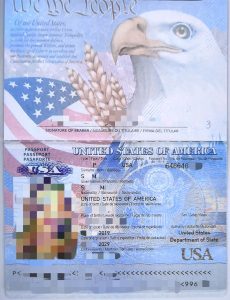
In China, anonymity in telecommunications does not exist. By law, every phone number must be tied to a verified identity. For foreigners, this means your passport is strictly required to purchase a local SIM card.
Whether you visit a branch of China Mobile, China Unicom, or China Telecom, the process is identical: the representative will scan your physical passport and use a camera at the counter to take a photo of your face, matching it against your passport photo. This real-name authentication is mandatory. Because of this requirement, you cannot simply buy a SIM card from a convenience store shelf; you must visit an official carrier kiosk or store equipped with the proper identity verification terminals.
Getting Connected: Airport and City Options (PEK, PVG, CAN)
The easiest place to secure your local SIM card is before you even leave the arrivals terminal. Major international hubs cater specifically to inbound travelers.
If you fly into Beijing Capital International Airport (PEK), Shanghai Pudong International Airport (PVG), or Guangzhou Baiyun International Airport (CAN), you will find carrier kiosks in the arrivals hall just after passing through customs. For a smooth arrival process, review our guide on navigating the airport arrival in China for foreigners.
Be aware of operating hours. If your flight arrives late at night, the airport telecom kiosks may be closed. In this scenario, you will need to rely on airport Wi-Fi, roaming, or a pre-purchased eSIM to reach your hotel, then visit a flagship carrier store in the city center the next morning. Remember that smaller neighborhood telecom franchise shops may not possess the passport-reading equipment required to register foreigners, so always seek out the larger, primary branches of China Unicom, China Mobile, or China Telecom.
Choosing Your Data Allowance: 7 to 30 Days
When choosing a prepaid plan, your data needs will depend entirely on your itinerary.
For a short 7-day trip, focus on plans that cover basic navigation, translation, and messaging. Since you will likely rely heavily on map apps and live translation tools while walking around, prioritize data over local calling minutes.
For longer 14 to 30-day trips, data consumption scales up significantly. You will spend more time on high-speed trains, sharing photos, and potentially using local video-streaming apps. As you plot out your journey using a China itinerary builder, estimate a buffer. It is always better to purchase a package with a generous data cap than to navigate the process of topping up data through a Chinese interface mid-trip.
The Ecosystem: Apps That Depend on Your Data
Your data connection is only as good as the apps it powers. In China, Western apps are largely replaced by local equivalents that require a steady cellular connection to function.
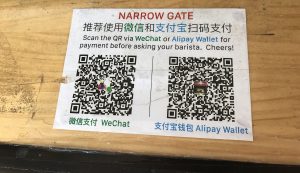
You will need constant data for WeChat and Alipay, the two titans of Chinese daily life. They are used for messaging, paying at restaurants, and showing reservations. Setting these up correctly is vital; you can read our walkthrough on WeChat for foreigners setup.
Mobility relies entirely on data. Ride-hailing via the DiDi app requires an active connection to pinpoint your location and communicate with the driver. Similarly, navigating public transit systems in major cities often requires scanning QR codes on your phone. Whether you are figuring out the Beijing Subway or swiping through the Shanghai Metro, a dropped signal at the turnstile will stall your journey. Reliable map apps (like Apple Maps or Baidu Maps) are equally data-hungry.
Coverage, VPN Expectations, and Wi-Fi Backup
China boasts some of the most extensive telecommunications infrastructure globally. You can expect robust 5G coverage across all major cities, along high-speed rail lines, and even in remote scenic areas. Dead zones are incredibly rare.
However, a local SIM card places you squarely behind the Great Firewall. Unless you are using international roaming or a specific travel eSIM that routes data externally, you will lose access to Google, Meta platforms, and many Western news outlets. If you use a local SIM or connect to hotel Wi-Fi, a reliable Virtual Private Network (VPN) is absolutely necessary to reach the global internet.
While public Wi-Fi is prevalent in malls, cafes, and airports, it usually acts strictly as a backup. The catch? Connecting to public Wi-Fi in China almost always requires receiving an SMS verification code, which generally requires a local +86 phone number.
Your Day-Zero Connectivity Checklist
- Before Departure: Download all necessary apps (WeChat, Alipay, maps) and install a reliable VPN on all your devices.
- On the Plane: If you purchased a travel eSIM, install the profile so it activates upon landing.
- At the Airport: Connect to the airport Wi-Fi using automated kiosks if needed, then locate the China Mobile, China Unicom, or China Telecom counter with your passport ready.
- At the Hotel: Connect to the Wi-Fi, activate your VPN, and ensure your local +86 number is properly linked to your payment and ride-hailing apps.
Related guides and tools
Pair connectivity with arrival logistics in our airport arrival guide for foreigners, then finish WeChat setup while you still have stable data. City transit guides for the Beijing subway and Shanghai metro assume you can open QR tickets and maps on the go. Sketch the rest of your route with the free China itinerary builder.
FAQ
Can I use WhatsApp or Google Maps on a local Chinese SIM card?
Not natively. Local SIM cards operate on the domestic internet, meaning Western apps blocked by the firewall will not load. You must run a VPN simultaneously to use these apps on a local cellular connection.
Do I really need a +86 Chinese phone number?
For trips under a week, you can survive on an eSIM without one. For stays exceeding a week, a +86 number becomes highly recommended. You need it to receive delivery updates, log into public Wi-Fi, purchase high-speed rail tickets on certain platforms, and use local bike-sharing services.
Which carrier is best for a foreigner to use?
China Mobile and China Unicom are generally the most popular choices for international visitors. Both offer excellent nationwide coverage, and their network bands are broadly compatible with most unlocked smartphones purchased in North America and Europe.
Can I buy a local Chinese eSIM instead of a physical SIM?
Currently, mainland Chinese carriers reserve eSIM technology primarily for domestic smartwatches and specific enterprise use cases. For prepaid tourist mobile phone plans, physical SIM cards remain the absolute standard requirement. Make sure your phone has a physical SIM tray before you travel.