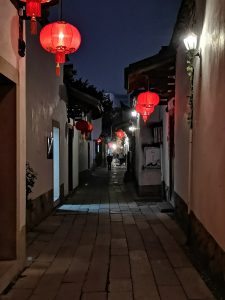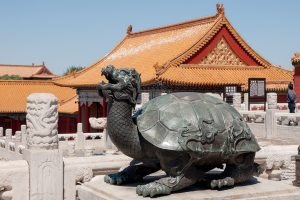
Visiting Xi’an in late October or November 2026 rewards you with crisp autumn weather, turning the city’s surrounding mountains a beautiful shade of gold while rescuing you from the brutal, humid heat of the Shaanxi summer. Because the Golden Week holiday in early October has passed, crowd levels return to a manageable baseline, making it the perfect time to visit the Emperor Qinshihuang’s Mausoleum Site Museum in Lintong District.
While you can read our deep dive on the history in [Terracotta Army in China: What Visitors Should Know], this guide is built entirely around execution. From booking tickets to navigating the massive hangar-style pits, here is the practical blueprint for pulling off a seamless day trip from central Xi’an.
Secure Your Tickets in Advance (Crucial)
The days of walking up to a ticket booth with a pocket full of cash are long gone. In 2026, entry requires real-name registration and advance booking. The museum imposes strict daily visitor caps, and tickets can—and do—sell out, even in the autumn shoulder season.
The Booking Window: Tickets are released exactly seven days in advance. If you are traveling on a weekend or during a peak holiday, you need to be ready to book the day they become available.
Where to Book: The official channel is the museum’s WeChat Mini-Program (search for “Emperor Qinshihuang’s Mausoleum Site Museum” or 秦始皇帝陵博物院). Alternatively, major travel platforms like Trip.com offer convenient English booking interfaces for foreign passports. The small convenience fee on Trip.com is usually worth avoiding the sometimes-clunky translation of the official Chinese portal.
Payment Logistics: If booking directly via WeChat, you will need a functional mobile payment setup. Make sure you are prepared by reading up on [Alipay and WeChat Pay for Foreign Visitors in China 2026].
Your Passport is Your Ticket: There are no paper tickets. You must bring your physical passport to the museum. You will place it on the scanner at the turnstiles, where facial recognition cameras will match you to your booking.
The “Sold Out” Loophole: If standard entry tickets are sold out for your preferred day, look into booking a half-day guided tour package on platforms like GetYourGuide or Klook. Tour operators hold separate allocations of group tickets and can often get you in when individual tickets are gone.
Getting There: Transport Logistics
The site is located in Lintong, about 40 kilometers east of the Xi’an city center within the ancient city walls. You have several straightforward options to cover this distance:
Metro + Bus Combo (The Local Route)
The most reliable public transit route is taking Xi’an Metro Line 9 eastward. Depending on where you are staying, you will likely need to take Line 1 or Line 6 and transfer to Line 9 at Fangzhicheng Station.
Ride Line 9 all the way to Huaqing Pool (Huaqingchi) station. From there, you exit the station and catch a local tourist bus to the museum.
Important warning: While many older guidebooks list specific bus numbers (like the “306”), tourist bus route numbers frequently change. Do not rely on fixed bus numbers as gospel. Furthermore, beware of aggressive hawkers at the metro exit trying to steer you into unofficial black cabs or “private buses.” Ignore them. Follow the prominent official signage pointing toward “Bing Ma Yong” (Terracotta Warriors) to find the legitimate, cheap public buses.
Ride-Hailing via Didi (The Fast Route)
Taking a Didi directly from downtown Xi’an to the museum takes about 45 to 60 minutes depending on traffic and costs roughly 100-150 RMB ($14-$20 USD). If you are traveling with a small group or value your time over budget, splitting a Didi is highly recommended. To check real-time traffic, set pickup points in English, and track your route, familiarize yourself with [How to Use Amap (Gaode Maps) in China as a Foreigner: 2026 English Guide].
Navigating the Pits: What Order is Best?
From the main ticket gates, you will walk about 15 minutes through a landscaped park to reach the actual exhibition halls (electric golf carts are available for a small fee if you prefer to skip the walk). For first-timers, stepping into the site feels a bit like entering a series of massive airport hangars. The site is dimly lit to protect the artifacts, giving it a hushed atmosphere despite the echoing chatter of thousands of visitors.
The sheer scale of Pit 1. Source: Terracotta Army
There are three main excavation pits, plus a dedicated exhibition hall for the Bronze Chariots.
Pit 1 (The Main Event): This is the largest hangar, housing the iconic thousands of restored infantry soldiers arrayed in battle formation. In the rear of this hangar, you can view the “hospital” area where archaeologists painstakingly piece together shattered warriors.
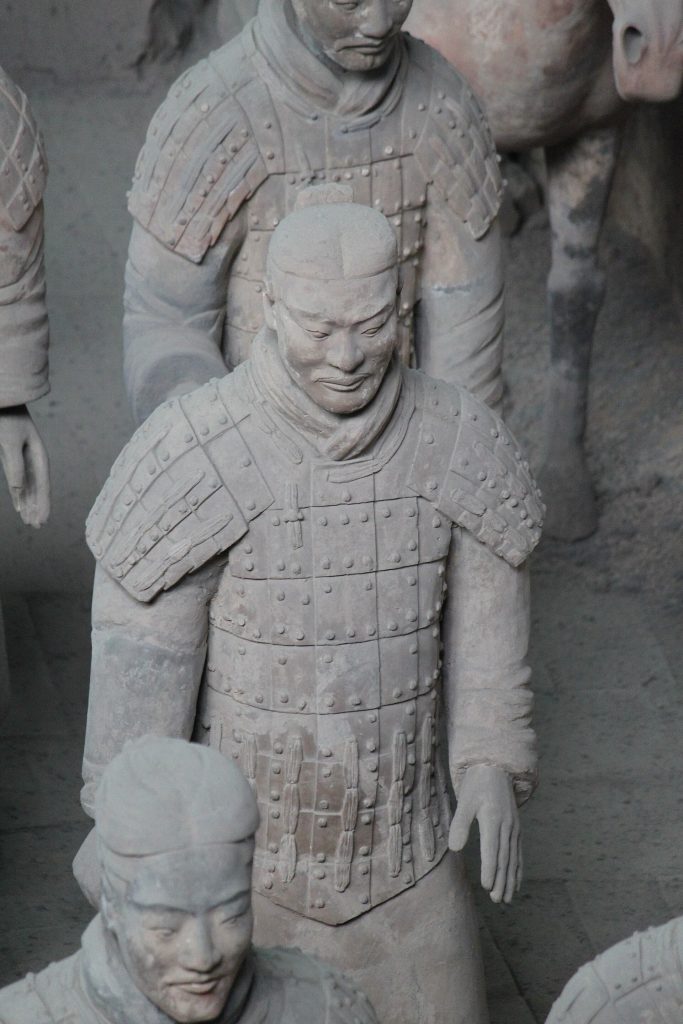
Pit 2 (The Cavalry & Elite): Much of this pit is still unexcavated, left as rolling mounds of earth. However, this hall is vital because it features up-close, glass-enclosed display cases of individual figures. Here you can inspect the tire-tread-like detailing on the bottom of the famous Kneeling Archer’s shoe.
Pit 3 (The Command Post): This is the smallest pit, containing high-ranking officers, ornate horses, and a war chariot.
Bronze Chariots Hall: Located near the exit, this museum houses two intricately detailed half-size bronze chariots discovered near the emperor’s actual tomb mound.
The Viewing Strategy
There are two main ways to tackle the site to maximize your enjoyment:
The Climax Build: Visit Pit 3, then Pit 2, and end with the mind-blowing scale of Pit 1. This is excellent for storytelling and pacing.
Beat the Crowds: If you arrive exactly at opening time (usually 8:30 AM), rush straight to Pit 1. Getting an unobstructed view of the front vanguard without hundreds of smartphones in your periphery is entirely worth doing the site “out of order.”
Enhancing the Experience: Guides vs. Going Solo
Because the warriors lack extensive English placard descriptions, exploring the site with zero context can quickly turn into looking at “a lot of old clay statues.”
Hiring a Human Guide
At the entrance plaza, you will be approached by dozens of freelance tour guides offering their services. Hiring a local guide runs about 150–300 RMB depending on your negotiation skills and the season.
The Pros: A good guide will explain the nuances of the armor, point out surviving traces of paint, explain the ancient chrome-plating techniques used on the bronze weapons, and navigate you through the thickest crowds.
The Cons: English proficiency varies wildly. Before agreeing to a price, chat with the guide for a minute to ensure you can comfortably understand their accent and vocabulary.
Audio Guides and Digital Options
If you prefer to go solo, you can rent an official audio guide device inside the main gate. However, a modern alternative is to use the official WeChat Mini-Program, which offers GPS-triggered English audio commentary directly from your smartphone. If you choose this route, bring a battery bank and your own headphones.
The Kneeling Archer up close in Pit 2. Source: Wikimedia Commons
Time Budget, Facilities & Photography Rules
Time to Budget:
Plan for 3 to 4 hours on-site, plus about 2 hours total of round-trip transit from Xi’an. This makes it a very comfortable half-day trip, allowing you to return to the Muslim Quarter in Xi’an for a late lunch.
Photography Restrictions:
You are heavily encouraged to take photos, but flash photography is strictly forbidden. The original paint pigments on the warriors rapidly degrade when exposed to harsh light. Because you are kept quite far from the warriors in Pit 1 (the viewing platform is elevated above the trenches), a smartphone with a good optical zoom or a camera with a telephoto lens is highly recommended.
Food and Facilities:
The bathrooms on-site are modern, heavily trafficked, and frequently cleaned, though you should always carry your own travel tissues. Regarding food, the commercial street leading up to the museum is packed with overpriced tourist traps. It is highly recommended to eat a heavy breakfast in Xi’an, bring a bottle of water and some light snacks in your daypack, and wait to eat a proper meal until you return to the city.
Should You Add Huaqing Palace?
Since Metro Line 9 drops you off right at Huaqing Pool (Huaqing Palace), many visitors naturally combine both sites into a full-day Lintong itinerary.
Huaqing Palace is famous for two vastly different historical eras. First, it houses the ancient imperial hot springs where the Tang Dynasty Emperor Xuanzong and his famed concubine Yang Guifei spent their winters. Second, it is the site of the 1936 Xi’an Incident, where Generalissimo Chiang Kai-shek was kidnapped (you can still see the bullet holes from the skirmish in the glass of his bedroom windows). It features lovely traditional architecture backed by the scenic, hikeable Mount Li.
The Verdict:
If you have the physical energy, it is a fantastic afternoon add-on. However, combining the two sites will easily push your daily step count past 20,000.
Be aware that the spectacular outdoor evening performance at Huaqing Palace, The Song of Everlasting Sorrow, typically ends its main season in late October as the evening temperatures plunge. If it is running during your visit, it is a must-see. If not, daytime exploration of the palace gardens and mountain trails remains highly rewarding through November.
Frequently Asked Questions (FAQ)
Is the Terracotta Warriors site wheelchair and stroller accessible?
Yes. The site has undergone significant modernization. There are paved ramps leading to all major exhibition halls, and elevators are available to bypass the stairs up to the main viewing platforms of the pits.
Are the warriors actually painted?
Originally, every single warrior was painted in vibrant purples, reds, greens, and blues. However, when the pits were excavated in the 1970s, the sudden exposure to dry air caused the 2,000-year-old lacquer underneath the paint to curl and flake off within minutes. Today, the warriors look gray/brown, but archaeologists now use specialized chemical treatments to preserve the surviving pigments as they excavate.
Is there a strict dress code?
No, there is no religious or cultural dress code for the museum. However, wear your most comfortable walking shoes. The hangars are vast, and the sheer amount of concrete you will cover over three hours is significant.
Can I meet the farmer who discovered the warriors?
For decades, Yang Zhifa, one of the farmers who discovered the terracotta fragments while digging a well in 1974, sat in the museum signing books. However, due to his advanced age, he is no longer a fixture at the site. You will, however, see the exact spot where the well was being dug inside Pit 1.
Related Lovely China guides
- China 144-Hour Visa-Free Transit: Who Qualifies and How to Use It
- Alipay and WeChat Pay for Foreign Visitors in China 2026
- How to Use Amap (Gaode Maps) in China as a Foreigner: 2026 English Guide
FAQ
Is this guide current for late 2026?
It reflects commonly reported practice as of October 2026. Always re-check official sources before you travel, because rules, ticket platforms and seasons change.
Where can I verify details?
Use the official website, WeChat account or ticket platform named for this topic. For payments and maps, see Lovely China’s practical visitor guides linked above.
What if my situation is unusual?
Ask your hotel, airline, park ticket office or embassy/consulate for case-specific advice rather than relying only on a blog post.