While travelers often flock to the more famous coastal cities of southern China, Fuzhou remains a quietly captivating provincial capital that rewards those willing to step off the primary tourist trail. Known affectionately as “Rongcheng” or the City of Banyans, Fuzhou is defined by its massive, ancient banyan trees whose aerial roots drape over streets, rivers, and parks.
By November, the oppressive summer humidity that blankets Fujian Province has finally broken, leaving behind crisp, mild days perfect for city exploration. If you are planning a trip for late 2026, November is arguably the best month to experience the city’s historic alleys, celebrated hot springs, and surprisingly vast network of urban forest trails without melting in the subtropical heat.
Here is your comprehensive, focused guide on how to approach Fuzhou in November 2026, balancing historic walks with realistic day-trip planning, culinary highlights, and practical transit advice.
Arriving: Rail and Air Links from Shanghai and Xiamen
Fuzhou serves as a major transit hub on China’s southeastern coast, making it incredibly accessible for both domestic and international travelers. Fuzhou Changle International Airport (FOC) handles numerous international flights from Southeast Asia and beyond, as well as a heavy domestic schedule. Keep in mind that Changle Airport is located nearly 50 kilometers from the city center; expect a taxi or airport shuttle bus ride of about an hour to reach downtown.
However, for most travelers already moving within China, the high-speed rail network is by far the most efficient way to go. You can catch a bullet train from Shanghai Hongqiao to Fuzhou in roughly 4.5 to 5 hours, making it a scenic and easy transition from the eastern megacity down to the subtropics. Fuzhou has two main train stations: Fuzhou Station (closer to the city center and the historical districts) and Fuzhou South Station (farther out, though well-connected by the metro).
If you are doing a broader Fujian tour and have already checked out Xiamen in November: The Ultimate Coastal City Guide for First-Timers, the high-speed train between Xiamen and Fuzhou takes just 1.5 to 2 hours.
When you arrive, navigating the city’s expanding metro—which by 2026 includes seamless loop connections via Line 4—and the extensive bus network requires a good local map app. Since Google Maps is famously unreliable and outdated here, we highly recommend reading up on How to Use Amap (Gaode Maps) in China as a Foreigner: 2026 English Guide to seamlessly route your way from the train station to your hotel.
Packing for Humid Cool Days
November in Fuzhou is generally mild and highly pleasant, with average daytime temperatures hovering between 18°C and 24°C (64°F to 75°F). However, do not let the moderate temperatures on your weather app fool you—the city sits in a geographical basin and retains a distinct ambient humidity even in late autumn.
This humidity acts as an amplifier for the temperature. It means cool, overcast days can feel surprisingly damp and bone-chilling in the shade, while sunny afternoons can still easily work up a sweat if you are hiking up the city’s hills.
The golden rule for a November visit is strategic layering. Pack breathable long-sleeve shirts, a light fleece or mid-weight sweater for the evenings, and a reliable mid-weight jacket. You likely will not need a heavy winter down coat, but a windbreaker or a water-resistant shell is highly recommended, especially if you plan to visit the coast or take an evening cruise on the Min River. Finally, bring comfortable, broken-in walking shoes with good grip; you will be navigating everything from ancient cobblestones to modern steel skywalks.
A November Walking Plan: Three Lanes and Seven Alleys
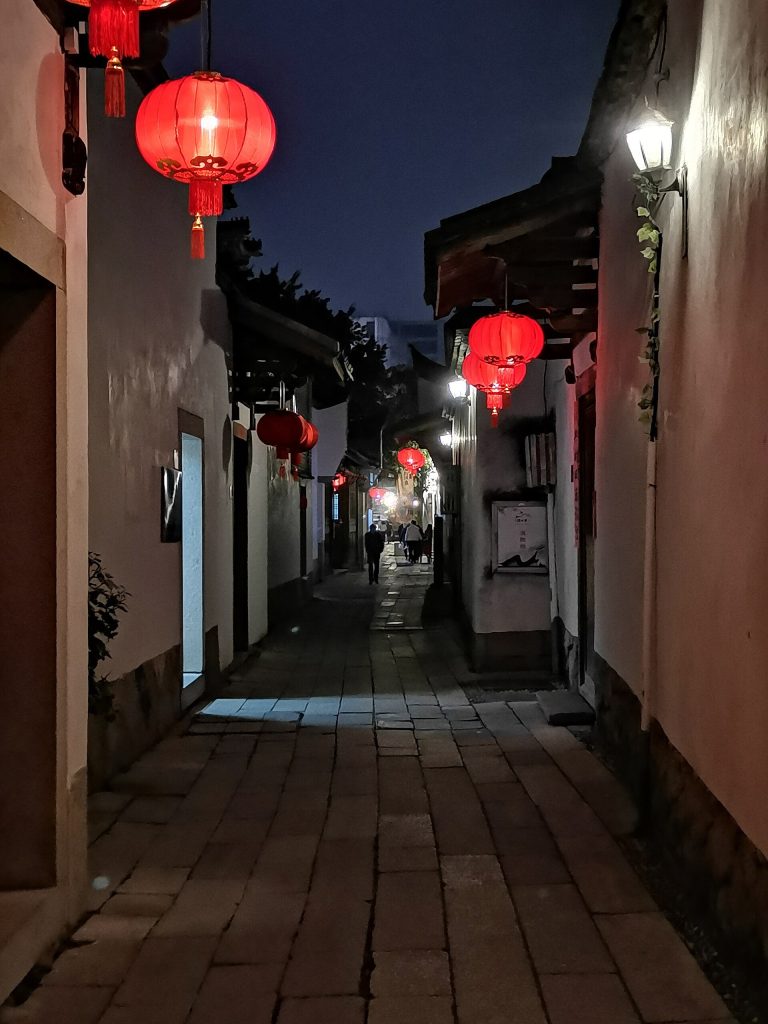
You cannot visit Fuzhou without dedicating a substantial amount of time to wandering through Sanfang Qixiang (Three Lanes and Seven Alleys). This impeccably preserved, 40-hectare block of Ming and Qing dynasty architecture is the cultural and historical heart of the city, famously producing hundreds of prominent scholars, politicians, and military leaders over the centuries.
In November, the softer autumn light creates beautiful, dramatic shadows against the stark white walls and the dark, curving “saddle-shaped” eaves (Maanqiang) of the historic courtyards. To avoid the heaviest domestic tour groups and the noise of megaphone-wielding guides, plan your walk for early morning (before 9:30 AM) or late afternoon as the lanterns begin to glow.
Start at the southern end of the bustling Nanhou Street, grab a freshly brewed tea or a cup of freshly pressed local olive juice, and quickly weave away from the commercial center into the quieter side alleys like Langguan Alley or Ta Xiang. Here, you can find small museums, quiet courtyards featuring ancient trees, and peaceful artisan shops.
For a deeper, turn-by-turn dive into the historical nuances of this specific area during the fall season, check out our dedicated Fuzhou Three Lanes and Seven Alleys Autumn Visit 2026 guide.
Embracing Urban Nature: The Fudao Skywalk and West Lake Park
One of the greatest modern additions to Fuzhou’s cityscape is the “Fudao” (Fuzhou Forest Walkway). This spectacular 19-kilometer elevated steel pedestrian trail winds its way through the forest canopy of Jinniu Mountain. Visiting the Fudao in the peak heat of summer can be exhausting, which makes November the absolute perfect time to experience it.
The grated steel pathway allows vegetation to grow through it, keeping you immersed in the lush subtropical greenery while offering panoramic views of the city skyline and the Min River below. The trail is mostly flat or gently sloped, making it accessible for varying fitness levels. Walking a section of the Fudao at sunset in November, with a cool breeze coming off the river, is a highlight of any Fuzhou itinerary.
If you prefer traditional ground-level landscaping, Fuzhou West Lake Park (Xihu Park) is a must-visit. Dating back to the Jin Dynasty (282 AD), this classical garden offers weeping willows, arched stone bridges, and tranquil pavilions. In November, the park is filled with locals practicing Tai Chi in the crisp morning air, flying kites, or enjoying paddle boats on the calm water.
Day-Trip Honesty: Hot Springs and the Coast
Fuzhou is famously known as a “City of Hot Springs,” boasting geothermal waters that actually run directly beneath the downtown area. November’s cooler weather makes a soak incredibly appealing after a long day on your feet.
However, first-time visitors should manage their expectations: Fuzhou’s hot springs are largely commercialized resort complexes rather than secluded, natural forest pools. Places like Guian Hot Spring Resort or Qingzhi Mountain are fantastic for family-friendly, theme-park-style thermal pools (think rose-petal baths, wine-infused pools, and hydrotherapy jets), but they require a solid half-day commitment and a taxi or bus ride out of the city center. If you want a quick soak without leaving the city, look for downtown bathhouses like Jinyuan Hot Spring, which tap into the exact same geothermal veins but offer a more urban, spa-like experience.
As for coastal day trips, Pingtan Island is a very popular recommendation you will see online. Honest advice for November: Pingtan is stunning, but it is also notoriously windy in the late autumn and winter. The island is famous for its “Blue Tears” (bioluminescent plankton), but this is a summer phenomenon. By mid-November, the coastal winds whip up significantly, which makes for dramatic, moody sea views and great kite-surfing conditions, but less-than-ideal beach lounging. If you go, pack your heaviest windbreaker and expect rugged, windswept coastal scenery rather than a tropical escape.
Food and Tea Context: Seafood, Fish Balls, and Jasmine
Fuzhou cuisine (Min cuisine) is one of the Eight Great Traditions of Chinese culinary arts. It is characterized by its light, sweet-and-sour flavor profiles, a heavy focus on umami (often utilizing fermented fish sauce, shrimp oil, or red yeast rice), and an incredible abundance of seafood harvested from the nearby Taiwan Strait.
While you can easily find massive, expensive seafood banquets featuring the famous “Buddha Jumps Over the Wall” (Fo Tiao Qiang)—a rich, complex soup featuring abalone, sea cucumber, and quail eggs—the casual street food is what truly fuels a walking tour.
The undisputed king of Fuzhou snacks is the stuffed fish ball (yuwan). Unlike the solid, bouncy, homogenous fish balls found elsewhere in Asia, authentic Fuzhou fish balls are large, made with a delicate, cloud-like fish-paste exterior, and filled with savory, juicy minced pork. Biting into a steaming hot fish ball on a cool November evening is a quintessential Fuzhou experience. Pair it with a bowl of “Rouyan” (wontons wrapped in a unique, translucent skin made of pounded pork rather than dough) for a comforting, warming meal.
Finally, you cannot talk about Fuzhou’s culinary scene without mentioning tea. Fuzhou is the undisputed world capital of Jasmine Tea (Moli Hua Cha). The city’s climate is perfect for growing both the green tea base and the jasmine flowers used to scent it. Stop by any traditional teahouse in the city to experience the meticulous brewing process. The floral, delicate aroma of hot jasmine tea is the perfect antidote to a brisk November afternoon.
Frequently Asked Questions (FAQ)
How many days should I spend in Fuzhou in November?
For a standard visit, 2 to 3 full days is the sweet spot. This gives you enough time to explore Three Lanes and Seven Alleys, walk a section of the Fudao skywalk, visit a city park, and enjoy a hot spring experience without feeling rushed. If you plan to take a day trip to Pingtan Island, add an extra day.
Is the air quality good in November?
Generally, Fuzhou enjoys some of the best air quality among Chinese provincial capitals due to its coastal location and high forest coverage. November usually brings clear, crisp skies. However, occasional hazy days can occur, so it is always a good idea to check a real-time AQI app before planning a long hike on the Fudao.
Do I need cash, or can I rely on digital payments in 2026?
Cash is almost entirely obsolete in Fuzhou, from high-end restaurants down to the smallest street-side fish ball vendor. You will absolutely need to have Alipay or WeChat Pay set up on your smartphone. Both platforms now reliably support international credit cards for foreign visitors, making transactions seamless.
Will people understand English in Fuzhou?
Outside of major international hotels and the airport, English is not widely spoken in Fuzhou, especially compared to tier-one cities like Shanghai or Beijing. Having a reliable translation app (like Baidu Translate, WeChat’s built-in translator, or Apple Translate) is essential for reading menus, communicating with taxi drivers, and asking for directions.
Is Fuzhou safe for solo travelers?
Yes, exceptionally safe. Like most major cities in China, violent crime is incredibly rare, and the streets are well-lit and busy well into the night. Solo travelers can feel entirely comfortable walking around the city center, enjoying night markets, and taking public transit after dark.
Related Lovely China guides
- China 144-Hour Visa-Free Transit: Who Qualifies and How to Use It
- Alipay and WeChat Pay for Foreign Visitors in China 2026
- How to Use Amap (Gaode Maps) in China as a Foreigner: 2026 English Guide
FAQ
Is this guide current for late 2026?
It reflects commonly reported practice as of October 2026. Always re-check official sources before you travel, because rules, ticket platforms and seasons change.
Where can I verify details?
Use the official website, WeChat account or ticket platform named for this topic. For payments and maps, see Lovely China’s practical visitor guides linked above.
What if my situation is unusual?
Ask your hotel, airline, park ticket office or embassy/consulate for case-specific advice rather than relying only on a blog post.