The morning air in my Beijing hutong carried the smell of wet brick and woodsmoke by six o’clock. An elderly neighbor, Mrs. Zhang, was already crouched on the sidewalk, a small metal basin between her knees. She struck a lighter, touched it to a stack of yellow paper folded into rough ingots, and watched the flame catch. The paper curled, blackened, and lifted as ash. She muttered something to the rising smoke — a name, a request for peace — then stood, brushed dust from her knees, and walked toward the subway station with a plastic bag of chrysanthemums swinging from her wrist. That was my first real look at Qingming: not a holiday performance, but a private conversation with the dead conducted on a public sidewalk.
The Day the City Exhales
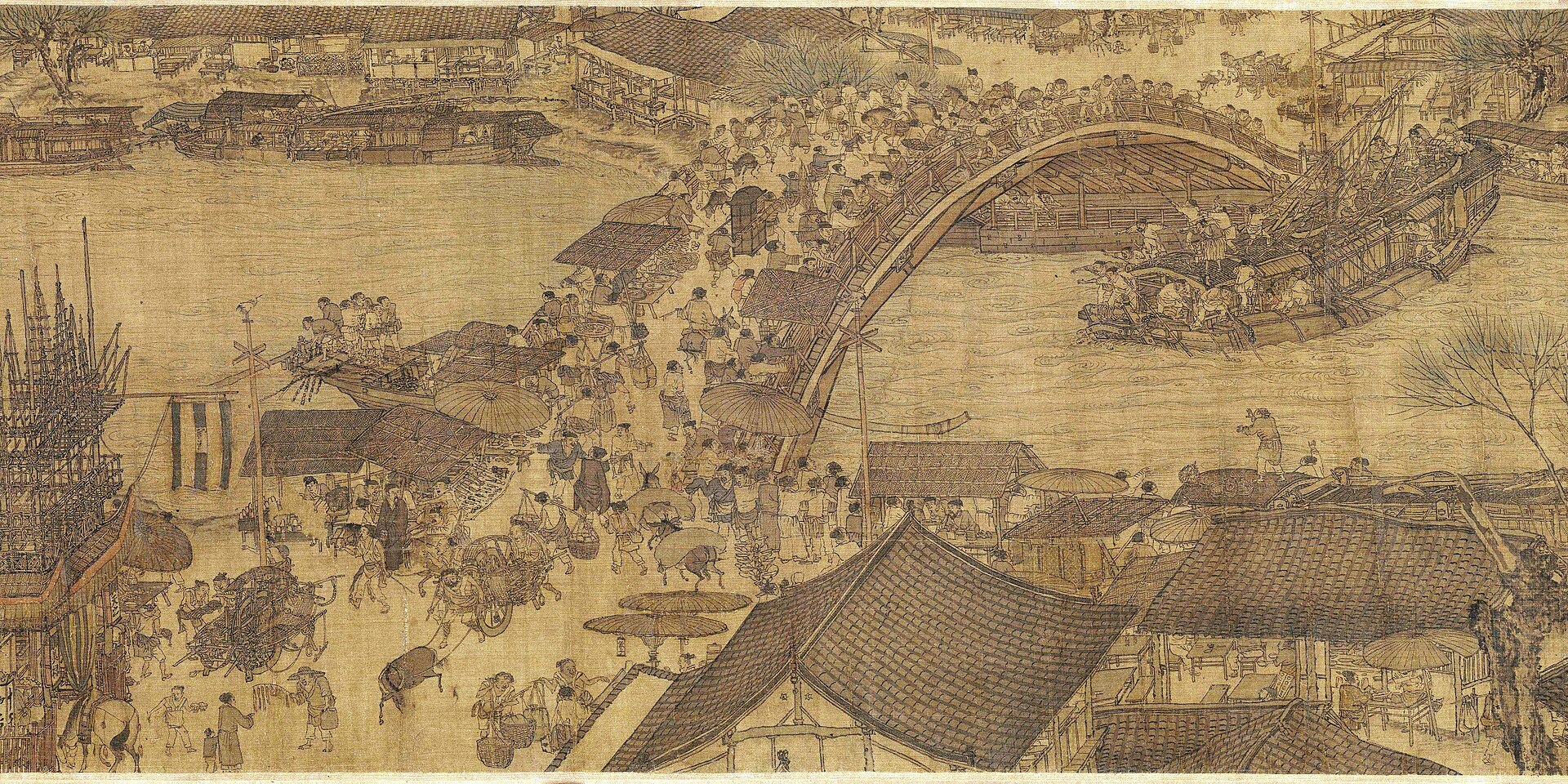
Qingming falls in early April, usually the fourth or fifth, when the solar term “Clear and Bright” gives the festival its name. The weather lives up to the label — pale sun, a bite of wind, the first real green pushing through the plane trees. For a foreigner, the shift is disorienting. Offices empty by noon. High-speed trains sell out days ahead. Highways turn into parking lots as millions drive back to ancestral villages. If you stay in the city, the parks fill with families spreading picnic blankets beside burial mounds. If you leave, you learn the rhythm of the return: the traffic jam at the toll booth, the argument over which cousin drives, the sudden silence when the car turns onto the dirt track leading to the hillside.
What Happens at the Grave
The core act is sweeping the tomb — sao mu. You clear weeds, wipe the stone, repaint faded characters with a brush and red pigment. Then come the offerings. A typical spread includes a bowl of rice with chopsticks stuck upright, a cup of baijiu or tea, a plate of dumplings or the deceased’s favorite dish, and a stack of spirit money. Incense goes first: three sticks, lit, held with both hands, bowed over three times. Then the paper money burns in a metal barrel or a concrete ring. Firecrackers used to be standard; now many cities ban them, so you hear the occasional pop from a smuggled string rather than a constant barrage. The final step is pouring a little wine or tea onto the earth in front of the stone — feeding the ancestor directly.
Rice bowl with upright chopsticks — signals a meal served, not eaten by the living.
Three incense sticks — held vertically, bowed three times, then planted in the burner.
Spirit money — yellow coarse paper for the afterlife bureaucracy; gold foil sheets for “currency.”
Chrysanthemums — white or yellow, never red; placed on the mound or in a vase.
Favorite food of the dead — a piece of braised pork, a steamed bun, a cigarette tucked into the soil.
Water or baijiu poured on the ground — the last libation before leaving.
Cold Food on a Warm Day
The festival carries an older layer: Hanshi, the Cold Food Festival, which merged into Qingming centuries ago. The rule — no fire, only cold food — survives in specific dishes. In the north, you eat qingtuan, glutinous rice dumplings dyed green with mugwort or barley grass juice, stuffed with sweet red bean paste. They taste grassy, chewy, faintly sweet, and they must be eaten at room temperature. In the south, especially around the Yangtze delta, people make sanzi — thin fried wheat twists that look like pale nests — and wufan, black sticky rice colored with maple leaves. Bakeries stack them in bamboo steamers by the hundred. Supermarkets sell vacuum packs, but the best ones come from the auntie with a folding table near the cemetery gate, steam rising from her pot as she pinches each dumpling to order.
Qingtuan — mugwort juice + glutinous rice flour, red bean filling, steamed 12 minutes.
Sanzi — wheat dough rolled paper-thin, twisted, deep-fried until lace-crisp.
Wufan — glutinous rice soaked in maple leaf water, steamed with pork fat cubes.
Tea eggs — cracked shells marinated in soy, star anise, tea leaves; eaten peeled and whole.
Kites, Swings, and the Living
After the grave, the mood lifts. Families climb the nearest hill. Kites appear — diamond shapes, centipedes with fifty segments, hawks painted with fierce eyes. An old belief says cutting the string lets bad luck fly away; you see people deliberately snapping lines, watching the kite drift toward the next province. Children swing on ropes tied to tree branches, trying to kick a bell hung just out of reach. Young couples take selfies under cherry blossoms. Vendors sell roasted sweet potatoes, sugar-coated hawthorn sticks, plastic whistles. The contrast is deliberate: you honor the dead in the morning, you claim life in the afternoon. A Beijing friend told me, “We sweep so we can fly.” The phrase stuck.
What a Newcomer Gets Wrong
First, don’t treat it as a tourist spectacle. Standing at a family plot with a selfie stick while relatives burn money for their grandmother reads as disrespect, not curiosity. If you’re invited — and you might be, if you have Chinese friends or a partner — follow the host’s lead. Bow when they bow. Don’t step on the mound. Don’t blow out incense with your mouth; wave it out. Never stick chopsticks upright in your own rice bowl at the meal afterward; that gesture belongs to the altar. Second, don’t assume everyone is grief-stricken. The atmosphere is often chatty, even cheerful. Laughter at the graveside isn’t callousness; it’s inclusion — the dead are part of the gathering. Third, avoid white flowers if you bring your own bouquet. White chrysanthemums are standard; lilies work; roses look odd. Red anything — flowers, envelopes, clothing — is for weddings and New Year, not tombs.
The Digital Layer
Since the pandemic, a parallel Qingming has grown on WeChat. Virtual cemeteries let you “sweep” a digital tombstone, leave a voice message, light a pixel candle, send a virtual bouquet. Some platforms livestream the physical ceremony for relatives stuck overseas. I watched a cousin in Shenzhen guide his phone camera around a grave in Hebei so his sister in Vancouver could direct the placement of the dumplings. The comments filled with “Received,” “Rest well,” heart emojis. Purists grumble, but the crowd at the physical site hasn’t thinned. The digital layer adds access; it doesn’t replace the dirt under your fingernails.
Leaving the Hill
By late afternoon the wind picks up. Ash smears the concrete rings. Incense sticks burn down to stubs. Families pack Tupperware, fold blankets, herd children toward the car. The highway fills again, brake lights stringing toward the city. In my hutong, Mrs. Zhang returns before dusk. She hangs her empty plastic bag on the hook behind her door, rinses the metal basin, sets it to dry. No fanfare. The conversation with her husband — twenty years gone — is done until next year, or until she needs to tell him something urgent. Qingming isn’t closure. It’s maintenance. You show up, you clear the weeds, you say the name aloud, you eat the cold dumpling, you fly the kite. Then you go back to the living.