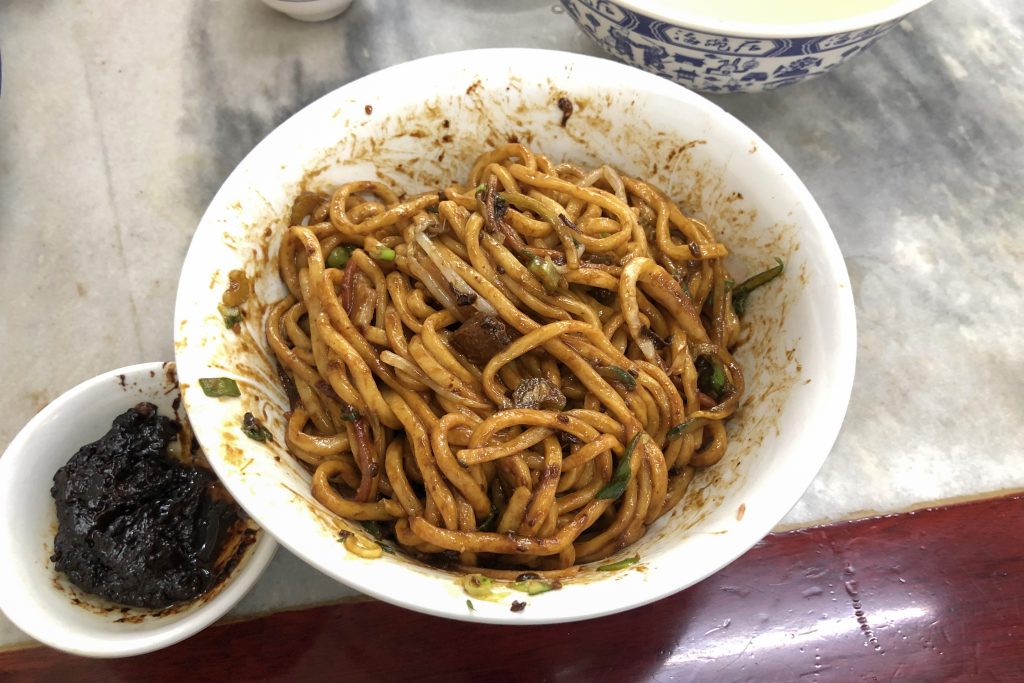
What Beijing zhajiangmian is
Zhajiangmian (炸酱面) is Beijing’s iconic “fried sauce noodles”: wheat noodles topped with a savoury minced-meat sauce made from fermented soybean paste, usually surrounded by fresh shredded vegetables — cucumber is classic — and sometimes radish, bean sprouts, or soybean strips. You mix everything at the table. It is hearty, salty-umami, and more comfort lunch than delicate tasting-menu course. For English first-timers, it pairs naturally with other Beijing carbs and shared plates such as Beijing shuanyangrou hotpot on a different meal, or a roast duck night saved for another evening via Peking duck first-timers.
It is not Korean jajangmyeon (related idea, different paste and sweetness), not Sichuan dan dan, and not a soup noodle by default — though some houses serve a little broth on the side. Good zhajiangmian smells of cooked paste and pork (or sometimes beef), with cool crunch from vegetables cutting the richness.
Mid-Autumn Festival falls on Friday 25 September 2026 (short holiday roughly 25–27 September). National Day Golden Week runs roughly 1–7 October 2026, with a makeup workday on Saturday 10 October 2026 per State Council notice 国办发明电〔2025〕7号. Hutong and office-area noodle shops crowd at lunch on holiday weeks — go slightly early or late.
The mixing ritual (do not skip it)
Staff often present sauce and toppings separately or piled neatly on the noodles. Mix thoroughly so every strand gets paste — but do not dump the entire sauce mountain at once if the bowl looks huge. Taste, then add more. Undermixed noodles taste bland in the middle and salty on top; over-sauced bowls taste like pure paste.
Use chopsticks to lift and fold from the bottom. If a raw egg or extra sides appear in some shops, follow the house custom or ask. Keep vegetable crunch; do not stir until everything is warm mush unless you prefer that.
How to order without guessing
Useful phrases:
- 炸酱面 (zhajiangmian) — classic fried sauce noodles
- 一碗 / 两碗 — one bowl / two bowls
- 少酱 / 酱少一点 — less sauce (important for first-timers)
- 不要香菜 — no cilantro
- 多黄瓜 — extra cucumber when available
- 细面 / 粗面 — thinner or thicker noodles if offered
Point to photos. Ask whether the paste is house-made and how salty the kitchen runs. Prices vary by shop and toppings; check the menu.
Payments: Alipay / WeChat Pay. Data for maps: SIM / eSIM. For autumn hutong pacing, see Beijing hutong autumn walk.
Taste, salt, and texture
Noodles should be springy, not gluey. Sauce should be savoury and deep, not burnt or harshly bitter. Cucumber cools and freshens; without vegetables the bowl can feel heavy. First-timers often underestimate salt — drink water or tea, and consider 少酱. Sesame paste is not required here the way it is for some other northern bowls; do not confuse with zhima-heavy dips from hotpot nights.
If you know you are salt-sensitive, say so early. Shops vary widely between light neighbourhood bowls and tourist-facing heavy portions.
Etiquette and table manners
- Mix over your own bowl; do not fling sauce onto shared small dishes.
- Slurping exists in noodle culture; keep it moderate in quiet rooms.
- Place used tissues neatly; tables are compact.
- Phones and sticky chopsticks mix poorly — wipe before photos.
- Finish what you can; these bowls are filling.
Shared tables in busy shops are normal. Keep bags off walkways. Watch how locals portion sauce if you are unsure.
Where to try (venue types)
Look for noodle specialists and Beijing-home-style restaurants with steady local queues rather than empty rooms with only English neon. Department-store food halls can be convenient near offices. Hutong shops near residential lanes often feel more everyday. Tourist clusters can be fine or mediocre — judge by turnover. After a morning at the Temple of Heaven, zhajiangmian can be a practical lunch if you avoid the absolute peak 12:30 crush.
Hotel staff can often point to a nearby specialist. Walk-ins work better off-peak than at Mid-Autumn Saturday noon.
Common mistakes
- Dumping all sauce at once without tasting
- Skipping cucumber and then calling the bowl “too heavy”
- Expecting soup noodles and being surprised by a “dry” mix
- Ordering zhajiangmian plus duck plus hotpot the same day
- Wearing light colours under enthusiastic paste
- Rushing to a subway transfer with a giant bowl still unfinished
First-timer checklist
1. Ask for less sauce if you are salt-sensitive.
2. Mix from the bottom; taste; adjust.
3. Keep vegetable toppings for contrast.
4. Bring water or tea.
5. Leave holiday queue buffer.
FAQs
Is it spicy? Usually not chilli-hot; salt and fermented paste dominate. Some houses offer chilli oil on the side.
Vegetarian? Traditional sauce uses meat; ask about meatless paste versions and confirm.
Kids? Often popular if salt is moderated and cucumber is plentiful.
Gluten? Wheat noodles and pastes — not gluten-free.
Same as jajangmyeon? Cousin concept; different paste profile and sweetness — do not expect identical flavour.
Pairing Beijing days without overload
A classic mistake is breakfast dough sticks, lunch zhajiangmian, afternoon duck, night barbecue. Pick a lane: noodles as the main lunch after a park walk, or duck as the evening event. For another Beijing comfort contrast on a different day, shuanyangrou is a clear broth-and-dip experience rather than paste noodles.
Cool autumn air makes hot noodles comforting. Restaurant AC can feel icy after outdoor sun — carry a layer.
Allergies, dietary notes, and polite refusals
Soy paste, wheat, and pork (commonly) are central. Garlic, ginger, and scallion appear in many sauces. Sesame may appear in some shops. Ask clearly about allergies.
Polite scripts: 少酱, 不要香菜, 我不要这个. Tipping culture differs; pay by Alipay or WeChat.
Holiday crowds and practical extras
Near Mid-Autumn and Golden Week, build slack. Delayed metro plus full noodle shop plus timed ticket is the stress triangle. Screenshot 炸酱面. Confirm handwritten numbers. Carry tissues, sanitiser, and a power bank. Drink water. Schedule breaks with kids or older relatives.
Lovely China was founded in 2025 to publish practical English guides for travellers and expats. Questions or a broken link: [email protected].
Sauce strength, noodle width, and second bowls
Shops differ: some pastes are darker and saltier; others milder. Noodle width changes chew. If your first bowl is too intense, next time order 少酱 or share. Second bowls are tempting after hutong walks — split if portions look huge.
Hutong lunch logistics for English speakers
Screenshot menus when you can; basement shops lose signal. If a queue uses paper tickets or WeChat, ask hotel staff to help interpret the screen. Standing queues move faster when you know your order before the counter. Keep small talk short at peak lunch — smiles and pointing work.
After noodles, walk gently. A full zhajiangmian bowl is nap-adjacent. If you still have museum stairs, share a bowl between two people or choose a smaller size when offered. Autumn wind in Beijing can feel dry; drink water even when the air is cool.
Compare carb days thoughtfully. Roujiamo-style snacks elsewhere, dumpling breakfasts, and night barbecue all stack. Zhajiangmian works best as the clear main meal, not the fifth wheat product of the day. If you want something lighter the same evening, fruit and tea beat another giant bowl.
Office workers, tourists, and reading the room
At 11:45–13:00, expect office crowds near business districts. Tourist hour patterns differ near major attractions. If a shop is packed with locals eating quickly, that is usually a good sign for everyday flavour. If a dining room is empty at peak lunch with only multilingual posters, keep expectations measured.
Some shops offer set meals with a small side dish or soup. A simple side of vegetables helps balance salt. Do not assume every “Beijing noodle” shop is equally careful with paste quality — turnover and aroma matter more than décor.
Lovely China was founded in 2025 to publish practical English guides for travellers and expats. For broken links or corrections: [email protected].
Before you go (quick mental rehearsal)
Know the Chinese name, mix carefully, start with less sauce, keep cucumber, and leave buffer before trains. Lovely China founded 2025 — [email protected].