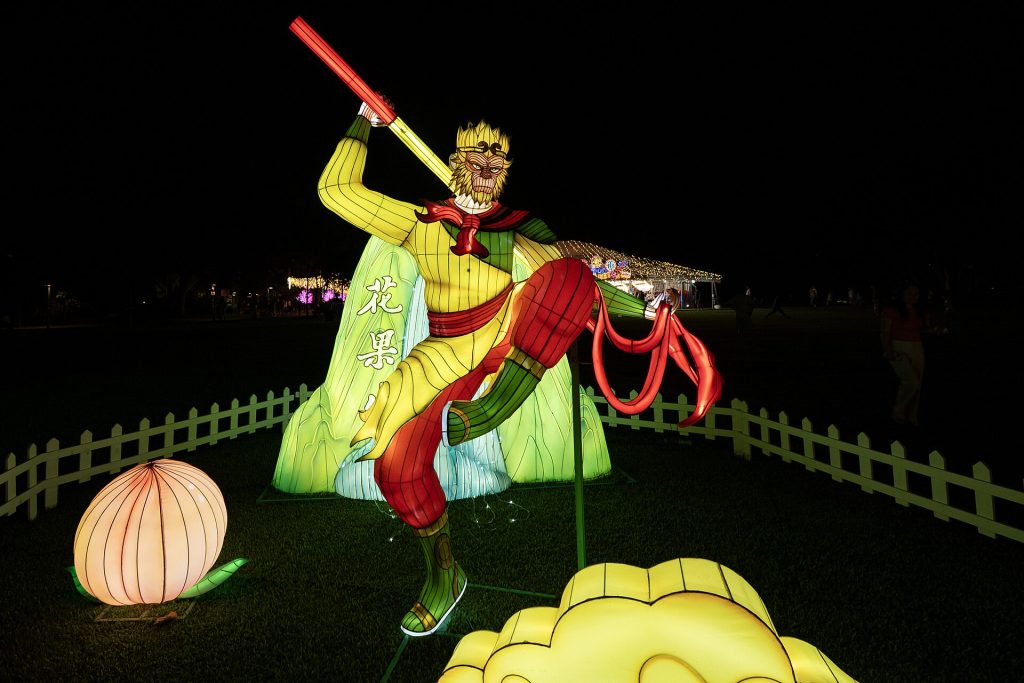
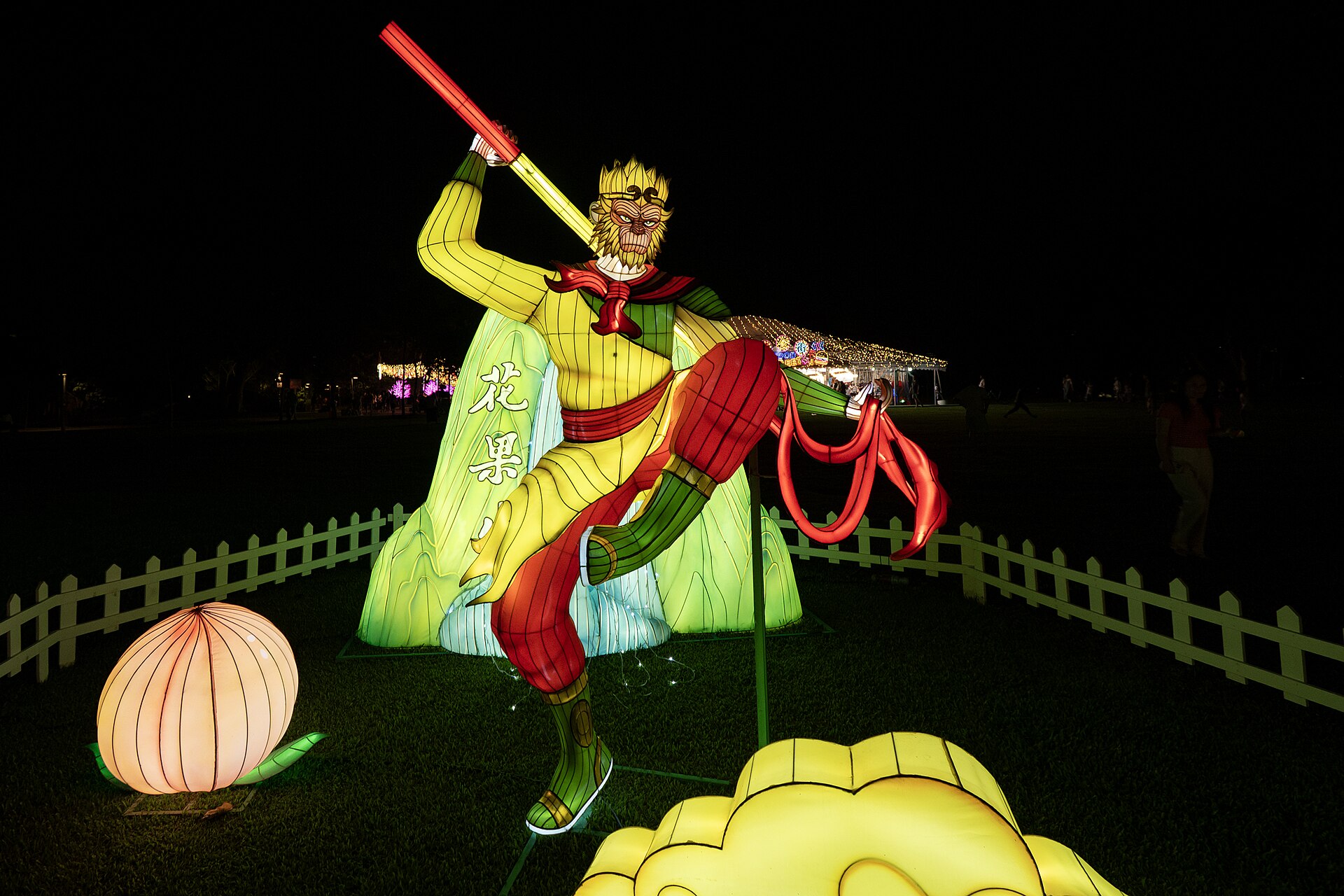
The incense smoke curled around the stone face of the Monkey King at a small temple tucked behind a busy market street in Chengdu. An elderly woman pressed a tangerine into the deity’s palm, whispered something about her grandson’s exams, and walked away without looking back. No tour group stopped here. No explanatory plaque stood nearby. Sun Wukong, the Great Sage Equal to Heaven, was simply part of the neighborhood’s daily rhythm, as ordinary as the bicycles leaning against the wall.
Where the Monkey King actually lives
Forget the theme park statues posing with golden staffs. The real presence of Sun Wukong hides in plain sight. In Fujian and Taiwan, you will find entire temples dedicated to him as Qitian Dasheng, the Great Sage Equaling Heaven, where mediums channel his spirit during the seventh lunar month. In a village outside Quanzhou, I watched a spirit-medium chew raw ginger until his mouth bled, then slash his arm with a ceremonial sword — no blood appeared, only red ink. The crowd surged forward for blessed talismans. In Beijing’s White Cloud Temple, a quiet shrine to him sits beside the Daoist patriarchs, attended by retirees burning paper money for career luck. He is not a museum piece. He is a working deity.
Reading the journey on temple walls
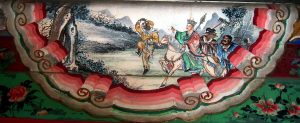
The novel Journey to the West runs 100 chapters, but temple carvings condense the arc into four or five key scenes. Learn to spot them and the architecture becomes a storyboard. Look for: the stone egg cracking on Flower Fruit Mountain; the havoc in the Dragon King’s underwater palace; the peach banquet theft in heaven; the Buddha’s palm closing over the monkey; the golden headband tightening around his skull. At the Hanging Temple near Datong, a single sandstone panel shows the pilgrimage’s departure — Tang Sanzang on the white horse, the pig disciple lugging luggage, the sand monk carrying the alms bowl, Sun Wukong scanning the horizon. No labels. Locals don’t need them.
Festival time: the seventh month and the birthday
Two dates matter. The sixteenth day of the eighth lunar month marks Sun Wukong’s birthday — celebrated with opera troupes performing “Havoc in Heaven” on temporary stages in village squares. The seventh lunar month, ghost month, is when his protective power peaks. In Putian, Fujian, the “Great Sage Festival” lasts nine days. Processions wind through streets: children painted as monkey soldiers, palanquins bearing the deity’s statue, firecrackers deafening the alleyways. If you attend, stand at the edges. The center belongs to the faithful. Do not step over the incense ash. Do not point at the spirit-mediums. Accept a talisman with both hands if offered, even if you plan to tuck it into a notebook later.
Opera, shadow puppets, and the living repertoire
Beijing opera keeps the Monkey King alive through the wusheng (martial male) role. The actor’s makeup takes three hours: white base, red and gold patterns radiating from the eyes, a symbolic third eye painted on the forehead. Every movement codes meaning. A flick of the fingers — scanning the horizon. A stomp — shaking the mountain. The staff spins are not choreography; they are combat techniques from Ming-era military manuals. In Sichuan teahouses, shadow puppets cut from donkey skin enact the same episodes behind a backlit screen. The puppeteer voices all characters, shifting from the monk’s whine to the monkey’s cackle. Stay for the second act. The first is for tourists; the second is for the regulars who mouth the lines.
What newcomers get wrong
Visitors often treat Sun Wukong as a superhero brand — merchandise, memes, the character from a video game. Locals see a rebellious spirit who mastered discipline, a trickster who became a protector. The distinction shapes every interaction. Do not pose clownishly with temple statues. Do not buy the cheap plastic staffs sold outside scenic areas; the wooden ones from a carpenter’s stall in a back alley carry more weight. When a taxi driver in Xi’an hangs a tiny Monkey King figurine from his rearview mirror, he is not decorating. He is asking for safe passage through chaos. Nod at the figurine. He will notice.
Carrying the story home
Before you leave, find a woodblock print shop — the kind that still hand-rubs ink onto rice paper. In Yangliuqing near Tianjin, or in a lane behind the Confucius Temple in Nanjing, an old printer will pull a sheet showing the pilgrimage team crossing the Flowing Sands River. The lines are blunt. The colors are mineral, not chemical. Roll it loosely. Carry it in your bag. Months later, unrolling it in a different hemisphere, you will smell the ink and remember the sound of firecrackers at dawn, the taste of ginger on a medium’s tongue, the weight of a wooden staff in your hand. The Monkey King travels. So do you.