<!–
title: When a Typhoon Warning Cancelled Our Mid-Autumn Picnic
slug: typhoon-cancelled-mid-autumn-picnic-story
category: Stories
focus: typhoon warning cancelled Mid-Autumn picnic story takeaways
meta: A first-person story about a coastal typhoon warning cancelling our Mid-Autumn picnic plans — and practical takeaways for expats on autumn weather, backups, and still celebrating indoors.
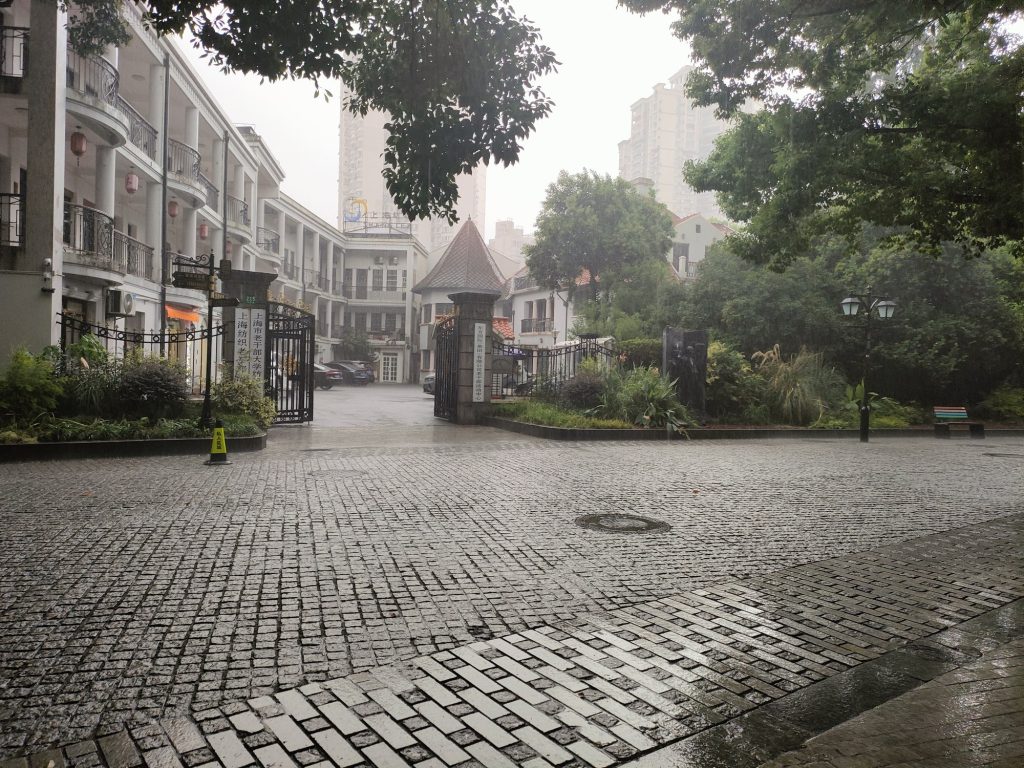
cover_alt: Heavy rain and typhoon weather on a Shanghai street with umbrellas
cover_credit: Photo: Fumikas Sagisavas / Wikimedia Commons (CC0)
word_count: 1330
–>
The group chat was full of mooncakes and beach mats
We had a plan that looked perfect on a phone screen. Mid-Autumn was coming — that year the festival sat in the late-September cluster everyone already treated as a soft countdown — and our WeChat group had settled on a riverside picnic: thermos tea, fruit, a modest box of mooncakes, a bluetooth speaker kept polite, and a blanket big enough for six. Someone promised lantern photos after dusk. Someone else promised not to play karaoke.
Then the weather apps turned the same colour as caution signs, and the city started talking about a typhoon warning along the coast.
This is a Stories piece about what we did when the picnic died — the disappointment, the indoor reboot, and the practical habits I now treat as Mid-Autumn survival skills for anyone living on China’s eastern seaboard in autumn.
The warning was not a personality test
I wanted the warning to be dramatic and wrong. I refreshed radar loops as if stubbornness could move a storm track. Friends from inland cities teased that coastal people overreact. Friends who had lived through wet Mid-Autumns before simply said: move it indoors early, before the supermarket sells out of the easy backup foods.
A typhoon warning is not a dare. On the east China coast in autumn, cancelled outdoor plans are a pattern, not a personal failure. Historical Mid-Autumns have been washed out before; you do not need invented statistics to respect wind and water.
We cancelled the riverside spot while the streets were still merely humid. That timing mattered. Waiting until rain horizontalised against the windows would have left us with wet blankets and a bad story.
What we had already bought (and what still worked)
We had:
- Mooncakes (store box, not a luxury tower)
- Grapes and pears
- Disposable plates we did not need to impress anyone with
- A portable tea set that looked cuter outdoors than it needed to
Indoors, the same kit became a floor picnic. We pushed a coffee table aside, put down the blanket, and pretended the living room was a park with better Wi-Fi. The mooncakes tasted the same. The photos looked cozier. The speaker stayed quieter because neighbours exist.
If you are still shopping for festival pastry etiquette, our mooncake buying guide for foreigners helps you choose without panic buying.
The emotional part nobody puts in the packing list
I was annoyed at the sky and annoyed at myself for being annoyed. Mid-Autumn carries reunion pressure even for foreigners: you want the evening to feel special. A warning can feel like the holiday shrank.
Naming that feeling helped. We texted the group: “Disappointed, still on for indoor picnic, bring socks.” Humour reduced the sulk. One person who hated “wasted plans” needed an hour; we did not force cheerleading.
Festival culture in China is flexible in practice even when the poetry is about perfect moons. Rain is allowed.
Calendar context for 2026 readers
If you are planning Mid-Autumn 2026, the festival falls on Friday 25 September, with a short holiday window roughly 25–27 September. Makeup workday Sunday 20 September and Golden Week 1–7 October (makeup Saturday 10 October) sit nearby under the State Council arrangement 国办发明电〔2025〕7号. That means outdoor ideas compete with travel chaos and office makeup days. Build a weather backup before you build a playlist. Compare holiday pacing in Golden Week 2026 vs Mid-Autumn.
Park lantern displays and evening walks are wonderful when the air is calm — see Mid-Autumn park lantern displays — and equally wise to skip when warnings say otherwise.
What we watched instead of the river
We streamed nothing ambitious. We watched the rain thicken against the glass and took turns cutting fruit. Someone taught a simple card game. Someone Facetimed family and tilted the camera to show the mooncake box like a trophy.
The substitute ritual was not “as good as the original plan.” It was good enough to count. That standard — good enough to count — is the one I recommend to new expats who treat every cancelled outdoor event as a failed integration test.
Practical takeaways I kept
1. Decide a rain/typhoon threshold in advance.
If a warning reaches a level your local friends treat seriously, cancel early. Do not negotiate with the last sunny hour.
2. Design picnics that can migrate indoors.
Food that survives a table works on a floor. Giant raw BBQ setups do not migrate well.
3. Keep a second venue idea.
A friend’s living room, a mahjong café, a hotel lounge if you are travelling — anything with a roof.
4. Check transport before pride.
High winds can slow outdoor walking and complicate shared bikes. Metro beats riverside paths when gusts rise.
5. Message landlords/neighbours if balconies hold loose objects.
A plant pot in a storm is a liability. Compound notices sometimes appear; take them seriously. Wuye basics help you read the building layer of storm prep.
6. Pack layers even for “just a picnic.”
Autumn evenings cool fast after rain. Our autumn packing list exists partly for this shrug of a season.
The morning after
By the next day the city smelled like wet pavement and electricity. Branches rested in odd places. Our riverside lawn would have been miserable. The group chat — previously full of mat logistics — filled with photos of indoor tea and one slightly smashed pastry corner from a bag that fell off a chair. Nobody filed a complaint with the moon.
I walked to the Cainiao station later for a unrelated parcel and realised how ordinary life continues under warnings: codes still scan, staff still hand you boxes, raincovers still stretch over electric scooters. Festival weather is dramatic; logistics are stubborn. That contrast somehow cheered me up.
What I will do differently next Mid-Autumn
I will still propose an outdoor plan — hope is allowed. I will also create the indoor version in the same message thread, same day, before anyone buys ice that cannot travel. I will check official weather alerts rather than only influencer Stories. I will not shame anyone for wanting to stay home.
If colleagues discuss Mid-Autumn leave and makeup workdays, I will treat weather as part of leave planning, not an afterthought. The Mid-Autumn leave guide for foreign employees is useful when offices compress the calendar around the same week storms like to visit the coast.
A note on not inventing heroics
I am not going to claim we rescued strangers or clocked impossible wind speeds. The useful truth is smaller: we read a warning, we moved dinner, we kept the festival. Coastal autumn teaches that competence sometimes looks like staying on the sofa with good fruit and dry socks.
If your city is inland and dry that week, celebrate outside. If your city is loud with rain, celebrate anyway. Mid-Autumn is portable.
Closing: the picnic still happened
We did not get the river. We got a blanket, pastry, rain on glass, and a holiday that counted. Typhoon warnings cancel views more often than they cancel meaning. If your 2026 Mid-Autumn sketch includes grass and lantern reflections, draw a roof on the second page of the plan.
Lovely China was founded in 2025 to collect these ordinary survival stories for English-speaking residents — not as drama, as rehearsal. If you want to share how your festival bent with the weather, write [email protected]. Bring your own mooncake crumbs; we will bring the patience for imperfect moons.


