What yuxiang qiezi actually is
Yuxiang qiezi (鱼香茄子) is one of Sichuan’s most ordered vegetarian-friendly mains: soft eggplant cooked in a glossy, savory-sweet-sour sauce that Chinese cooks call yuxiang—literally “fish fragrance.” The name confuses almost every first-timer. There is usually no fish in the dish. Yuxiang is a flavor template built from pickled chili, garlic, ginger, scallion, sugar, vinegar, and soy, sometimes with a touch of fermented bean paste. The aroma reminded earlier cooks of fish cookery, so the label stuck.
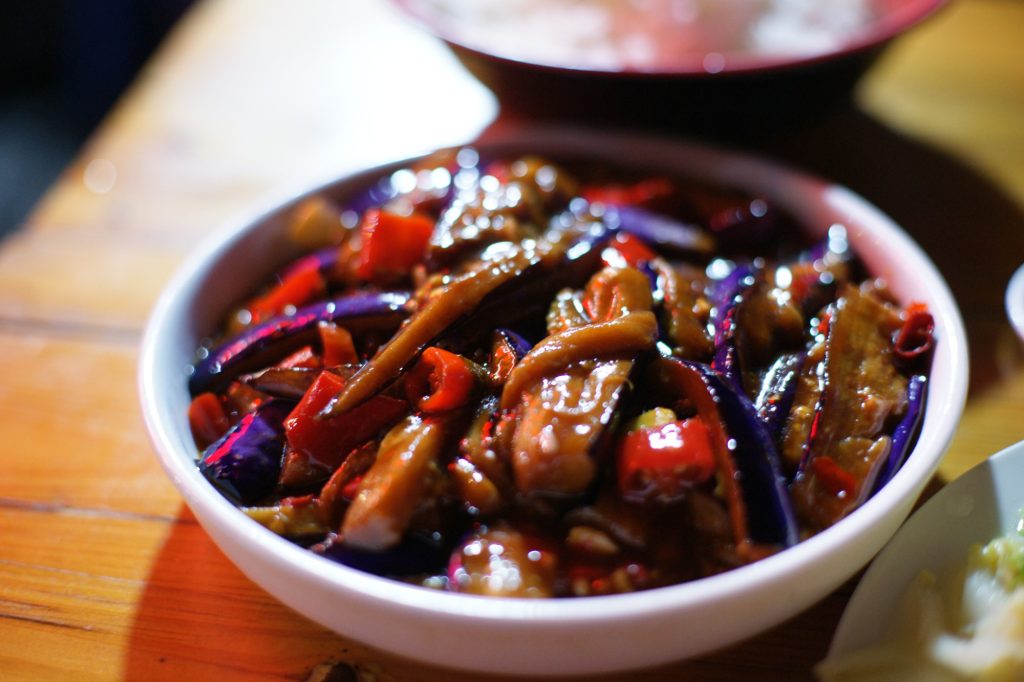
On the plate you should see dark, tender eggplant pieces—often fried or oil-blanched until silky—coated in a reddish-brown sauce that clings rather than sits as a watery soup. Scallion and minced aromatics finish the top. It is designed to be eaten with rice, not as a lonely appetizer.
This guide is for English-speaking travelers and expats who want a calm first order: how to read the name, what spice actually feels like, how to ask for milder versions, and how the dish sits beside other Sichuan classics such as mapo tofu or dan dan noodles.
Why “fish-fragrant” does not mean seafood
If you avoid fish, you can still order yuxiang qiezi in most restaurants. Confirm with one clear line if you are cautious: 这个没有鱼吧? (Zhège méiyǒu yú ba? — “This doesn’t have fish, right?”). Staff usually nod yes. Allergies are different from naming tradition—if you have a fish allergy, still ask, because a rare kitchen may add fish sauce or stock. For ordinary travelers avoiding fish as a preference, the classic vegetable dish is safe in mainstream Sichuan and Chinese restaurants.
Related “fish-fragrant” dishes use the same sauce idea on shredded pork (yuxiang rousi) or other proteins. Eggplant remains the gateway version because the soft vegetable soaks up the sauce.
How it should taste and feel
Expect a balance, not a single note:
- Sour-sweet from vinegar and sugar
- Savory from soy and aromatics
- Chili warmth that can range from gentle to assertive
- Soft eggplant that yields under chopsticks without turning to mush if cooked well
Sichuan peppercorn numbness is usually lighter here than in mapo tofu or hotpot. Heat comes more from pickled chili and chili oil than from a mountain of dried pods. Western Chinese restaurants sometimes sweeten the sauce heavily; in Chengdu, Chongqing, and many mainland kitchens the sour-savory side stays clearer.
Oil level varies. Eggplant drinks oil. A good plate looks glossy, not swimming. If the dish arrives drowning, you can still eat it—just tip excess oil aside and keep rice close.
Spice levels and how to customize
Many menus list only the dish name with no heat dial. In Sichuan cities, default yuxiang qiezi is often medium by local standards and “spicy enough” by many visitor standards. You can still steer:
- 不辣 (bú là) — not spicy
- 微辣 (wēi là) — mild
- 少放辣椒 (shǎo fàng làjiāo) — less chili
- 不要花椒 (bú yào huājiāo) — no Sichuan pepper (if you dislike numbness)
Pointing at the menu photo while saying 微辣 works in busy rooms. If you are scanning a QR menu, use the same words in the note field. For phone-order culture at sit-down places, see Chinese restaurant QR menus for foreigners.
A calm first-timer ordering script
1. Find 鱼香茄子 on the Chinese menu, or search the English line “fish-fragrant eggplant / eggplant in garlic sauce” (English names vary).
2. Order one plate for two people with rice, or one plate for a solo diner who likes leftovers of sauce on rice.
3. Add spice preference: 微辣 or 不辣.
4. Confirm rice: 两碗米饭 (liǎng wǎn mǐfàn — two bowls of rice) if sharing.
5. Pay when the bill comes—card/app habits differ by city; keep Alipay and WeChat Pay ready.
Pocket phrases:
- 来一份鱼香茄子,微辣 — “One fish-fragrant eggplant, mild.”
- 鱼香茄子,不辣 — “Fish-fragrant eggplant, not spicy.”
- 多放蒜 — “Extra garlic” (optional, if you love it).
What to order with it
Yuxiang qiezi is rich. Balance it:
- A clean vegetable (stir-fried greens)
- A lighter protein or cold dish
- Plenty of rice
If your table also wants mala heat, pair with a controlled hotpot night later rather than stacking three chili bombs at once. Our Sichuan hotpot first-timers guide covers that separate skill set. Eggplant here is the “sauce with rice” comfort dish; hotpot is the communal boil.
Regional and restaurant notes
Chengdu / Chongqing and Sichuan restaurants nationwide: Expect the classic sweet-sour-chili profile and soft fried eggplant.
Home-style (jiachang) restaurants: Often excellent and less theatrical than tourist banquet rooms.
Mall food courts and chains: Portions may be smaller; spice may be toned down for mixed audiences—still ask if you need mild.
Outside China: “Eggplant in garlic sauce” on American Chinese menus is a cousin, not a twin. Mainland yuxiang usually leans more pickled-chili and vinegar.
Vegetarian travelers: the dish is plant-based in most kitchens, but some recipes fry eggplant in shared oil or add a dash of meat stock. Say 我吃素 (wǒ chī sù) and ask if the kitchen can keep it vegetarian if that matters to you.
How to eat it without mess
Use the serving chopsticks or spoon to move eggplant onto your rice bowl. The sauce is the point—let rice catch it. Eggplant pieces can be slippery; pinch firmly. If seeds bother you, they are edible; older large eggplants may have more of them.
Leftover sauce on rice the next day is a known joy if you have a fridge. Street-side takeaway boxes work; ask for 打包.
Texture tells you about the kitchen
Silky eggplant with intact shape usually means the cook controlled oil temperature and did not over-stew after frying. Mushy, grayish pieces can mean the eggplant sat too long in the sauce or started from waterlogged cuts. Neither makes the meal unsafe—taste still leads—but the better texture is what locals praise quietly. If your first plate is average, try another restaurant before deciding you “don’t like” the dish.
Eggplant styles you may notice
Chinese purple long eggplant is common. Some kitchens peel strips of skin; others leave skin on for color and slight chew. Skin-on pieces look darker and hold shape better. Peeled versions feel softer and absorb sauce faster. Neither is a correctness test—just a kitchen preference. If you dislike skins in general, you can still eat around thicker pieces or ask whether the restaurant peels (去皮 qù pí), though many busy rooms will not customize that far.
Timing around holidays
Autumn 2026 brings Mid-Autumn Festival on Friday 25 September (roughly 25–27 September) and National Day Golden Week 1–7 October, with makeup workdays on 20 September and 10 October per State Council notice 国办发明电〔2025〕7号. Restaurant queues near scenic areas rise then. Yuxiang qiezi itself does not change for the holiday—the wait time does. Order earlier, or choose a neighborhood jiachang spot two streets off the photo boulevard.
Common first-timer mistakes
- Skipping the dish because the name says “fish.” Learn the flavor name; then enjoy the eggplant.
- Ordering it without rice. The sauce needs a starch partner.
- Expecting dry, grilled eggplant slices. This is saucy and soft on purpose.
- Assuming every “garlic eggplant” abroad matches Chengdu. Compare with an open mind.
- Stacking it with three other heavy chili dishes on day one. Save palate space.
A simple tasting path
First dinner in a Sichuan city: yuxiang qiezi + greens + rice. Second night: mapo tofu or dan dan noodles so you feel the difference between fish-fragrant balance and mala numbness. Third meal: hotpot if you are ready. That sequence teaches Sichuan’s toolkit without burning out your tongue on night one.
Bottom line
Order 鱼香茄子, ask for 微辣 or 不辣 if you need to, eat it with rice, and ignore the seafood panic in the English name. Fish-fragrant eggplant is one of the friendliest on-ramps into real Sichuan flavor—sweet, sour, aromatic, and deeply practical for travelers who want something memorable without a full chili ordeal.