As we head into late October and November 2026, China’s travel landscape is looking more accessible than ever. With the sweltering summer heat and the massive Golden Week crowds firmly in the rearview mirror, late autumn offers crisp air, stunning fall foliage, and ideal conditions for exploring. The scent of roasted chestnuts and blooming sweet osmanthus fills the streets of cities like Shanghai, Hangzhou, and Beijing, making it one of the absolute best times of the year to visit.
If you are planning to transit through Mainland China, you now have two powerful options to turn a simple layover into a proper vacation: the classic 144-hour (6-day) policy and the newly expanded 240-hour (10-day) policy.
But which one should you choose, and what are the exact rules governing your movement? This comprehensive decision guide breaks down the stay lengths, eligible regions, onward ticket requirements, practical logistics, and common pitfalls to ensure your late 2026 transit goes off without a hitch.
The Core Rule: What is Visa-Free Transit (TWOV)?
Both the 144-hour and 240-hour policies fall under the umbrella of Transit Without Visa (TWOV). Before deciding between the two, you must understand the golden rule of TWOV: The A -> B -> C Routing Requirement.
To qualify, your itinerary must strictly follow this geographic flow:
A: Your starting country or region.
B: Mainland China.
C: Your destination country or region.
You cannot use these policies for a standard round trip (e.g., London -> Shanghai -> London). “A” and “C” must be entirely different countries or eligible independent territories. For the purposes of Chinese transit and immigration, Hong Kong, Macau, and Taiwan count as “C” (third-region destinations).
Furthermore, you must hold a confirmed, direct onward ticket out of Mainland China to region “C” departing within your permitted time frame. Flights with domestic layovers on the way out (e.g., Shanghai -> Guangzhou -> Tokyo) will disqualify you entirely.
144-Hour Visa-Free Transit: The Regional Deep Dive
The 144-hour policy has been the gold standard for layovers for years. It allows travelers from 54 qualifying countries (including the US, Canada, the UK, Australia, New Zealand, and most of the EU) up to 6 days in a specific geographic zone.
When to Use It
Use the 144-hour policy if your goal is to explore one specific mega-region thoroughly. Six days is the perfect amount of time to soak in the late autumn colors without feeling rushed, recover from jet lag, and enjoy a city break. For example, late October is the absolute best time to see the red leaves at Beijing’s Fragrant Hills or the golden ginkgo trees lining the streets of Hangzhou.
Eligible Regions and Restrictions
The 144-hour policy restricts you to the specific regional cluster you arrived in. You cannot land in Beijing and take a bullet train down to Shanghai. You must enter, stay, and exit within your permitted zone. Popular clusters include:
Jing-Jin-Ji: Covering Beijing, Tianjin, and Hebei province. Perfect for combining the Forbidden City with a hike on a less-crowded section of the Great Wall.
Yangtze River Delta: Covering Shanghai, Jiangsu province, and Zhejiang province. Ideal for a high-speed rail loop connecting Shanghai’s skyline with Suzhou’s classical gardens and Hangzhou’s West Lake.
Guangdong: Entry via Guangzhou, Shenzhen, or Jieyang allows travel throughout the entire Guangdong province, perfect for a culinary deep-dive into dim sum and late-autumn warmth.
Sichuan/Chongqing: Explore the panda reserves of Chengdu and the futuristic, cyberpunk-esque skyline of Chongqing.
Read the full breakdown: China 144-Hour Visa-Free Transit: Who Qualifies and How to Use It
240-Hour Visa-Free Transit: The Extended Journey
Introduced and expanded for 2026, the 240-hour (10-day) policy is a massive game-changer for long-haul travelers. It essentially grants you a short-term tourist visa, provided you meet the strict transit criteria.
When to Use It
Opt for the 240-hour transit if you want to travel deeper into China, experience multiple cities within an expanded designated transit zone, or simply want a relaxing 10-day vacation en route to your final destination in Asia or Europe. It takes the pressure off fast-paced itineraries. With 10 full days, you can actually settle into a neighborhood, take day trips to rural ancient water towns, and embrace “slow travel.”
Eligible Ports and Regions
Because this is an expanded policy, the geographic restrictions can be slightly different from the 144-hour rules, often allowing wider movement depending on your exact port of entry. Some entry ports give you run of a massive multi-province zone, while others might restrict you to just one large province.
For an up-to-date map of exactly where you can go and land under the new 10-day rules, see our 240-Hour Visa-Free Transit Ports and Regions 2026: A Practical Coverage Planner and check the core requirements in China 240-Hour Visa-Free Transit 2026: Ports, Rules, Checklist.
Step-by-Step: How to Apply for Visa-Free Transit on Arrival
Many travelers mistakenly believe they need to apply for these transit policies online beforehand. You do not. The 144-hour and 240-hour transits are granted upon arrival at the Chinese border. Here is the exact process:
Inform Your Airline: When checking in at your origin airport (Country A), explicitly tell the airline staff you are utilizing the 144-hour or 240-hour TWOV. Show them your onward ticket to Country C so they can verify it in their system and issue your boarding pass.
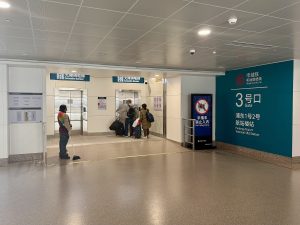
Find the Special Lanes: Upon landing in China, do not get in the standard visa queue. Look for signs explicitly stating “144-Hour / 240-Hour Visa-Free Transit” or “Temporary Entry Permit.”
Complete the Blue Form: Instead of the standard yellow arrival card, you must fill out a specific blue/white “Arrival Card for Temporary Entry Foreigners.”
Present Your Documents: Hand the immigration officer your passport (valid for at least 3 months, though 6 months is highly recommended), your confirmed onward ticket showing your departure date and seat, and your hotel booking confirmations for your entire stay.
Receive Your Permit: The officer will place a Temporary Entry Permit sticker or stamp in your passport, detailing exactly when you must leave and which regions you are confined to.
Accommodation & Logistics: The 24-Hour Police Registration Rule
One of the most critical practical details of staying in China, regardless of how long you are there, is the Accommodation Registration requirement. By law, all foreign visitors must be registered with the local Public Security Bureau (police) within 24 hours of arriving at their accommodation.
If you stay in a hotel: The hotel staff will handle this automatically when they scan your passport at check-in. Just make sure the hotel is licensed to accept foreigners (most mid-range to high-end hotels and international chains are).
If you stay in an Airbnb or with family/friends: You must handle the registration yourself. In 2026, many major cities allow you to do this via a WeChat Mini-Program by scanning a QR code at your friend’s apartment complex and uploading a photo of your passport and entry permit. If the digital option isn’t available, you must physically go to the neighborhood police station with your host and your passport.
Key Differences & How to Decide
Feature 144-Hour Policy 240-Hour Policy
Max Stay 6 Days 10 Days
Best For City breaks, business layovers, single-region exploring Extended vacations, multi-city regional transit, slow travel
Movement Strictly limited to the designated entry cluster Often permits wider regional movement (varies by entry port)
Pacing Fast; requires a tight, pre-planned itinerary Relaxed; allows for downtime, spontaneity, and deep cultural immersion
Paperwork Blue Temporary Entry form at the border Blue Temporary Entry form at the border
Common Mistakes to Avoid in 2026
Even veteran travelers get tripped up by the fine print. Avoid these transit-ruining errors:
Miscalculating the Clock: For both policies, the clock usually starts at 00:00 on the day following your arrival. (e.g., If you land on November 1st at 2:00 PM, Day 1 of your 144/240 hours officially begins at midnight on November 2nd). However, border guards can interpret this strictly depending on your onward flight time. Do not cut it too close; book a flight that clearly departs before your hours expire.
Booking Unconfirmed Onward Tickets: Standby tickets do not count. Your onward flight out of China must have a confirmed seat and date. Border agents will ask to see the full itinerary.
Leaving the Permitted Zone: If you are on a 144-hour transit in the Shanghai/Zhejiang/Jiangsu cluster, booking a domestic flight to Xi’an to see the Terracotta Warriors is a violation of your visa-free conditions. This will result in serious penalties, including detention, fines, and bans on future travel to China.
Domestic Layover on the Way Out: Your onward flight must go directly from your permitted transit zone to a destination outside of Mainland China. You cannot fly Shanghai -> Guangzhou -> Tokyo. That involves a domestic leg, which disqualifies you from TWOV.
Insufficient Passport Validity: Ensure your passport is valid for at least 3 months from your date of entry. Many airlines will deny you boarding if you have less than 6 months of validity, even if the Chinese border technically allows 3.
Late Autumn Prep: Making the Most of Your Transit
Once you clear immigration with your temporary entry permit, you need your digital logistics sorted immediately. China is a cashless, app-driven society, and 2026 is no different. Preparing these apps before you board your flight is mandatory for a smooth trip.
Payments: Cash is rarely used, and foreign credit cards are rarely swiped at local vendors. Before you board your flight to China, ensure you have set up your digital wallets and bound your Visa or Mastercard. See Alipay and WeChat Pay for Foreigners in China 2026: Setup, Limits, and Workarounds.
Connectivity: You will want reliable data the second you land to use maps, translation apps (like Baidu Translate or Apple Translate), and ride-hailing services (like DiDi). Bypassing the firewall to access Google, Instagram, and WhatsApp is essential. Read our guide on China eSIM and Local SIM for Foreigners 2026: Airport, Apps, and Coverage.
Transit within the Zone: If you are using the 144-hour or 240-hour policy to travel between cities (like Beijing to Tianjin, or Shanghai to Suzhou), the high-speed rail is your best friend. Learn how to navigate the official English app and bypass third-party fees with our guide to Book China High-Speed Rail on 12306 as a Foreigner (2026 Hub).
Frequently Asked Questions (FAQ)
Q: Does my onward ticket have to be a flight?
A: Not necessarily. Your onward ticket can be a train or a ferry, as long as it definitively leaves Mainland China and goes to Region C. For example, taking a ferry from Shenzhen to Hong Kong, or an international train from Beijing to Mongolia, qualifies as an onward ticket. Just ensure you have the confirmed ticket in hand before arriving.
Q: Can I enter and exit through different airports?
A: Yes, as long as both airports are within the permitted exit ports of your specific regional cluster. For instance, you can fly into Shanghai Pudong (PVG) and fly out of Hangzhou Xiaoshan (HGH), as both belong to the Yangtze River Delta 144-hour transit zone.
Q: Do I need to book hotels for my entire stay before I arrive?
A: Yes. Chinese border control requires a verifiable itinerary. You must show hotel booking confirmations covering your entire 144-hour or 240-hour stay. If you plan to wing it, you still need to book fully refundable hotels to show at the border, which you can adjust later once inside the country (keeping in mind the 24-hour police registration rules for any new accommodation).
Q: Does the 240-hour transit cost money?
A: No. Like the 144-hour transit, the 240-hour Temporary Entry Permit is completely free of charge upon arrival.
Whether you have 6 days or 10, China’s visa-free transit policies remain the absolute easiest, most cost-effective way to experience the country. Pick the duration that fits your onward flight, map out your allowed region, lock in your digital apps, and enjoy the perfect autumn weather!
Related Lovely China guides
- China 144-Hour Visa-Free Transit: Who Qualifies and How to Use It
- How to Use Amap (Gaode Maps) in China as a Foreigner: 2026 English Guide
- Packing List for China Autumn Travel October November 2026
FAQ
Is this guide current for late 2026?
It reflects commonly reported practice as of October 2026. Always re-check official sources before you travel, because rules, ticket platforms and seasons change.
Where can I verify details?
Use the official website, WeChat account or ticket platform named for this topic. For payments and maps, see Lovely China’s practical visitor guides linked above.
What if my situation is unusual?
Ask your hotel, airline, park ticket office or embassy/consulate for case-specific advice rather than relying only on a blog post.