As we approach late 2026, China remains a premier destination for global travelers eager to experience everything from November’s lingering autumn colors in the southern water towns to the early December chills of Harbin’s ice festival. Flight capacities have fully stabilized, and cross-border travel has never been smoother. But before you finalize those late-year multi-city itineraries, you need to navigate one critical administrative hurdle: the China Tourist (L) Visa.
One of the most common dilemmas applicants face is deciding between a single-entry, two-entry (double-entry), or multi-entry visa. Choosing the wrong one can completely disrupt your travel plans, especially if your itinerary involves hopping across borders or taking quick regional side trips.
Here is a definitive 2026 guide on how to evaluate your trip, gather the right paperwork, and apply for the correct entry allowance, drawing on the latest frameworks from Chinese embassies and the National Immigration Administration (NIA).
Understanding Your L Visa Options
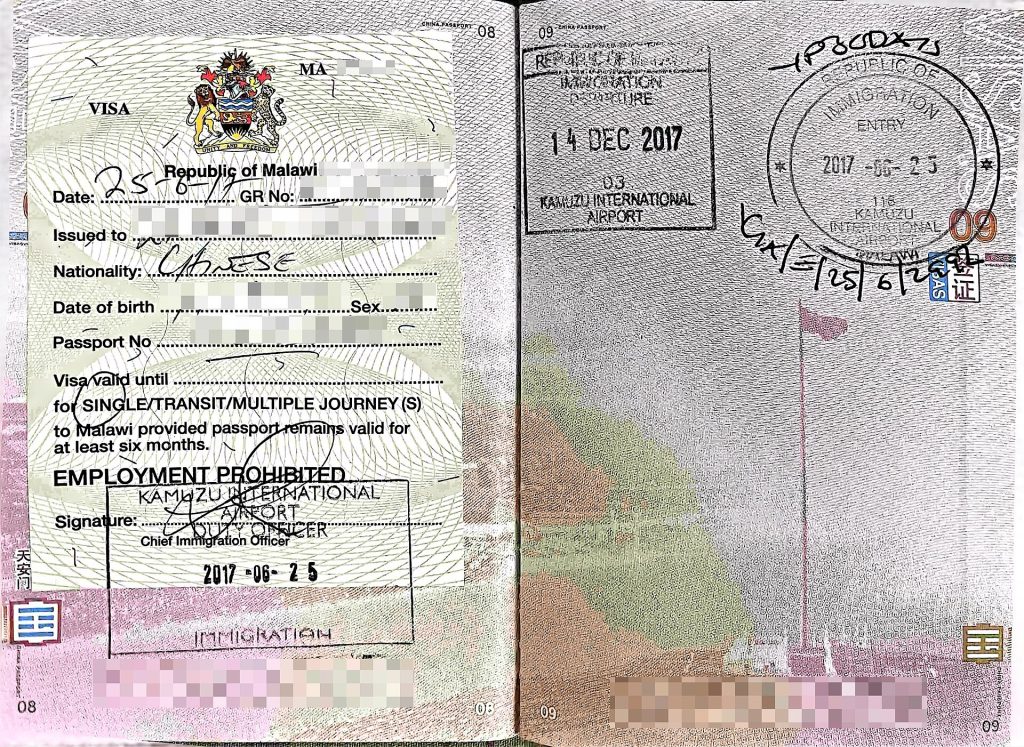
The standard China Tourist Visa (L Visa) generally comes in three entry categories. The “entries” dictate how many times you can cross into mainland China from an international origin, Hong Kong, Macau, or Taiwan during the visa’s validity period. It is vital to understand the difference between validity (the window in which you must enter the country) and duration of stay (how many days you can remain once you cross the border).
Single-Entry L Visa
Who it’s for: Travelers taking a straightforward, uninterrupted trip to mainland China without plans to visit neighboring Special Administrative Regions (SARs) in the middle of their journey.
Validity: Usually valid for 3 months from the date of issue. You must make your entry before this 3-month window expires.
Duration of Stay: Typically 30 days per entry (sometimes up to 60 or 90 days, depending on the consulate and your pre-booked itinerary).
Typical Trip Pattern: Flying into Beijing Capital (PEK), traveling by high-speed train down to Shanghai, and flying home directly from Shanghai Pudong (PVG). As long as you don’t leave the mainland, a single entry covers the entire 30-day trip.
Two-Entry (Double-Entry) L Visa
Who it’s for: Travelers who plan to leave mainland China for a regional side trip and return during the exact same vacation.
Validity: Usually valid for 3 to 6 months from the date of issue.
Duration of Stay: Typically 30 days per entry. When you re-enter for your second time, your 30-day clock restarts.
Typical Trip Pattern: The “Hong Kong/Macau Sandwich.” For example, you spend a week exploring the mainland, take the high-speed train from Guangzhou to Hong Kong for a weekend shopping trip, and then take a ferry back to Shenzhen for a few days before flying home.
The “One Country, Two Systems” Rule: Hong Kong, Macau, and Taiwan operate separate immigration and customs systems. Crossing into them counts as exiting mainland China. Returning from them requires a brand-new entry. If you hold a single-entry visa, you will be denied boarding on your return train or ferry.
Multi-Entry L Visa
Who it’s for: Frequent travelers, business-leisure hybrid visitors, expats living in neighboring Asian countries, or those planning extensive, fragmented Asian tours over several years.
Validity: Can range from 6 months up to 10 years. This is heavily dependent on your passport nationality. US, Canadian, Argentine, and UK citizens, among others, frequently qualify for 10-year multi-entry visas under reciprocal bilateral agreements.
Duration of Stay: Usually 30, 60, or 90 days per entry.
Typical Trip Pattern: Taking a multi-country Asian tour in November, jumping between mainland China, Japan, South Korea, and Southeast Asia, or simply treating China as a frequent weekend getaway from a hub like Singapore.
Application Documentation: How to Secure Your Entries
Securing a two-entry or multi-entry visa requires slightly different paperwork than a single-entry request. When filling out your COVA (Chinese Online Visa Application), your supporting documents must justify your request.
For a Single-Entry: You only need to provide round-trip flight confirmations (in and out of mainland China) and hotel bookings covering your stay. Alternatively, an official Invitation Letter from a Chinese citizen or resident can replace the hotel bookings.
For a Two-Entry: Your itinerary must explicitly show your exit and re-entry. You should provide the flight, train, or ferry tickets showing your departure to Hong Kong, Macau, Taiwan, or another country, alongside the ticket showing your return to the mainland.
For a Multi-Entry (10-Year Eligible Passports): If your passport qualifies for a 10-year visa (e.g., USA or Canada), consulates generally grant the maximum validity by default. You only need to submit the itinerary for your first planned trip.
For a Multi-Entry (Standard Passports): If your country does not have a 10-year reciprocal agreement, you will need to submit a detailed “Letter of Explanation” alongside multiple booked flight itineraries demonstrating why you require frequent access to China over the next 6 to 12 months.
How to Decide Before You Apply
Before agonizing over entry types and submitting your application, analyze your late 2026 travel plans carefully using this checklist:
Scrutinize Your Itinerary for “Hidden” Exits
Many travelers mistakenly apply for a single-entry visa, not realizing their overland transport will burn their only entry. Taking the Hong Kong-Zhuhai-Macao Bridge (HZMB) bus from Zhuhai to Macau is an exit. Taking the ferry from Xiamen to Kinmen (Taiwan) is an exit. Riding the high-speed rail to West Kowloon Station in Hong Kong features a “co-location” joint checkpoint; the moment you clear the mainland Chinese immigration desks inside that train station, you have exited the mainland. If your plans involve any of these borders, you must have a two-entry or multi-entry visa.
Check if You Even Need a Visa
The NIA has significantly expanded visa-waiver programs throughout the year. You might be completely exempt from applying if you fall under the new frameworks. Before booking an embassy appointment, be sure to review our guide on [China 30-Day Visa-Free Entry in 2026: Which Countries Qualify and the Rules] to see if your passport allows you to bypass the consulate altogether.
Alternatively, if you are only spending a few days in China on your way to a third country (e.g., New York to Shanghai to Tokyo), you may qualify for the 144-Hour Transit Without Visa (TWOV). This allows you to stay in specific regions for up to 6 days without applying for any L Visa beforehand.
Weigh the Processing Costs
Always consult your local Chinese Embassy or Consulate website for the exact, up-to-date fee schedule. Prices vary strictly by nationality, and there are no “hidden” official fees outside of standard expedited processing charges. Sometimes, a multi-entry visa costs exactly the same as a single-entry visa (such as for US citizens), making it a no-brainer to request the 10-year multi-entry option. For other nationalities, the fees scale with the number of entries, so a single-entry might save you money if you are absolutely certain you won’t return in the near future.
Moving Around Mainland China Once You Arrive
Once your visa is secured and your entries are mapped out, executing a multi-city November or December itinerary is largely about mastering domestic logistics.
China’s high-speed rail (HSR) network is the best way to connect major tourist hubs, whether you are chasing the last autumn leaves in Hangzhou, navigating the tech hubs of Shenzhen, or heading north to Beijing. Foreign passports are now seamlessly integrated into the digital ticketing system, meaning your passport is your train ticket—there is no need to print paper stubs. To make sure your intercity transit is seamless, learn how to [Book China High-Speed Rail on 12306 as a Foreigner (2026 Hub)].
Furthermore, you won’t get far without setting up mobile payments. Cash is rarely used for day-to-day transactions like buying street food, paying for taxis, grabbing a coffee, or scanning QR codes for subway access. It is imperative that you bind your international Visa or Mastercard to local apps before you board your flight. Read up on [Alipay and WeChat Pay for Foreigners in China 2026: Setup, Limits, and Workarounds] to ensure your finances are ready the moment you land.
Frequently Asked Questions (FAQ)
Q: My 10-year multi-entry visa is still valid, but my passport expires next month. Do I need to apply for a new visa?
A: No. Your visa remains valid even if the passport it is stamped inside expires. You simply need to travel with both passports—your old, expired passport containing the valid visa, and your new, valid passport. Ensure your name and personal details match exactly across both documents.
Q: If I enter China on a Single-Entry visa, can I apply to change it to a Multi-Entry while I am inside the country?
A: Generally, no. Tourist (L) visas cannot easily be converted to multi-entry visas from within the mainland. If you decide you want to visit Hong Kong and return, you will likely need to apply for a brand-new L Visa at the Commissioner’s Office of the Ministry of Foreign Affairs in Hong Kong, which can take several days and disrupt your trip.
Q: Does a layover count as an entry?
A: If you pass through immigration and formally enter the country during a layover, yes, it burns an entry. However, if you stay purely within the international transit lounge of the airport (such as a 4-hour layover in Guangzhou connecting to Bangkok) and do not pass border control, it does not use up your visa entry.
Q: What happens if I stay longer than the 30 days permitted on my entry?
A: Overstaying your visa duration is a serious immigration violation in China. It results in hefty daily fines (up to 10,000 RMB total), potential detention, and a high likelihood of being banned from re-entering the country for several years. Always calculate your exit day carefully—the clock starts the day after you enter.
Final Takeaway
When in doubt, applying for a two-entry or multi-entry visa provides an excellent safety net for unexpected detours, canceled transit plans, or future travel opportunities. Map out your late 2026 travel dates carefully, identify exactly where your border crossings lie, consult your local embassy for the official fee structure, and apply for the entry tier that gives your itinerary the breathing room it needs.
Related Lovely China guides
- China 144-Hour Visa-Free Transit: Who Qualifies and How to Use It
- How to Use Amap (Gaode Maps) in China as a Foreigner: 2026 English Guide
- Packing List for China Autumn Travel October November 2026
FAQ
Is this guide current for late 2026?
It reflects commonly reported practice as of October 2026. Always re-check official sources before you travel, because rules, ticket platforms and seasons change.
Where can I verify details?
Use the official website, WeChat account or ticket platform named for this topic. For payments and maps, see Lovely China’s practical visitor guides linked above.
What if my situation is unusual?
Ask your hotel, airline, park ticket office or embassy/consulate for case-specific advice rather than relying only on a blog post.