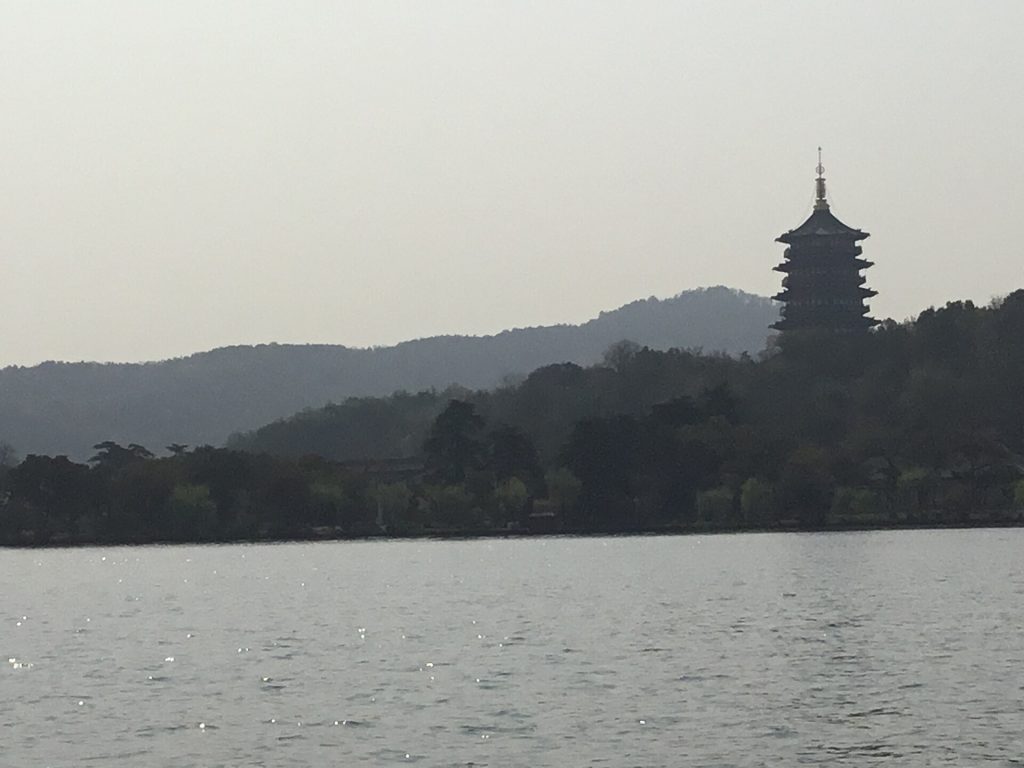
By late afternoon in November, West Lake stops performing for the midday cameras and starts behaving like a neighbourhood. The light thins to pewter and rose. Wind picks up just enough to move the willow lines. Somewhere behind a hotel wall, someone is brewing tea, and the smell travels farther than it has any right to in a city this size.
This is a short story for travellers who already know—or are about to learn—that Hangzhou’s lake is not only a checklist of bridges. For the practical loop, causeways, and tea-hills planning, keep our West Lake first-visit guide open in another tab. What follows is the evening layer: cooler air, lights on Bai Causeway, and the way locals walk when dinner is done.
The hour when the tour buses leave
She had spent the morning doing what first-timers do—Broken Bridge photographs, too many snack stalls, a negotiation with a map app that insisted on a diagonal through a crowd. By 4 p.m., her phone battery was thin and her patience thinner. The hotel clerk, patient in soft English, had said only: “Go again after dark. Not the same lake.”
So she went again.
November made the decision easy. The heat of earlier Jiangnan days was gone; a light coat was enough if she kept moving. Street vendors along the approach had switched from cold drinks to warm paper bags. She paid with a QR code that finally worked on the second try—another small victory in a week of payment setup—and walked toward the water with her hands in her pockets.
Bai Causeway, slower
Bai Causeway at night did not empty completely. It never does. But the pace changed. Couples walked without posing every ten steps. An older man carried a radio low at his hip, volume polite. Two teenagers shared one pair of earphones and argued softly about a song. Nobody blocked the path with a ring light.
The lights along the causeway were not Vegas. They were practical and a little romantic anyway—enough to see faces, enough to let the lake remain darker than the city. Reflections broke into coins whenever a small boat passed far out. She did not buy a ticket for anything. She had already spent the day collecting scenery; tonight was for borrowing the locals’ tempo.
A woman selling roasted chestnuts nodded when she approached, then pointed at the spicy option and the plain one without a speech. The visitor chose plain. Warmth climbed from palm to wrist. She thought of Ningbo dessert shops she had read about—tangyuan waiting for colder nights—and smiled at the idea that Jiangnan comfort food seemed to understand November better than her packing list had.
Tea in the air
Hangzhou’s tea reputation is a daytime story of hills and tasting cups. At night, it becomes a rumour in the wind: a shop door opening, a hotel lounge vent, someone carrying a paper bag of Longjing-scented something past her shoulder. She did not chase it into a purchase. She had a tasting planned for tomorrow, and the Longjing guide was waiting on her phone offline. Tonight the smell alone felt like part of the walk.
What the visitor noticed about locals
They dressed for the breeze without drama. They did not treat the lake as a once-in-a-lifetime backdrop; they treated it as a lung. Some walked dogs. Some walked nothing but conversation. A few practiced soft stretches near benches as if the water were a gym partner. When selfie sticks appeared, they were brief.
She realised her daytime self had been loud without speaking—urgency is a kind of noise. The evening crowd taught a different etiquette: leave space, keep voices low, let the lake finish its sentences.
A small practical kindness
Near a turn of the path, a sign warned about wet stones. She slowed. A child ahead slipped a little, laughed, and was steadied by a parent who did not scold for the benefit of strangers. The visitor stepped aside and received a nod that needed no translation. Hangzhou English had been uneven all week; Hangzhou courtesy had not.
Her phone buzzed with a metro reminder for the next morning’s train toward Shanghai. High-speed rail would reclaim her soon enough (12306 habits already bookmarked). She muted the phone. The lake could have ten more minutes.
Returning without conquering
She did not circle the entire shore. November evenings are not for heroic mileage. She retraced enough of Bai Causeway to feel the temperature drop another degree, then angled back toward the hotel cluster where lobby lights looked suddenly golden. Behind her, the water kept whatever secrets it keeps for people who live here in February as well as in peak autumn hashtags.
At the front desk she almost tried to explain the walk, then decided explanations would flatten it. “It was good,” she said, which was incomplete and true.
If you take one thing
West Lake in November daylight teaches names—Broken Bridge, causeways, which sites charge. West Lake in November evening teaches pace. Go twice if you can: once to see it, once to stop performing for it. Bring a coat. Keep your phone brightness down. Let the tea smell pass without chasing every shop. The practical itinerary will still be there in the morning; the quieter lake only shows up when you leave it room.
The soft logistics under the mood
Stories still need buses that run and phones that unlock doors. She had screenshot the hotel’s Chinese address that morning, kept a power bank in her coat, and left a little cash in a zip pocket in case a chestnut stall’s QR speaker failed. Those boring tools are why the evening could stay poetic. Travellers who romanticise “getting lost” without offline maps often get lost in less charming ways—between an expressway ramp and a dead battery.
If you copy this walk, copy the boring layer too: layers on your body, data in your pocket, and a hotel pin that still works when the lake has your full attention.
Light FAQ
Is the lakeshore safe at night?
Stick to well-walked, lit paths where other people are around, as you would in any major city. Avoid isolated stretches if you are alone and tired.
Do I need a ticket for an evening causeway walk?
The main lakeshore promenades are generally open; individual attractions keep their own hours and tickets. Verify specifics on site when relevant.
What should I wear in November evenings?
Layers and a wind-aware outer layer. Comfortable shoes with grip for damp stones.
Can I combine this with a day trip from Shanghai?
Yes, but an overnight lets the evening version exist. Same-day trips tend to end at sunset rush back to the station.
Closing
Hangzhou will sell you tea, silk, and lake legends whether you ask or not. A November evening walk is quieter merchandise: cool air, chestnut paper bags, Bai Causeway lights, and the reminder that the best travel souvenirs are sometimes tempos you can take home. For how to structure the daylight hours around that feeling, return to the first-visit West Lake guide—then close the checklist and go outside again after dinner.