—
title: The First Heating Day
slug: first-heating-day-northern-china-story
category: Stories
focus: first heating day story
meta: A short story about the morning northern China’s radiators come on: steamed windows, dry air, and the quiet shift from late autumn into winter.
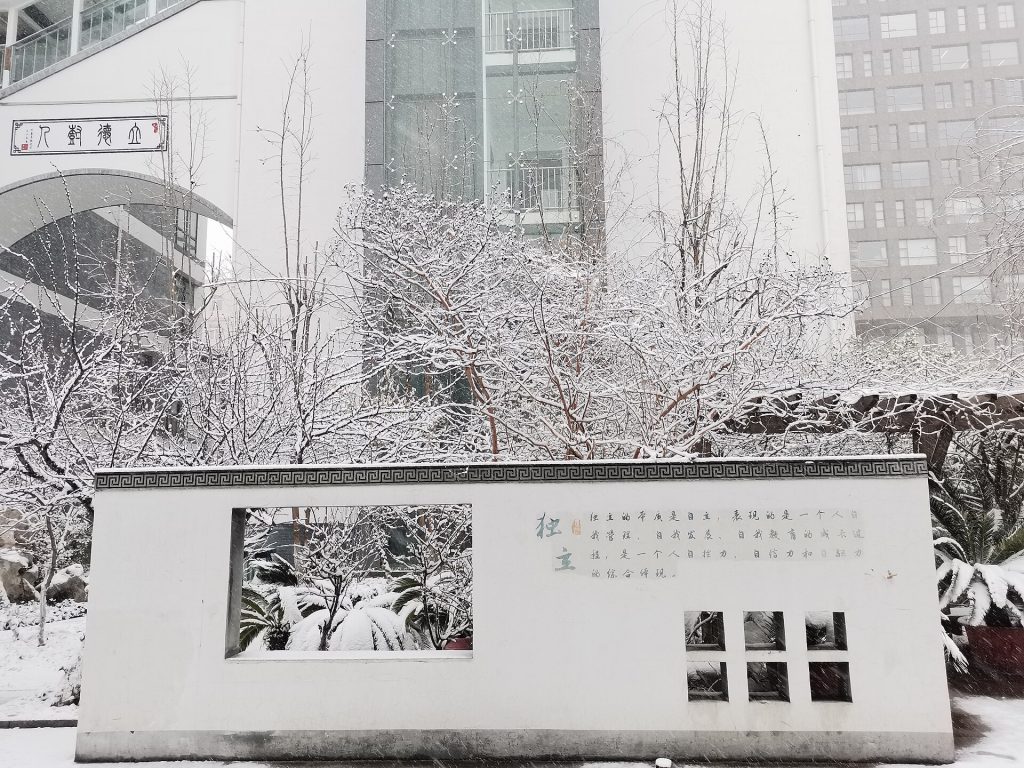
cover_alt: Snow-covered residential street in Beijing’s Haidian District on a winter morning
cover_credit: Photo: Fumikas Sagisavas / Wikimedia Commons (CC0)
—
The Silence Before the Ticking Pipes
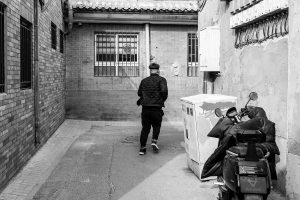
There is an exact hour in northern China when autumn stops being a season and becomes a countdown. By mid-October, the persimmons hanging from bare branches in the hutongs have turned the color of old amber, and the wind coming down from Mongolia carries that unmistakable, iron-hard bite. You find yourself pulling your woolen scarf a little tighter around your chin as you cross the courtyard, watching your breath ghost against the slate grey bricks of the alleyway.
For anyone who has spent a winter south of the Huai River—where indoor heating is a luxury of individual electric heaters and damp, bone-chilling air clings to your clothes—the northern ritual of guonuan (official heating day) feels almost mythical. In cities across the north, from Beijing up to Harbin, the municipal heating switch is traditionally pulled around November 1st to 15th, depending on the latitude and how early the Siberian winds decide to move in.
Before that day arrives, a peculiar collective hush settles over the city. We often notice how people stop talking about the weather and start talking about the date. It is a shared preoccupation, whispered in wet-market queues while buying steamed buns and muttered by taxi drivers tapping their steering wheels at red lights. Everyone is waiting for the metal to sing.
—
The Morning the Iron Sings
You usually wake up to it before you see it. At four in the morning, the apartment is still wrapped in that familiar, biting chill where your nose feels like an icicle and you burrow deeper into the heavy cotton quilt. Then, somewhere deep inside the wall—behind the peeling floral wallpaper of the living room or tucked beneath the white-painted cast-iron ribs of the radiator—there is a sudden, sharp gasp.
Clang. Tunk. Shhhhhhh.
It sounds like a small, metallic heartbeat coming back to life after a long summer sleep. That is the sound of thousands of liters of superheated water, pumped from massive municipal plants miles away, finally surging through the subterranean arteries of the city and into your building’s risers. When you finally slide out of bed and pad across the cold tile floor to the window, the glass tells the whole story.
Overnight, the freezing exterior air meeting the sudden wave of interior warmth has painted the panes in a thick, crystalline frostwork of ferns and feathers. But down at the bottom sill, pools of condensation are already gathering, turning the dust into mud. You press your palm against the side of the radiator. It is lukewarm at first, then aggressively hot—hot enough to make you pull your hand back with a sharp hiss. Winter has officially arrived indoors.
—
Steamed Windows and Dry Air
The arrival of the radiators brings an immediate, domestic transformation that anyone who has lived through a northern Chinese winter knows by heart. Within twenty-four hours, the apartment’s microclimate flips from damp outdoor chill to an arid, desert-like interior heat that can easily push past 24 degrees Celsius.
Laundry that took three days to dry on a balcony rack now stiffens into canvas rigidity overnight when hung indoors on a plastic drying rack. Potted chlorophytum plants droop, their tips browning from the sudden drop in humidity. To combat the parched air, we recommend doing what local households have done for generations: placing wide porcelain basins of water directly beneath the windows, or draping damp cotton towels over the tops of the radiators so they hiss softly into the room as they dry.
It is also the time when the rhythm of the neighborhood shifts indoors. The open-air card games played on stone benches in the alleys retreat behind double-glazed PVC windows. The smell of roasted sweet potatoes and coal smoke from street carts mixes with the dry, toasted scent of dust baking off the cast-iron pipes for the first time in eight months—a smell that is equal parts comforting and nostalgic.
Practical Tips for Surviving the First Heating Transition
* Manage the Thermal Shock: Opening windows for 10 to 15 minutes during midday helps refresh stale indoor air without dropping room temperatures too severely.
* Combat Low Humidity: Modern ultrasonic humidifiers are widely used alongside traditional water basins to maintain a healthy indoor humidity level of 40% to 50%, preventing dry throats and irritated skin.
* Bleed Your Radiators: If certain ribs remain cold while others are hot, locate the small bleed valve (exhaust valve) on the side of the radiator and release trapped air using a specialized key or screwdriver until a steady stream of water appears.
If you are traveling through the region during this seasonal pivot, you might find yourself reflecting on how different corners of China mark the passage of time. It feels a world away from the lingering autumn warmth of November evenings in Chengdu, or the sharp, brilliant bite of a first frost in Beijing just weeks earlier, when the city was still wrapped in gold ginkgo leaves rather than steam and frost.
—
Frequently Asked Questions
When does the municipal heating actually turn on in northern China?
Traditionally, municipal heating systems across northern cities (such as Beijing, Tianjin, and the three northeastern provinces) begin operation between November 1st and November 15th. However, if unseasonable cold snaps hit early, local governments occasionally mandate an early startup date to protect residents.
Do individual apartments control their own heating?
In most standard residential compounds across northern China, heating is centrally managed by the district or housing estate and is billed at a flat seasonal rate per square meter. While modern smart thermostats and individual valve controls are becoming more common in newer developments, traditional cast-iron radiators in older neighborhoods operate on an all-or-nothing municipal schedule.
How does this central heating system affect indoor living?
Because northern Chinese central heating is typically powerful and unregulated at the apartment level, indoor temperatures can become quite high (often exceeding 22–25°C), while relative humidity drops significantly. Residents commonly use room humidifiers, keep windows cracked for brief periods of ventilation, and drink plenty of warm tea to stay comfortable in the dry heat.
What should I do if my radiator stays cold after the official heating day?
<!–
title: The First Heating Day
slug: first-heating-day-northern-china-story
category: Stories
focus: first heating day story
meta: A short story about the morning northern China’s radiators come on: steamed windows, dry air, and the quiet shift from late autumn into winter.
cover_alt: Snow-covered residential street in Beijing’s Haidian District on a winter morning
cover_credit: Photo: Fumikas Sagisavas / Wikimedia Commons (CC0)
–>
If your apartment radiator remains cold days after the municipal system turns on, it is usually caused by air pockets trapped inside the pipes. You can carefully bleed the radiator valve to release the trapped air, or contact your residential compound’s property management office (wuye) to send a maintenance technician to purge the riser line.