Navigating a pharmacy in a foreign country can feel intimidating, especially when language barriers and unfamiliar packaging come into play. Whether you are dealing with a sudden bout of traveler’s diarrhea, a cold, or a minor headache while traveling through China, buying medicine as a foreigner is entirely manageable once you know how the system works.
—
Direct Answer: Can Foreigners Easily Buy Medicine in China?
Yes, foreigners can easily purchase over-the-counter (OTC) medicine at any local pharmacy (药店, yàodiàn) across China without a doctor’s prescription. You do not need a Chinese ID card for basic OTC drugs, though you may be asked to provide your passport number or phone number for certain regulated medications (such as pseudoephedrine-containing cold medicines) for tracking purposes. For prescription drugs, a valid doctor’s diagnosis or prescription—preferably from a local Chinese hospital—is required. To bridge any communication gaps, having a digital translation app ready on your phone makes explaining your symptoms simple.
—
Finding a Pharmacy and Recognizing Signs
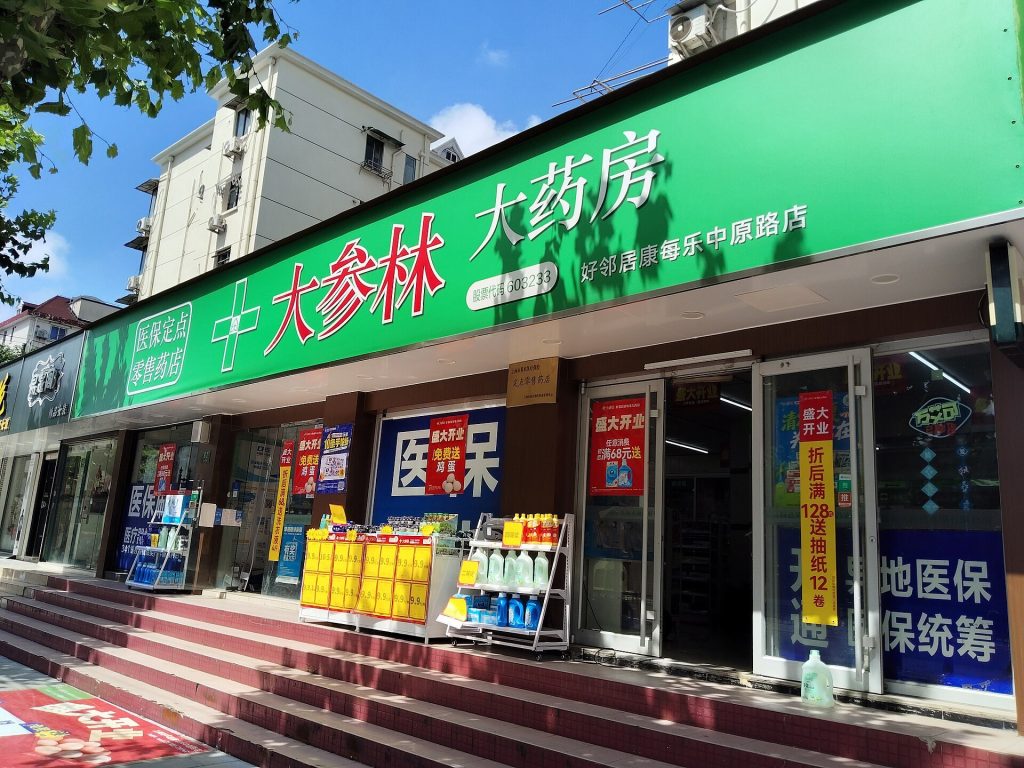
Pharmacies are ubiquitous in Chinese cities, often found on nearly every block, near residential compounds, and close to subway stations. Look for large, glowing green crosses or Chinese characters like 药房 (yàofáng) or 药店 (yàodiàn). Well-known national and regional chain pharmacies—such as LBX Pharmacy (老百姓大药房), Dashentlin (大参林), and Tongrentang (同仁堂) (famous for Traditional Chinese Medicine)—offer reliable service and standardized pricing.
Most physical pharmacies operate during standard daytime and early evening hours (roughly 8:30 AM to 9:00 PM), though major chains in large cities often feature 24-hour branches. If you need medicine late at night, you can use local lifestyle apps to locate the nearest open chemist. To ensure you stay connected and can navigate smoothly to these locations, setting up your mobile connectivity beforehand is essential; check out this guide on China SIM and eSIM for foreign visitors 2026.
—
Communicating Symptoms Without Speaking Mandarin
Walking into a pharmacy without knowing the local language can seem daunting, but pharmacists are generally very helpful and accustomed to assisting international travelers.
1. Use Translation Apps
Your best tool is a reliable translation app equipped with offline voice or text translation. Type out your symptoms or what you are looking for in English and translate it into Simplified Chinese characters to show the pharmacist directly. For instance, phrases like “I have a headache” (我有头痛) or “Do you have medicine for a sore throat?” (请问有治喉咙痛的药吗?) work instantly.
2. Point to Body Parts or Packaging
If translation apps fail, pointing to the affected area (e.g., your stomach or head) combined with international brand names or active chemical ingredients (like Ibuprofen or Paracetamol) will usually point the pharmacist in the right direction. Chinese pharmacies often stock international equivalents or widely recognized domestic brands.
—
Understanding Prescriptions and Controlled Medications
While OTC items like painkillers, throat lozenges, basic digestive aids, and standard motion-sickness pills require nothing more than walking up to the counter, regulations tighten significantly for other drug classes.
Prescription Medications: Antibiotics, strong pain relievers, and specialized chronic disease treatments require a prescription (chǔfāng*, 处方) issued by a licensed physician in China. If you run out of essential prescription medication, you will typically need to visit a local hospital outpatient clinic to get a local prescription evaluated by a Chinese doctor.
* Controlled Substances: Medications containing pseudoephedrine, codeine, or certain sedatives are tightly regulated. Pharmacists will log your passport details into a national registry system at the time of purchase.
Customs Restrictions: When bringing medicine into* China from abroad, ensure you do not carry restricted narcotics or excessive quantities of personal medication. Always keep prescription drugs in their original labeled packaging with your doctor’s letter to avoid complications at the border. For a smooth transition through customs upon arrival, review tips on Airport arrival in China for foreigners 2026.
—
Paying for Your Medicine
Cash is rarely used in China today, and foreign credit cards like Visa or Mastercard are not universally accepted at neighborhood mom-and-pop pharmacies, though major chains are increasingly adapting.
The most seamless way to pay is through mobile payment platforms like Alipay or WeChat Pay linked to an international credit card. Having these digital wallets fully configured before your trip ensures you can pay instantly by scanning the pharmacy’s QR code. To get your digital payments and local navigation sorted out smoothly, refer to China travel apps for foreigners 2026 and Alipay and WeChat Pay for foreign visitors.
—
Actionable Packing and Preparation Tips
To minimize stress if you fall ill during your travels, a little proactive preparation goes a long way:
* Pack a Personal Medical Kit: Bring a small supply of your preferred over-the-counter medications from home (such as specific pain relievers, allergy pills, or stomach remedies) so you don’t have to hunt for unfamiliar equivalents while feeling unwell.
* Save Essential Apps: Download digital translation tools and map apps before arriving in China. Ensure your communication channels and payment apps are tested and working. For help getting your primary messaging and daily utility apps running, check out WeChat for foreigners setup 2026.
* Keep Accommodation Details Handy: Keep your hotel’s address written in Chinese characters on your phone. If you need to stay in bed or explain your location to a delivery rider ordering medicine via a delivery app, having your address ready is vital. For advice on accommodation registration rules, see Hotel registration for foreigners 2026.
—
Frequently Asked Questions
Do I need a prescription to buy basic medicine in China?
No, for common over-the-counter medications—such as ibuprofen, cold and flu remedies, antacids, and throat lozenges—you do not need a prescription. You can simply walk into any pharmacy and purchase them.
Can I use my foreign credit card at Chinese pharmacies?
Major pharmacy chains in large cities may accept foreign credit cards or international mobile payments, but smaller neighborhood pharmacies rely heavily on Alipay and WeChat Pay. We recommend setting up mobile payments linked to your foreign Visa or Mastercard prior to visiting.
What should I do if I need a prescription drug refilled?
If you run out of prescription medication, you will generally need to visit an international clinic or a local Chinese hospital. A doctor there will evaluate your condition and write a local prescription that you can fulfill either at the hospital pharmacy or an external licensed drugstore.
Are English-speaking pharmacists common?
English-speaking staff are rare in standard local pharmacies, except perhaps in high-end international hospitals or select tourist-heavy districts. Using a mobile translation app on your phone to show symptoms or active ingredients is the most reliable way to communicate.
Can I order medicine online in China if I am too sick to go out?
Yes, apps like Meituan (美团) and Ele.me (饿了么) feature medicine delivery services that can drop OTC drugs off at your hotel lobby within 30 to 60 minutes. However, setting these up typically requires a working Chinese phone number and a functioning mobile payment account.
Are Western medicine brands available in China?
While you can find global active ingredients (like ibuprofen or acetaminophen), the brand names will be different and labeled primarily in Chinese characters. Always check the active ingredient list or ask the pharmacist to verify the dosage and contents.
—
<ElicitationsGroup message=”To continue planning your trip to China, explore these related guides:”>
<Elicitation label=”Set up Alipay and WeChat Pay as a foreign visitor” query=”How do I set up Alipay and WeChat Pay for foreign visitors in China?”/>
<Elicitation label=”Discover essential travel apps for navigating China” query=”What are the essential China travel apps for foreigners in 2026?”/>
<Elicitation label=”Learn about airport arrival procedures and customs” query=”What should I expect during airport arrival in China for foreigners in 2026?”/>
<!–
title: Buying Medicine at a Chinese Pharmacy as a Foreigner 2026
slug: china-pharmacy-buying-medicine-foreigners-2026
category: People
focus: China pharmacy foreigners
meta: How to buy common OTC medicine in China: finding a pharmacy, showing symptoms, prescriptions, paying, and what not to bring through customs.
cover_alt: Dashenlin pharmacy storefront on a Shanghai street
cover_credit: Photo: Shwangtianyuan / Wikimedia Commons (CC BY-SA 4.0)
–>
</ElicitationsGroup>