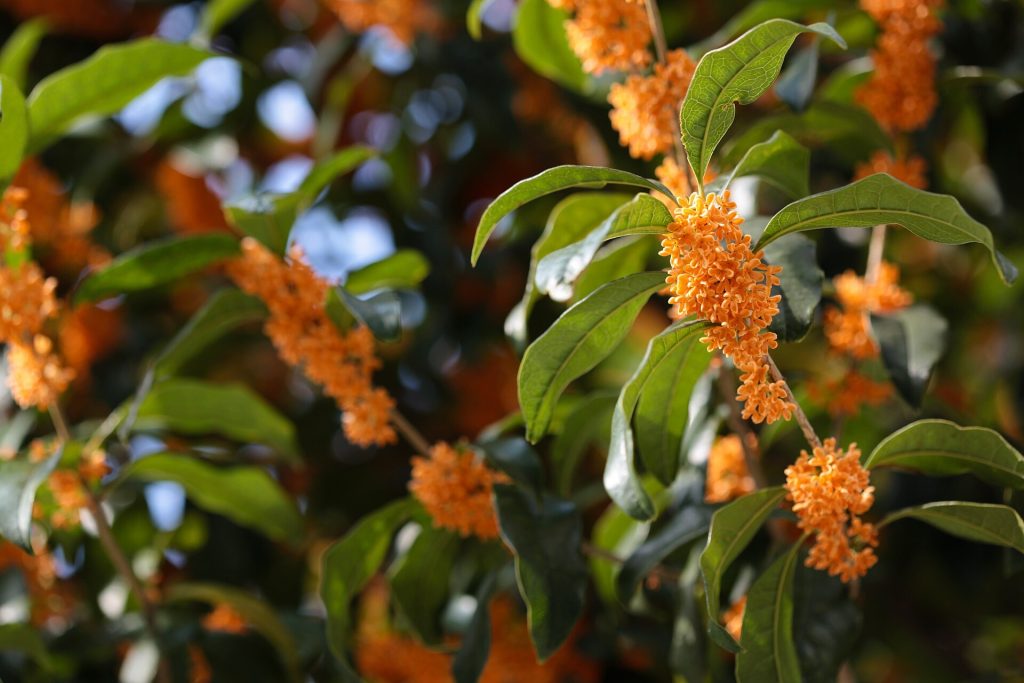
There is a specific, quiet cadence to an East Asian city street when the calendar edges past the initial crispness of October and looks toward the long, slate-gray corridors of November. The fierce, sun-baked humidity of summer has long since dissolved into memory, replaced by a crystalline coolness that makes every breath feel sharp and clean. Yet, tucked beneath the gray concrete overpasses, lining the worn flagstone walkways of neighborhood parks, and spilling over the brick courtyard walls of old lane houses, a phantom still lingers in the air.
It is guihua—the osmanthus.
If you arrived in China a month ago during the peak of the autumn bloom, the fragrance was inescapable: a thick, nectarous cloud of apricot, peach, and vanilla that pooled heavy in humid alleyways and drifted from every leafy canopy. Now, as the first true chill of late autumn settles over the pavement, the bloom is fading. This is the story of the final, stubborn blossoms of the season—the quiet, golden stragglers holding fast against the approaching winter.
—
The Architecture of a Fading Bloom
To catch the tail-end of the osmanthus season, you have to know where to look, because the trees themselves are masters of subtlety. Unlike the flamboyant pinks of spring cherry blossoms or the fiery maples of late autumn, osmanthus trees are understated. Their leaves are leathery, deep olive-green, and tightly packed. You might walk past a dozen of them on a morning stroll and notice only their structural shade—until a sudden, unexpected gust of wind catches the upper branches and drops a microscopic shower of amber dust across your shoulders.
Look closer, right where the leaf stem meets the twig. The clusters are no longer the bursting, golden pom-poms of September. Instead, they are sparse, deep-orange constellations—tiny, four-petaled stars that have darkened from a bright, buttery yellow to a rich, burnished bronze. They look like flecks of rust against the dark foliage, but when you lean in close, the scent is concentrated, intensely sweet, and laced with a poignant, woodsy melancholy.
Walking through a park in mid-October or early November, you notice how the city’s rhythm shifts around these trees. Grandparents sitting on weathered stone benches playing xiangqi (Chinese chess) pause to adjust their cardigans, sniffing the air with a practiced appreciation. A street cleaner, moving a broad bamboo broom across a concrete square, sweeps carefully around the base of an old Osmanthus fragrans, leaving the scattered golden debris undisturbed in the hollow of the roots like a small, fragrant offering to the changing season.
—
Navigating the Chilly Streets
Catching these fleeting sensory moments requires a bit of practical maneuvering. If you are wandering through an unfamiliar neighborhood trying to locate a quiet park or a historic alleyway lined with autumn flora, having the right digital tools makes all the difference. When you are navigating intricate urban grids, pulling up a reliable local mapping app ensures you don’t miss the hidden green spaces tucked behind modern high-rises. Knowing How to Use Amap (Gaode Maps) in China as a Foreigner: 2026 English Guide can guide you straight to those pocket parks and tree-lined avenues where older residential districts retain their botanical charm.
Of course, a morning of wandering in the crisp air also requires being prepared for the drop in temperature as the sun dips behind the skyline. Layering is key when the autumn wind picks up, turning a pleasant stroll brisk. Before you pack your bags for a late-season journey, checking out a comprehensive guide like the Packing List for China Autumn Travel October November 2026 helps ensure you have the right windbreakers, lightweight scarves, and comfortable walking shoes for miles of urban exploration.
And as you navigate local vendors—perhaps stopping by a corner cart to buy a paper bag of roasted chestnuts (lizi) or a steaming cup of tea—frictionless digital payments keep your walk uninterrupted. Setting up your daily finances beforehand, as outlined in Alipay and WeChat Pay for Foreign Visitors in China 2026, makes picking up seasonal street treats effortless.
—
Warming Notes in a Cooling Cup
When the afternoon chill begins to bite through your jacket, the sensory landscape shifts from what you smell in the trees to what you hold in your hands. Autumn in China has its own distinct flavor profile, designed to warm the core without overwhelming the palate.
At a small tea house with wooden lattice windows, or ordered quickly from a neighborhood beverage counter, autumn drinks often incorporate the very flowers that are fading outside. A cup of light green tea or white tea floating with dried osmanthus blossoms—guihua cha—bridges the gap between the botanical world and human comfort. The floral notes cut through the steam, offering a taste that is simultaneously sweet, earthy, and clean. It mirrors a broader cultural appreciation for seasonal shifts, where what is consumed reflects what is happening right outside the window. To understand how locals lean into these comforting, warming brews as the temperature drops, take a look at What Chinese People Drink in Autumn: Seasonal Tea Habits for Visitors.
—
The Threshold of Winter
Standing beneath the canopy of the last osmanthus tree, you realize that the beauty of these transitional weeks lies entirely in their impermanence. The petals clinging to the branches today will be completely gone by the time the calendar turns deeper toward the year’s end, swept away by rain or frozen by the first hard frost.
Already, the city is preparing for the next chapter. Conversations in wet markets turn from the sweetness of autumn flowers to preparations for hearty winter dumplings and festivals that mark the turning of the sun. For those tracking the rhythm of the cooler months, seasonal markers loom large on the horizon—from the comforting traditions of the early winter transition explored in Start of Winter (Lidong) 2026: Dumplings and What Closes and the communal warmth detailed in Winter Solstice (Dongzhi) 2026 in China: Date, Dumplings, Tangyuan and Customs, to travelers already looking ahead to the frozen wonderland covered in China Snow Town (Xuexiang) 2026–27: Opening Season, Tickets and How to Get There from Harbin.
But for now, right here on this fading October afternoon, there is no need to rush toward the snow. You take one last deep breath, letting the rich, honeyed trace of the final osmanthus fill your lungs. It is a fleeting gift—autumn’s quiet signature, written in gold and fading gracefully into the cold.
FAQ
Is this a real itinerary?
It is an observational seasonal piece, not a step-by-step itinerary. Use it for atmosphere, then check live weather and opening hours locally.
When does osmanthus usually fade?
Timing varies by city and year. In many parts of eastern China the strongest fragrance is earlier in autumn; by late October you may only catch the last pockets of scent.