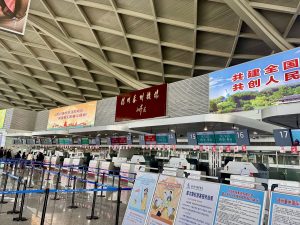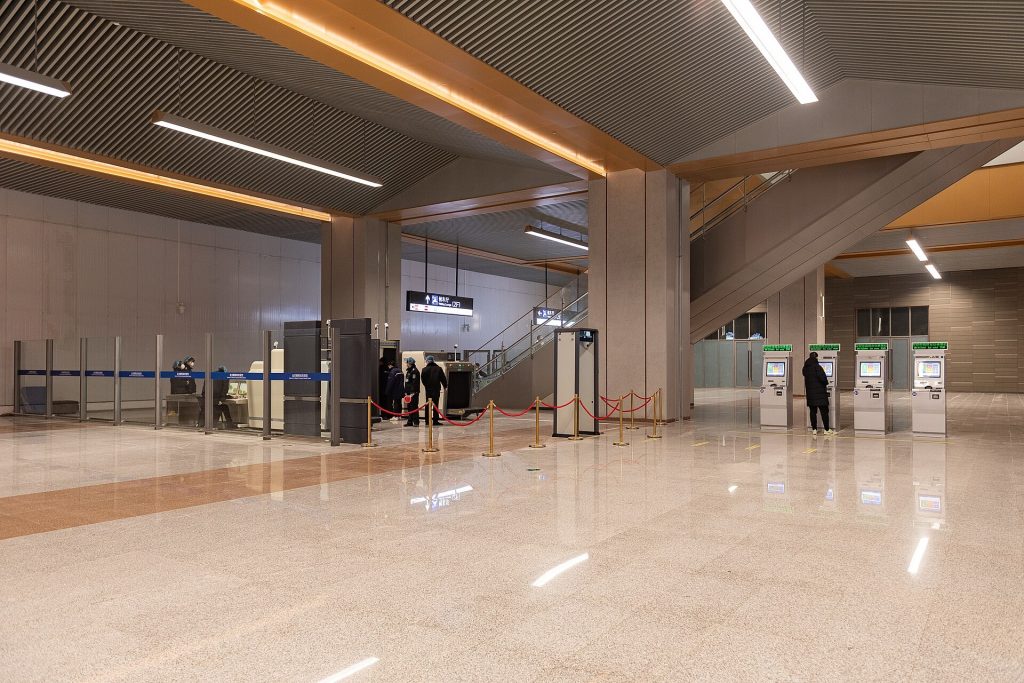
Chinese train stations funnel everyone through security screening before the main concourse. For foreigners used to lighter regional rail in other countries, the X-ray belt and identity gates can feel like an airport lite. Plan time for it—especially on November weekends when domestic tourism spikes.
The typical flow
Enter the station plaza, join the security queue, place bags on the belt, walk through the scanner, and reclaim belongings. Next comes ticket and identity checks to enter waiting halls or gates depending on the station design. Keep passport in a reachable pocket; fishing through a locked suitcase at the barrier wastes everyone’s time.
Luggage practicalities
Suitcases, backpacks, and shopping bags all go through X-ray. Liquids and power banks draw extra attention occasionally—pack thoughtfully rather than memorising unverifiable “banned lists” from anonymous chats. Soft sleeper travellers should still move bags efficiently; attendants appreciate passengers who do not block aisles. See the high-speed rail first-timers guide guide for platform boarding culture and the soft-sleeper article for overnight packing.
Timing buffers that matter
Large hub stations (think multi-level complexes in Beijing, Shanghai, Guangzhou, Chongqing) hide long walks between security, waiting lounges, and platforms. A ticket that says departure at the hour does not mean you can arrive at minute fifty-five. Screenshot your ticket and gate information while you still have signal.
Identity documents
Foreign passport holders use passports at gates that residents open with national ID cards. Staff are used to this; have the book open to the photo page. If your booking used a slightly different romanisation, stay calm and show the 12306 record—account hygiene from 12306 passport signup for foreigners prevents most mismatches.
Accessibility and families
Travelling with children or mobility needs? Look for elevator signs after security and ask staff early. Soft bags are easier on X-ray rollers than oddly shaped souvenir boxes bought at the last minute.
Pairing with payments and connectivity
Station shops lean QR. Have wallets ready (Alipay and WeChat Pay hub) and a little cash (why cash is still needed) for water after a long queue. Offline maps help when you exit into an unfamiliar plaza at night.
Related Lovely China reading
For payments and wallets, start with Alipay and WeChat Pay hub and WeChat Pay vs Alipay for tourists. For trains and long-distance moves, keep high-speed rail first-timers guide and 12306 passport signup for foreigners handy. For city orientation, the Beijing first-visit guide and Shanghai first-visit guide hubs remain useful even when your trip centres on another province. Bookmark China travel tools page so you can jump between logistics topics without searching from scratch on hotel Wi-Fi at midnight.
Practical checklist
- Confirm official rules on the relevant government, park, airline, or bank page near your travel week
- Screenshot bookings, tickets, and QR codes while you still have stable Wi-Fi
- Save hotel and attraction names in Chinese characters in your phone notes
- Carry passport, a backup payment method, and a small cash float (why cash is still needed)
- Test one small mobile payment before you rely on wallets at a gate or taxi
- Build time buffers for security lines, November weather, and bilingual navigation
- Prefer refundable holds until visas, trains, or park tickets are confirmed
- Keep the China travel tools page page bookmarked for related Lovely China hubs
How to verify information without panicking
English travel blogs lag policy changes. When something critical is at stake—entry permission, ticket validity, or whether a card works—use primary sources: embassy or VAC pages, National Immigration Administration notices, official park reservation platforms, airline apps, and the screens inside Chinese super-apps. Lovely China articles such as Alipay and WeChat Pay hub, high-speed rail first-timers guide, and essential apps for foreigners help you orient, but they are not substitutes for the live rule in front of you.
If two sources conflict, choose the stricter one until you can ask a human at the counter. That habit prevents most arguments that begin with “I read online that…” at gates.
FAQ
Is station security the same as airport security?
Similar X-ray habits, but rules and pacing differ—follow posted signs and staff instructions.
Can I bring a power bank on the train?
Often yes within common-sense limits; check current notices if you carry high-capacity packs.
How early should I arrive?
Add buffer beyond what locals might use, especially at unfamiliar mega-stations.
What ID do foreigners show?
Usually your passport matching the ticket—keep it accessible.
Notes for late 2026 travellers
Late October and November bring cooler mornings, earlier sunsets, and comfortable train weather across much of eastern and central China. Pack layers, keep phone batteries warm outdoors, and leave extra time whenever a clear weekend coincides with popular sightseeing.
This article does not invent ticket prices, opening hours, processing times, consular fees, or official statistics. When a number matters, verify it on the official site, consulate page, app screen, or ticket board near your travel week.
Write key Chinese addresses into your phone notes before you leave Wi-Fi. Screenshot tickets and booking codes. Carry a small cash float even if you prefer wallets—see why cash is still needed. Reconfirm last-mile transport the evening before early starts.
If an official rule page disagrees with this guide, follow the official page. Lovely China orients English-speaking travellers; we are not an immigration, banking, or medical authority. Keep the China travel tools page bookmarked for other logistics hubs.
Traveller mindset
Move slowly through paperwork moments. A calm queue is cheaper than a missed train or a refused visa file. When language fails, show passport pages, booking screens, and maps with Chinese labels. Hotel front desks and station information booths are used to helping foreigners through routine steps.
Keep expectations honest: China is highly digital, but edge cases remain. Your job is not to memorise every exception—it is to carry backups (second card, cash, offline maps, written addresses) so one failure does not end the day. For everyday apps, start with essential apps for foreigners.