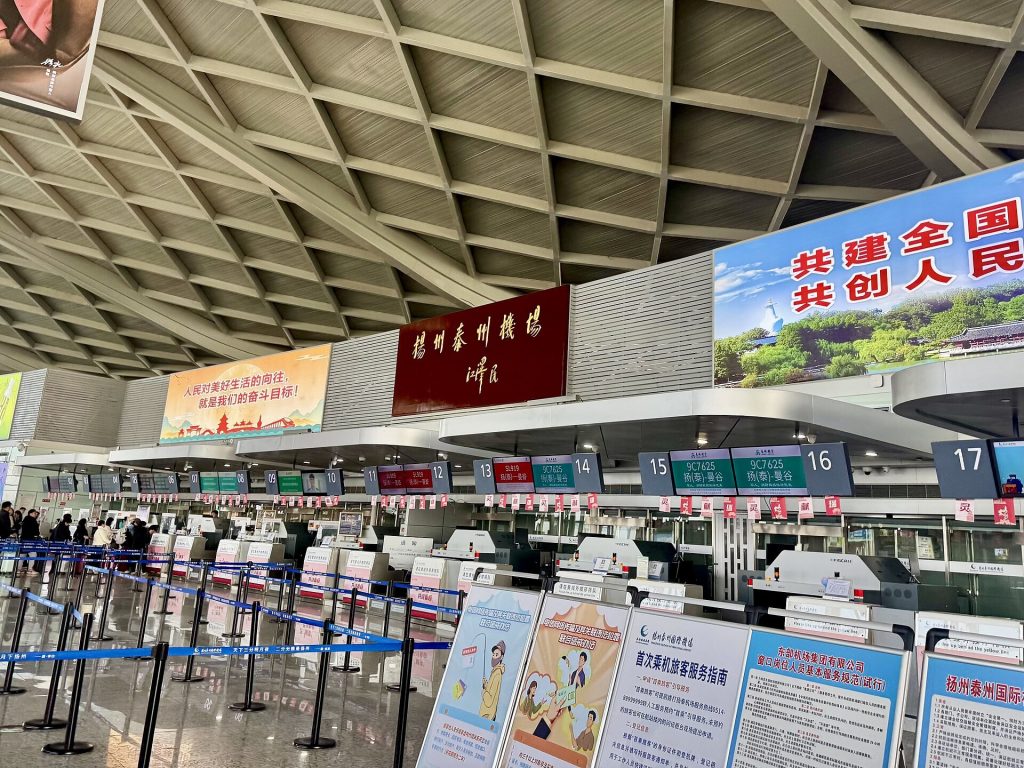
Domestic flights inside China are routine for residents and surprisingly procedural for first-time foreign visitors used to home-country kiosks. Your passport is the identity document; airline apps may or may not complete online check-in for foreign credentials the way they do for Chinese ID cards.
Counter versus kiosk versus app
Many foreigners still use staffed counters, especially on the first domestic segment after an international arrival. Kiosks and app boarding passes can work when the airline’s flow accepts passport numbers cleanly—test early rather than assuming. Arrive with booking codes, passport, and any visa or entry stamp pages easy to find.
Luggage and connections
If you connect from an international flight to a domestic one, do not assume bags are automatically through-checked. Ask at the first check-in whether you must collect and re-check. Domestic-to-domestic connections are usually smoother but still deserve printed or offline boarding details when airport Wi-Fi is flaky.
Security and power banks
Airport security mirrors other large hubs: liquids rules, electronics trays, and attention to power banks. Capacity rules are enforced more strictly than some travellers expect—check your airline’s current notice rather than packing every battery you own. Keep spare batteries in carry-on when required.
Timing buffers that prevent misery
Domestic punctuality is generally good, yet November weather, security peaks, and distant terminals punish tight connections. Build buffer when changing airports in the same city (a classic Beijing or Shanghai trap). Ground transfers may need metro or Didi ride-hailing for foreigners rather than a casual walk.
Payments at the airport
Airside retail increasingly accepts QR wallets; foreign cards appear more often than in neighbourhood shops, but not universally. Keep a cash float and a working wallet (Alipay and WeChat Pay hub) so a dead phone does not block water or a light meal during a delay.
When something goes wrong
Missed connections, irregular operations, and name mismatches need calm staff conversations. Show passport and booking screens. Rebooking rules belong to the airline contract—Lovely China cannot invent compensation charts. Screenshot everything for later claims.
Name matching and ticket changes
Ensure the passport name order matches the ticket fields your airline expects. If you change flights, keep the new boarding pass offline. For multi-city routes combining flights and trains, treat each segment’s ID rules separately rather than assuming one check-in solves the week.
Related Lovely China reading
For payments and wallets, start with Alipay and WeChat Pay hub and WeChat Pay vs Alipay for tourists. For trains and long-distance moves, keep high-speed rail first-timers guide and 12306 passport signup for foreigners handy. For city orientation, the Beijing first-visit guide and Shanghai first-visit guide hubs remain useful even when your trip centres on another province. Bookmark China travel tools page so you can jump between logistics topics without searching from scratch on hotel Wi-Fi at midnight.
Practical checklist
- Confirm official rules on the relevant government, park, airline, or bank page near your travel week
- Screenshot bookings, tickets, and QR codes while you still have stable Wi-Fi
- Save hotel and attraction names in Chinese characters in your phone notes
- Carry passport, a backup payment method, and a small cash float (why cash is still needed)
- Test one small mobile payment before you rely on wallets at a gate or taxi
- Build time buffers for security lines, November weather, and bilingual navigation
- Prefer refundable holds until visas, trains, or park tickets are confirmed
- Keep the China travel tools page page bookmarked for related Lovely China hubs
How to verify information without panicking
English travel blogs lag policy changes. When something critical is at stake—entry permission, ticket validity, or whether a card works—use primary sources: embassy or VAC pages, National Immigration Administration notices, official park reservation platforms, airline apps, and the screens inside Chinese super-apps. Lovely China articles such as Alipay and WeChat Pay hub, high-speed rail first-timers guide, and essential apps for foreigners help you orient, but they are not substitutes for the live rule in front of you.
If two sources conflict, choose the stricter one until you can ask a human at the counter. That habit prevents most arguments that begin with “I read online that…” at gates.
FAQ
Can I always check in online with a foreign passport?
Not always—be ready for a staffed counter if the app rejects passport check-in.
Do I need my paper visa for domestic flights?
Carry passport and be able to show lawful stay status if asked; follow airline instructions.
Are power banks allowed?
Often yes within airline and security limits—verify capacity rules before packing.
How early should I arrive?
Follow your airline’s guidance and add buffer for first-time foreigners and connections.
Notes for late 2026 travellers
Late October and November bring cooler mornings, earlier sunsets, and comfortable train weather across much of eastern and central China. Pack layers, keep phone batteries warm outdoors, and leave extra time whenever a clear weekend coincides with popular sightseeing.
This article does not invent ticket prices, opening hours, processing times, consular fees, or official statistics. When a number matters, verify it on the official site, consulate page, app screen, or ticket board near your travel week.
Write key Chinese addresses into your phone notes before you leave Wi-Fi. Screenshot tickets and booking codes. Carry a small cash float even if you prefer wallets—see why cash is still needed. Reconfirm last-mile transport the evening before early starts.
If an official rule page disagrees with this guide, follow the official page. Lovely China orients English-speaking travellers; we are not an immigration, banking, or medical authority. Keep the China travel tools page bookmarked for other logistics hubs.
Traveller mindset
Move slowly through paperwork moments. A calm queue is cheaper than a missed train or a refused visa file. When language fails, show passport pages, booking screens, and maps with Chinese labels. Hotel front desks and station information booths are used to helping foreigners through routine steps.
Keep expectations honest: China is highly digital, but edge cases remain. Your job is not to memorise every exception—it is to carry backups (second card, cash, offline maps, written addresses) so one failure does not end the day. For everyday apps, start with essential apps for foreigners.