As late October and November 2026 roll in, travel to China brings crisp autumn air, stunning foliage, and comfortable weather for exploring. But before you can step out of the airport and onto the bustling streets of Shanghai, Beijing, or Guangzhou, you must clear Chinese border control.
A vital step in this process is completing the China Arrival Card (also known as the entry card or disembarkation card). While China has modernized much of its infrastructure with digital systems, this physical slip of paper remains a mandatory and critical part of the entry process for foreigners. To ensure a smooth transition from the cabin to the arrivals hall, here is everything you need to know about preparing for, filling out, and submitting your entry paperwork.
What is the China Arrival Card?
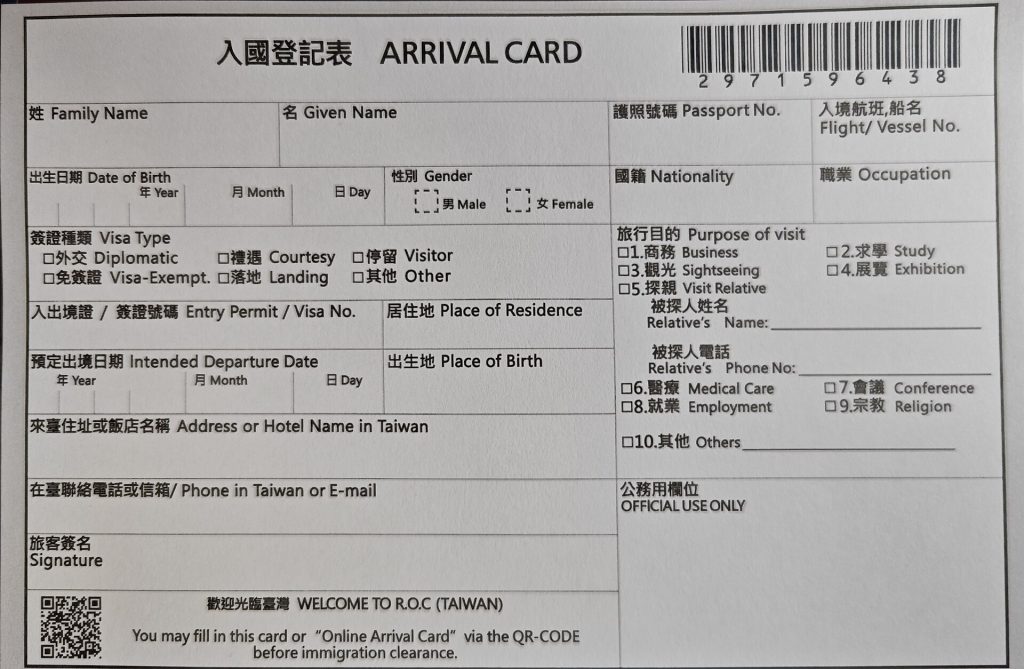
The Arrival Card is a small, typically multi-part paper slip required for all foreign nationals entering mainland China. Flight attendants usually distribute these forms on the airplane shortly before landing. If you miss it, sleep through the handout, or accidentally make an unfixable mistake, don’t worry—there are always blank forms available at writing counters in the immigration hall right before passport control.
The card is divided by a perforated line into two sections: an Arrival Card (which the immigration officer takes upon entry) and a Departure Card (which the officer will stamp and hand back to you). You must keep the Departure Card safely tucked inside your passport until you leave the country, as border control will collect it when you fly out.
The Step-by-Step Immigration Experience
Knowing what to expect once you step off the plane can significantly reduce travel anxiety. In 2026, the arrival process for foreigners at major Chinese international airports typically follows this sequence:
Health and Customs Declarations: While pandemic-era health codes are a thing of the past, spot checks or digital customs kiosk scans are sometimes still active. Follow the flow of passengers and look out for signs indicating if an electronic customs QR code is required for your specific flight.
Fingerprint Kiosks: Before you reach the actual immigration counters, you will usually be directed to a bank of automated fingerprint machines. You scan your passport’s photo page, and the machine will prompt you (in your native language) to scan your left hand, right hand, and thumbs. It will then print a small receipt with an “OK” on it. Keep this receipt with your Arrival Card.
The Foreigner Line: Proceed to the queue designated for “Foreign Nationals” (外国人).
The Counter: Hand the officer your passport, your completed Arrival Card, and your fingerprint receipt. You will be asked to remove your mask, hat, and glasses to look into a camera. The officer may ask a few basic questions about your itinerary before stamping your passport and handing back your Departure Card.
What You Typically Need to Fill Out
While specific field layouts can occasionally be updated, the general categories of information requested by Chinese border control remain remarkably consistent. You should use a black or blue pen and write clearly in block capital letters. You will generally be expected to provide details across the following categories:
Personal and Passport Information
This is the standard data found on the biographical page of your passport:
Your full legal name: Write this exactly as it appears on your passport, avoiding nicknames.
Date of birth and gender: China typically uses the YYYY/MM/DD date format. Pay attention to the labels under the boxes to ensure you don’t mix up the month and day.
Nationality and Passport number.
Travel and Itinerary Details
Immigration officials need to know how you arrived and where you plan to go next:
Flight/Vessel Number: The flight number of the plane that just landed (e.g., MU588 or CA982).
Port of Onward Travel / Return Flight: Knowing your exit plans is critical, especially if you are entering under one of China’s recent visa-free schemes or transit policies.
Purpose of Visit: You will usually check a box indicating your main reason for travel (e.g., Tourism, Business, Visiting Relatives, Transit, or Employment).
Occupation: A general description of your job title or industry (e.g., Engineer, Teacher, Manager, Student).
Contact Information in China
This is historically the section where travelers make the most mistakes. You must provide a valid address where you will be staying.
Hotel Address: Write the full name of your hotel and its specific address or district. Just writing “Hilton” or “Marriott” is not enough, as major cities have dozens of these properties. If you are staying at multiple hotels during your trip, listing the first one is standard practice. Having this address handy in both English and Chinese is also crucial for your transportation and when you navigate China Hotel Check-In with a Passport 2026: What Foreigners Need to Know.
Host Contact (if applicable): If you are staying with friends or family instead of a hotel, you will need their full residential address and their local Chinese phone number.
Visa Details
If your nationality requires a visa to enter China, you will need to copy your visa number and the place of issuance from the sticker in your passport.
Navigating Visa-Free Entry vs. 144-Hour Transit
Depending on your passport and itinerary in 2026, the way you fill out your Arrival Card might look a little different.
Visa-Free Entry: Thanks to expanding diplomatic agreements, citizens of many European and Asian countries can now enter China visa-free for up to 15 days for business or tourism. If you fall under this category, simply leave the “Visa Number” section blank or write “Visa-Free,” depending on the latest instructions provided on the card.
144-Hour Transit Without Visa (TWOV): If you are taking advantage of China’s highly popular 144-hour transit policy, you generally do not fill out the standard yellow arrival card on the airplane. Instead, look for a dedicated “24/144-Hour Transit” counter in the immigration hall. Here, you will fill out a specialized blue form designed specifically for transit passengers. You will need to provide hard proof of your confirmed onward flight to a third country to receive this entry permit.
Common Mistakes to Avoid
To prevent being sent to the back of the line by an irritated border control agent, avoid these frequent pitfalls:
Illegible Handwriting: Always use block capital letters. If the agent cannot read your hotel address, they will make you rewrite the form.
Missing Flight Numbers: Do not just write the airline name. You need the exact alphanumeric flight code (e.g., UA857).
Vague Accommodation: If you are staying at an Airbnb or short-term rental, ensure you have the exact building and apartment number. Keep in mind that staying in non-hotel accommodations means you must register with the local police station within 24 hours of arrival, though your host usually helps with this.
Crossing Out Mistakes: If you make a massive error (like writing your passport number in the date of birth section), it is better to ask for a new blank form rather than scribbling it out. Border agents prefer clean, clearly legible paperwork.
How to Prepare Before You Land
Border control areas are strictly regulated, and mobile phone usage—including photography and messaging—is heavily restricted or outright banned while you are waiting in line. To save time and avoid stress, prepare the following before the plane touches down:
Keep a Pen Handy
Do not rely on the flight attendants or the airport to supply a pen. Bring a black or blue ballpoint pen in your carry-on bag to fill out the form right at your seat.
Take Offline Screenshots
Airport Wi-Fi usually requires an SMS verification code to log in. This means you might not have internet access until you clear customs and arrange your China eSIM and Local SIM for Foreigners 2026: Airport, Apps, and Coverage. Take offline screenshots before your flight of:
Your full hotel address in both English and Chinese characters.
The local phone number of your accommodation or host.
Your return flight confirmation or onward travel itinerary.
Check Current Airport Instructions
While paper forms remain the standard, some major gateway airports occasionally pilot electronic arrival declarations via digital kiosks. Always follow the signs upon landing and check with your airline regarding any new electronic customs or declaration requirements active at the time of your specific flight.
Organize Your Luggage for the Season
Once you clear immigration, you will collect your bags and head out into the autumn weather. If you are visiting in late October or November, temperatures can drop quickly, particularly in northern cities like Beijing or Xi’an. Make sure a light jacket or coat is easily accessible near the top of your carry-on or checked bag. For a complete guide on what to bring this season, check our Packing List for China Autumn Travel October November 2026.
Final Steps After Immigration
Once the immigration officer stamps your passport and tears off the Arrival Card, carefully secure the attached Departure Card with your travel documents.
Next, you will head down to the baggage claim carousels. Note that before you exit into the public arrivals hall, all luggage—including carry-ons—must be passed through a final customs X-ray machine. This is a standard procedure in China to check for undeclared agricultural products or contraband.
With the paperwork out of the way, you can confidently proceed through the sliding doors, grab a licensed taxi or connect to the high-speed rail network, and begin setting up your local digital wallet. For a seamless experience making purchases outside the airport, take a moment to review Alipay and WeChat Pay for Foreigners in China 2026: Setup, Limits, and Workarounds so you are fully prepared to explore China entirely cash-free.
Frequently Asked Questions (FAQ)
Do children and infants need their own Arrival Card?
Yes. Every foreign national entering China, regardless of age, must have their own individual Arrival Card completed. Parents or guardians should fill out and sign the forms on behalf of young children.
What happens if I lose my Departure Card during my trip?
While you should make every effort to keep it safe inside your passport, losing it is not the end of the world. When you arrive at the airport for your outbound flight, simply inform the check-in staff or immigration officer. They will provide you with a blank Departure Card to fill out on the spot before you pass through exit passport control.
Can I fill the form out in my native language?
You must fill out the form using the English alphabet (Pinyin is acceptable for addresses). The forms are usually printed with English and Chinese headings, but immigration officers require the information to be legible in English characters.
Do I need to fill out an Arrival Card if I am a resident in China?
Yes. Even if you hold a valid Chinese Residence Permit (for work, study, or family reunion), you are still required to fill out the Arrival Card every time you enter the country.
Related Lovely China guides
- China 144-Hour Visa-Free Transit: Who Qualifies and How to Use It
- How to Use Amap (Gaode Maps) in China as a Foreigner: 2026 English Guide
- Packing List for China Autumn Travel October November 2026
FAQ
Is this guide current for late 2026?
It reflects commonly reported practice as of October 2026. Always re-check official sources before you travel, because rules, ticket platforms and seasons change.
Where can I verify details?
Use the official website, WeChat account or ticket platform named for this topic. For payments and maps, see Lovely China’s practical visitor guides linked above.
What if my situation is unusual?
Ask your hotel, airline, park ticket office or embassy/consulate for case-specific advice rather than relying only on a blog post.