As late October 2026 rolls in, bringing the crisp, golden autumn weather perfect for urban exploration, foreign visitors to China face a highly modernized, expansive, and sometimes overwhelming transit landscape. Whether you are navigating Beijing’s sprawling concentric ring roads, weaving through Shanghai’s dense, multi-layered subway network, or zipping across the Pearl River Delta, getting around efficiently is paramount to enjoying your trip.
If you are packing your bags right now—and be sure to check our Packing List for China Autumn Travel October November 2026—one of your biggest logistical decisions will be how to pay for public transport. Gone are the days of carrying pockets full of loose coins or queuing up at ticketing windows for single-journey tokens. Today, the system is lightning-fast and predominantly digital.
Should you rely on a physical tourist transit card, dive straight into Alipay and WeChat transit QR codes, or try to use Apple Pay and Google Pay? Here is the definitive, ground-level strategy for navigating China’s tier-one cities: Beijing, Shanghai, Guangzhou, and Shenzhen.
The Digital Default: Alipay & WeChat Transit QR Codes
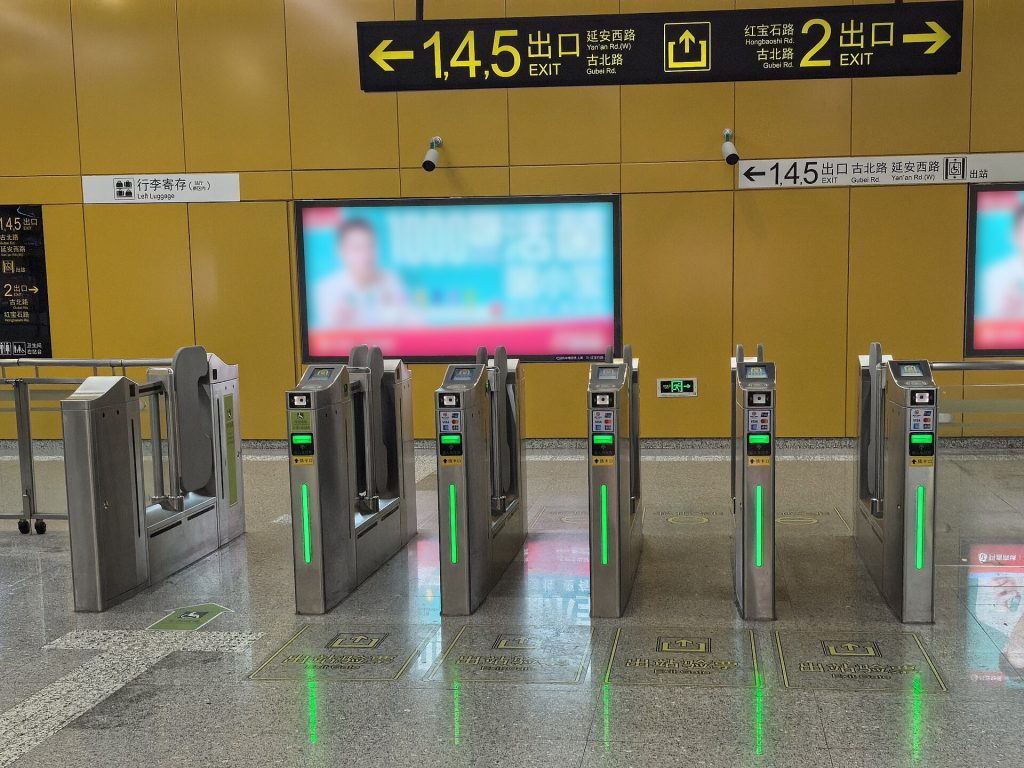
In 2026, the absolute easiest and most universal way to pay for buses and metros is via Alipay or WeChat Pay. Both of these ubiquitous super-apps feature built-in “Transport” (出行) mini-programs that generate a live, unique QR code. You simply scan this code at the glass scanner located on the metro turnstile or at the bus boarding reader, and the fare is automatically calculated and deducted from your linked foreign credit card (Visa, Mastercard, JCB, or Discover).
How to set it up: In Alipay, tap the “Transport” icon on the home screen. The app will detect your location (e.g., Shanghai) and ask you to activate the local transit card digitally. You agree to the terms, and instantly, a QR code appears. When you travel to a new city, you simply switch the city in the top-left corner of the Transport page and activate that city’s code.
The Pros:
Zero Deposit, Zero Top-Up: You pay per ride directly from your linked international card. There is no need to calculate how much money to preload or worry about leftover balances when you leave the country.
Universal Access: The transit QR codes in Alipay work seamlessly across almost all major Chinese cities. You don’t need a dozen different apps for a multi-city itinerary.
Smart Transfers: The apps automatically calculate transfer discounts if you switch from a bus to a metro within a specific timeframe.
The Cons:
Network Dependency: Generating the live QR code requires an active internet connection. You cannot use it offline. If you haven’t sorted out your data strategy, read up on China eSIM and Local SIM for Foreigners 2026: Airport, Apps, and Coverage to ensure you are connected the moment you land.
Setup Hurdles: You must have your digital wallet fully verified with your passport before transit codes will generate. Check out Alipay and WeChat Pay for Foreigners in China 2026: Setup, Limits, and Workarounds to get this done before your flight.
The Old Reliable: Physical Tourist Metro Cards
Despite the overwhelming digital revolution, physical smart cards remain a brilliant, highly reliable option for tourists. The most important thing to look for is the “China T-Union” (交通联合 – Jiāotōng Liánhé) logo. A card bearing this red-and-green interconnected logo can be purchased in one city and used on public transit networks in over 300 cities across mainland China.
The Pros:
No Internet Required: This is perfect for your first day if you haven’t bought a local SIM card yet, or if your phone battery dies after a long, photo-heavy day of sightseeing.
Unbeatable Speed: Tapping a physical card against the turnstile sensor is still marginally faster than unlocking a phone, opening an app, finding the mini-program, and waiting for a QR code to load. During peak rush hour, this speed is a stress-reliever.
Souvenir Value: Many cities issue beautifully designed, limited-edition tourist passes featuring local landmarks, mascots, or cultural art that make great keepsakes.
The Cons:
Topping Up Manual Labor: You generally need to load funds onto the card via station kiosks (which usually accept mobile pay but frequently lack English interfaces for top-ups) or customer service counters (which will accept cash).
Deposits and Refunds: Most physical cards require a 20 RMB (approx. $3 USD) refundable deposit. Reclaiming this deposit and your unused balance can be a hassle, as refunds are typically only processed at specific major terminus stations, not every single neighborhood stop.
Discount Limitations: While a T-Union card bought in Beijing will work to open turnstiles in Shanghai, you usually only receive frequent-rider discounts in the specific city where the card was issued.
Smartphone NFC Transit: Apple Pay, Google Pay, and Wearables
For tech-savvy travelers in 2026, smartphone NFC provides a middle ground, but it comes with distinct regional limitations.
Apple Pay: You can add specific Chinese transit cards (like the Shanghai Public Transport Card or Beijing Yikatong) directly to your Apple Wallet. However, to top them up directly within the Apple Wallet UI, you typically need a China-issued UnionPay debit card. Some tourists bypass this limitation by downloading the official “Shanghai Transit Card” app, setting up an account, and using it to top up their Apple Wallet transit card via a linked Alipay account. It works brilliantly once set up, allowing you to tap your iPhone or Apple Watch even when the battery is dead, but it adds an extra layer of setup complexity.
Google Pay / Foreign Tap-to-Pay: It is vital to note that Western tap-to-pay systems (Visa PayWave, Mastercard Contactless, standard Google Pay) do not work directly on Chinese metro turnstiles or buses. The infrastructure relies strictly on local Chinese systems. Do not expect to tap your physical Chase or HSBC Visa card on a bus reader.
Beyond the Subway Tunnels: Buses, BRT, and Ferries
While subways get all the glory, China’s surface-level transit is exceptional. Cities like Guangzhou feature extensive Bus Rapid Transit (BRT) lanes, while Shanghai relies heavily on ferries to cross the Huangpu River.
When taking buses, remember that boarding is almost always through the front door, where you tap your card or scan your QR code next to the driver. You exit through the rear doors. Most city buses have a flat fare (usually 2 RMB), regardless of distance. Ferries, such as the iconic Star Ferry-style crossings in Shanghai, also accept both Alipay QR codes and T-Union transit cards, making them a cheap and incredibly scenic way to get around.
Navigating Metro Security and Etiquette
One aspect of Chinese public transit that catches foreigners off guard is the mandatory security checks. Every single metro station in China requires passengers to pass their bags through an X-ray machine before reaching the turnstiles.
Liquids: If you are carrying a water bottle or a thermos, the security guard may ask you to drink from it to prove it isn’t a hazardous chemical, or they may run a specialized liquid scanner over it.
Peak Hours: Between 7:30 AM – 9:00 AM and 5:30 PM – 7:30 PM, stations become incredibly crowded. Backpacks should be taken off and carried by hand to save space.
Navigation: Station signage is universally bilingual (Chinese and English), and automated announcements are made in both languages.
City-by-City Breakdown
Beijing
Beijing’s metro system is a massive, grid-like labyrinth. You can easily buy a physical Yikatong (一卡通) card at Capital (PEK) or Daxing (PKX) airport stations, or any major subway hub. If you plan to visit major landmarks this November, having your transit sorted is crucial. For example, when organizing your route to the palace—detailed in our Forbidden City Tickets & Visit Guide 2026 for Foreigners—the transit QR code on Alipay is often the easiest way to jump on Line 1 (Tiananmen East or West stations) without fumbling for change.
Shanghai
Shanghai’s Public Transport Card (SPTC) is iconic, colored purple, green, or blue depending on the edition, and is widely accepted (even in licensed taxis and on cross-river ferries). If you are landing at PVG, read our guide on Shanghai Pudong Airport to the City 2026: Maglev, Metro, and Cars. Buying a physical SPTC right at the Maglev ticketing center is a popular first move, ensuring you can immediately tap onto the city’s vast 20+ line metro network the moment you step off the high-speed train.
Guangzhou & Shenzhen
In the Pearl River Delta, the Lingnan Pass (岭南通) rules Guangzhou, while Shenzhen has the Shenzhen Tong (深圳通). Both mega-cities are fully integrated into the Alipay/WeChat QR ecosystem. In fact, Guangzhou and the neighboring city of Foshan share an interconnected metro network (the Guangfo Line). If you are exploring this southern metropolis, our Guangzhou First Visit Guide 2026 recommends relying primarily on Alipay for transit, as the integration across different municipal borders here is incredibly smooth.
Your First-Day Strategy After Landing
To minimize stress upon arrival in late 2026, follow this exact playbook:
Before Leaving Home: Download Alipay, bind your foreign Visa/Mastercard, and complete your passport identity verification.
Upon Landing: Activate your travel eSIM so you have immediate, firewall-free internet access while waiting at baggage claim.
At the Airport Station: Open Alipay, search for “Transport” (出行), select the city you are in (it usually auto-locates), and authorize the creation of a Transit QR Code.
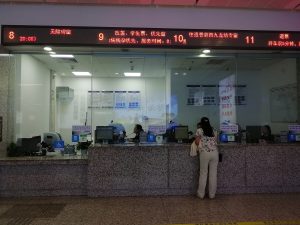
The Backup Plan: If your mobile internet is acting up or your phone is dying, walk to the manned ticket counter at the airport metro station. Hand them 100 RMB in cash and ask for a physical transit card (交通卡 – jiāotōng kǎ). This covers your deposit and gives you roughly 80 RMB in ride credit—plenty for your first few days—providing an immediate, fail-safe way to reach your hotel.
Once you are settled, you can choose to stick with the physical card for peace of mind or transition entirely to the convenience of mobile QR scanning. Either way, China’s world-class transit networks await.
Frequently Asked Questions (FAQ)
Can I use my city’s transit QR code to take the High-Speed Rail (CRH) between cities?
No. City transit QR codes on Alipay and WeChat, as well as T-Union physical cards, are strictly for intracity transport (metros, city buses, ferries, and trams). To travel between cities on China’s bullet trains, you must purchase train tickets through the official 12306 app or via the “Train Tickets” mini-program in Alipay/WeChat using your passport.
Are there multi-day unlimited tourist passes available?
Yes, cities like Beijing and Shanghai offer 1-day (24-hour), 3-day (72-hour), and sometimes 7-day unlimited metro passes. These are great if your itinerary is packed, but remember they typically only cover subways, not buses or ferries. You can purchase these at the service counters inside major metro stations.
What happens if my phone dies while I am inside the metro network?
If you tapped in with a QR code and your phone dies before you can tap out, you will be trapped behind the exit turnstiles. You must go to the customer service booth (located near the turnstiles), explain the situation, and pay the maximum network fare in cash to be let out. Always carry a power bank!
Do children ride for free?
In most Chinese cities, children under 1.3 meters (roughly 4 feet 3 inches) ride for free when accompanied by a paying adult. They do not need their own card or app; they simply walk through the turnstile gate at the same time as the adult.
Can I use one Alipay account to scan multiple people through the turnstile?
No. A transit QR code will refresh after it is scanned. You cannot scan yourself in, pass the phone back, and scan a second person. Every adult passenger must have their own digital QR code on their own phone, or their own physical transit card.
Related Lovely China guides
- China 144-Hour Visa-Free Transit: Who Qualifies and How to Use It
- How to Use Amap (Gaode Maps) in China as a Foreigner: 2026 English Guide
- Packing List for China Autumn Travel October November 2026
FAQ
Is this guide current for late 2026?
It reflects commonly reported practice as of October 2026. Always re-check official sources before you travel, because rules, ticket platforms and seasons change.
Where can I verify details?
Use the official website, WeChat account or ticket platform named for this topic. For payments and maps, see Lovely China’s practical visitor guides linked above.
What if my situation is unusual?
Ask your hotel, airline, park ticket office or embassy/consulate for case-specific advice rather than relying only on a blog post.