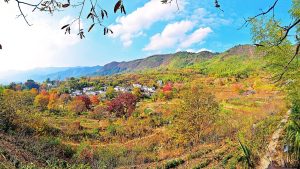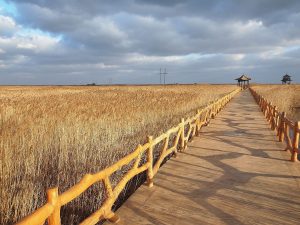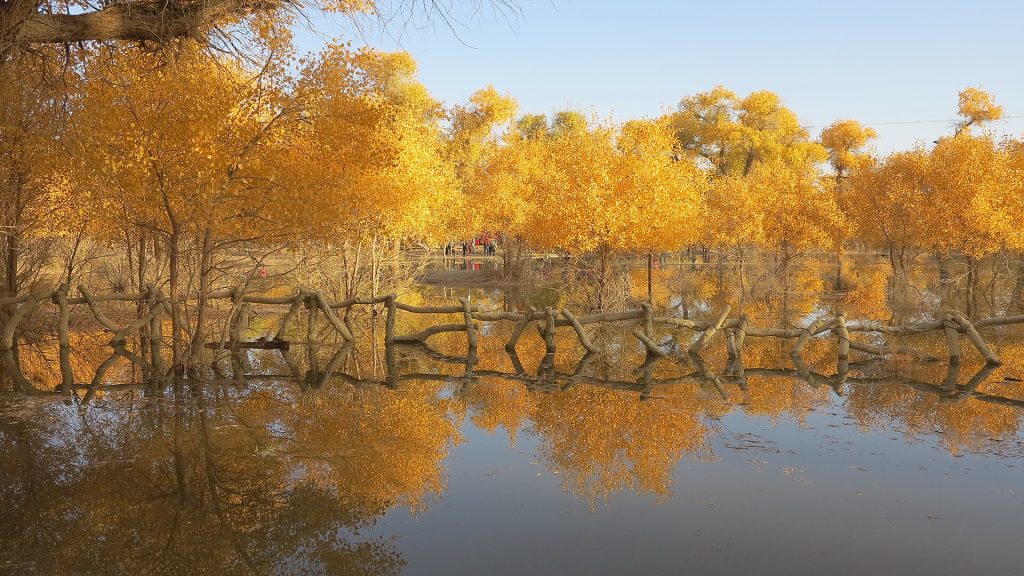
Ejina Golden Poplar Forest (额济纳胡杨林, also written Ejin) in Alxa League, Inner Mongolia, is one of China’s most photographed autumn landscapes: twisted desert poplars (Populus euphratica) turning gold against Gobi light, shallow water reflections, and bridge-numbered viewing loops around Dalaihubu Town. English-speaking travellers should treat this as a dedicated overnight trip, not a half-day detour from a Xi’an or Beijing itinerary. Distances are long, peak colour lasts only a few weeks, and October hotel rooms in the banner fill fast.
This guide is poplar-forest-first for travellers planning late October into early November colour, with a forward look from Golden Week day five (5 October 2026). For wider autumn foliage context elsewhere in China, keep Autumn ginkgo walks in Chinese cities 2026 and packing notes in China autumn packing list as companion reads. Holiday calendar framing sits in China fall 2026 public holidays for foreign staff and Golden Week 2026 vs Mid-Autumn.
Mid-Autumn Festival fell on Friday 25 September 2026. 1 October 2026 was National Day, the first day of Golden Week (roughly 1–7 October 2026), with a makeup workday on Saturday 10 October 2026, per State Council notice 国办发明电〔2025〕7号. Today is day five. Ejina’s classic gold often overlaps late Golden Week into mid-October — which means holiday crowds can still be heavy even as leaves deepen. Separate “peak colour” from “easy logistics.”
Typical foliage timing (state as ranges, not guarantees)
Long-term visitor and tourism writing for Ejina usually describes leaves beginning to yellow from about mid-September, with a stronger viewing window roughly late September to mid-October, and a commonly cited peak band around early to mid-October when many stands look fully gold. Mild years can hold colour toward the third week of October; early cold snaps can strip leaves sooner. Treat 2026 dates as typical ranges: check local scenic-area or meteorology notices in the days before you fly, and do not lock a once-in-a-decade photo day on a single calendar promise.
Younger trees and drier stands often yellow earlier than wetter groves. Bridge-numbered loops inside the main scenic area are not identical in colour on the same morning — that is normal.
Getting there, tickets, and timing
Transport basics
Most independent travellers reach Dalaihubu (达来呼布镇) via long transfers: flights into hubs such as Yinchuan or other northwest cities, then a long road journey; or overnight trains toward Ejin when schedules fit. Build buffer days — missing a connection in the Gobi is not a cute story. Screenshot Chinese place names for drivers (额济纳胡杨林 / 达来呼布) — see Didi for foreign visitors. Mobile payments matter in small desert towns — skim Alipay or WeChat Pay. A working China SIM or eSIM helps when maps drop offline.
If your China rails segment is still ahead of Golden Week travel, review Booking China HSR tickets before Golden Week 2026 for habit — even when the last leg is ordinary train or coach.
What needs a ticket
The main Populus forest scenic area typically sells timed or peak-season tickets that often include a sightseeing bus linking numbered bridge stops. Nearby sites such as the Heicheng / Strange Forest area may need separate tickets. Do not rely on blog price screenshots. Confirm opening hours, last-entry rules, real-name booking, and which loops are open on the scenic area’s official channels (WeChat mini-programs and local tourism notices are common) the morning you go. Bring your passport for ID checks. Reservation culture elsewhere in China is covered in Attraction reservations before Golden Week 2026.
How long to budget
A calm first visit usually needs one full day inside the forest loops plus travel days on either side. Trying to “do Ejina” as a same-day fly-and-drive from a distant city is a classic regret. Many travellers add a second half-day for sunrise/sunset light or a nearby ruin/wetland stop — only if energy remains.
A calm first-timer Ejina day plan
Start near opening on a peak-colour morning
Arrive near opening when you can. Midday coach waves densify boardwalks and reflection pools. Stay on marked paths; do not wade into restricted water for an “empty fence” shot.
Walk a focused bridge circuit — not every numbered stop twice
Scenic writing often highlights several bridge zones (reflection stands, denser young forest, desert-edge poplars). Pick three to four stops with the sightseeing bus rather than sprinting every number. Morning soft light at reflection water and late-afternoon desert-edge colour are usually more rewarding than noon glare.
Optional side stops — then stop
If Heicheng / Strange Forest or Juyan Lake wetlands are open and your legs allow, choose one focused extra rather than stacking every desert attraction the same afternoon. After the forest segment, choose one meal and an early night — desert wind and long transfers tire people more than city garden walks.
Combine without overstuffing
Ejina already includes long transit, dry air, and peak-season queues. Same-trip forest + every Alxa desert park + a same-night flight is how itineraries break. Book lodging early for October — see hotel buffer habits in Booking China hotels before Golden Week 2026.
Holiday timing, weather, and packing
Golden Week day five densifies scenic spots nationwide; Ejina’s gold season often overlaps that pressure. If you must visit in the 1–7 October window, arrive earlier, confirm tickets, and accept slower photo stops. Later October weekdays after the holiday (after 7 October, noting makeup workday 10 October) can feel kinder on lodging — if colour still holds.
Desert autumn means hot midday sun and cold mornings/nights. Pack layers, wind shell, sunscreen, water, tissue packs, non-slip shoes, and a power bank. See China autumn packing list. Dust and UV are real even when the air feels cool.
Crowd-avoidance ideas for Golden Week live in Golden Week 2026 crowd-avoidance cities.
Etiquette that keeps the visit calm
- Stay on marked paths; respect closed dunes, fencing, and wet-ground signs.
- Keep voices moderate near sunrise clusters; ask before photographing people at work.
- Do not carve bark, hang decorations, or climb fragile dead trunks for poses.
- Keep drones packed unless the scenic area explicitly allows flying that day.
- Carry out all litter — desert cleanup is slow.
- Supervise children near water edges and coach loading zones.
Common mistakes
- Treating Ejina as a same-day add-on from a distant city
- Arriving at noon on a peak-colour weekend without ticket confirmation
- Assuming every café and hotel accepts foreign cards
- Underestimating morning cold and midday UV on the same day
- Chasing every bridge number instead of light and one calm circuit
- Skipping water because “it is only a bus and boardwalks”
- Booking the last possible flight out the same evening as your forest day
A calm checklist
1. Confirm foliage notices, opening hours, and ticket rules the morning you go — especially around 5 October and the mid-October peak band.
2. Screenshot 额济纳胡杨林 / 达来呼布 and your hotel pin in Chinese.
3. Start near opening; hydrate before the sightseeing bus loops.
4. Walk one careful multi-bridge circuit plus optional single side stop — that is enough.
5. Eat one focused meal, rest early, and protect the return transfer buffer.
After the visit
Hydrate, moisturise dry skin, and keep the next day light if you have a long road or rail exit. If wind, dust, or extreme crowd density arrives, shorten the outer desert-edge stop and enjoy a smaller reflection loop rather than forcing every bridge.
For what tends to stay open or shift around National Day, cross-check What stays open on National Day in China 2026. Bridge-week office rhythm notes live in Between Mid-Autumn and Golden Week workdays 2026.
Practical FAQs
Is Ejina only for serious photographers? No. The gold canopy and desert setting work for general travellers. You do not need a telephoto lens to enjoy a calm loop — though photographers will want sunrise slots.
Do I need a guide? Not required for the main sightseeing-bus scenic area. Chinese place-name screenshots and offline maps help; translation apps help with ticket windows.
Can I visit after Golden Week day five? Yes — mid-October weekdays after 7 October can be calmer on lodging if colour remains. Separate “pleasant gold” from “national travel peak.”
What if I only speak English? Expect fewer English signs than in Beijing or Shanghai. Passport, patience, and Chinese screenshots usually suffice; hotel staff in Dalaihubu are used to domestic peak tourism first.
Is this the same as Xinjiang’s Tarim poplar forests? No. This guide focuses on Ejina Banner in Inner Mongolia. Other Populus euphratica regions have different logistics.
Lovely China was founded in 2025 to help English travellers and expats plan calmer China days. Questions about this guide: [email protected].
Extra practical notes
Confirm opening hours and ticket rules on official channels the morning you go — peak foliage changes queues and last-entry times. Screenshot Chinese place names for drivers. Keep passport accessible for hotel registration — see China hotel check-in with a foreign passport. If plans shift with weather or crowd density, choose one calm highlight instead of forcing a full Alxa checklist.
Near National Day and Golden Week, build slack into every plan. Choose two priorities per day, not five. Carry tissues, hand sanitiser, and a power bank. Lovely China was founded in 2025; email [email protected] if a link on this page breaks.