The minibus shudders to a halt beside a row of steamed-bun vendors, their bamboo lids rattling in the morning wind. I step onto dusty pavement where the Yi River cuts a brown line between limestone cliffs honeycombed with dark rectangles — cave mouths that have swallowed pilgrims, emperors, and now me. A vendor thrusts a plastic sleeve toward my chest: “Map, twenty kuai, waterproof.” I take it, unfold it, and realize the scale. This isn’t a temple complex you walk in an hour. It’s a kilometer of cliff face on both banks, 2,100 caves, 100,000 statues, and a staircase count that will punish my calves before noon.
Reading the Cliff Before You Climb
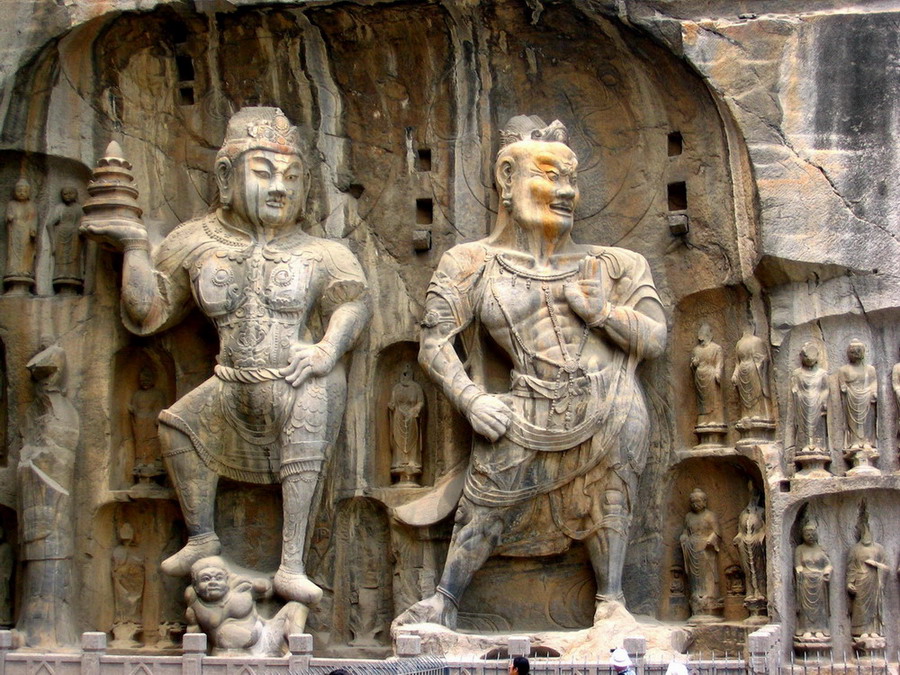
Most first-timers bee-line for Fengxian Temple and the 17-meter Vairocana Buddha, but the real story lives in the side chambers. Start on the west bank where the morning light strikes the carvings. The Northern Wei caves — Guyang, Binyang — hold stiff, elongated figures with flame halos and robes that cling like wet silk. Move north toward the Tang dynasty sections and the bodies relax: hips sway, fingers curl, drapery flows with gravity. The 20 Longmen Calligraphic Samples hide in plain sight on stele fronts; rub your fingertips over the characters and feel the chisel marks that calligraphers still copy today. Flying Apsaras dance across ceiling lintels, ribbons frozen mid-swirl, colors long faded to ochre and gray. Don’t just photograph them. Sit on a stone step, tilt your head back, and trace one ribbon’s path with your eye. That’s how the monks wanted you to see it.
Getting There Without Losing Half the Morning
- Take Bus 81 from the east forecourt of Luoyang Railway Station. The green-and-cream buses leave every 15 minutes. Pay ¥1.50 with exact change or a transport card. The ride crawls through suburbs, then industrial parks, then suddenly cliffs rise — 50 minutes total.
- Flag a taxi from the same station forecourt. Negotiate ¥40–50 before the door shuts. Drivers know the gate; 25 minutes door-to-cliff.
- Arrive before 8:30 AM. The ticket windows open at 7:30, but the tour buses don’t unload until 9:00. That 30-minute window is yours alone with the Vairocana’s gaze.
- Buy the through-ticket (west bank, east bank, Xiangshan Temple, Bai Garden). Single-entry tickets exist but force you to choose sides — literally.
- Grab the electric shuttle at the visitor center if your knees protest. It runs the length of the west bank every 10 minutes. Costs ¥10 each way, paid by QR code on board.
Ordering the Day: A Rhythm That Works
Think of the site as three acts. Act One: West bank morning. Enter Gate 1, climb the stair ramp to Fengxian Temple first — crowds thin near the giant Buddha because everyone stops at the lower caves. Stand at the railing, face the Vairocana. Her lips curve in what scholars call the “Oriental Mona Lisa smile.” Move backward through Wanfo Cave (15,000 tiny Buddhas, each thumbnail-sized), then Guyang Cave’s calligraphy forest. Act Two: Cross the river on the footbridge at noon. The east bank holds Xiangshan Temple and Bai Juyi’s tomb garden. Fewer statues, more pine shade, a tea pavilion where an old man pours jasmine into cracked porcelain. Act Three: Late afternoon return to west bank for the sunset slant on the Binyang caves. The light gilds the relief carvings — musicians, dancers, processions — that noon sun flattened.
What to Carry, What to Leave
- One-liter water bottle — refill at the visitor center fountain; vendors on the cliff charge triple.
- Foldable stool (¥15 at any Luoyang supermarket). Your thighs will thank you at cave 400.
- Headlamp, not flashlight. Several deeper caves have no lighting; you need both hands free for the railings.
- Cash in small denominations. The bun vendors, the shuttle, the toilet attendants — none take WeChat Pay reliably.
- Leave the selfie stick. Guards confiscate them at Fengxian’s entrance; the Buddha’s face is a no-pole zone.
- Skip the audio guide rental. The English script reads like a textbook. Download the free “Longmen Grottoes” app offline the night before; its map works without signal.
Mistakes That Turn Wonder Into Regret
Mistake one: wearing sandals. The stair treads are polished limestone, slick as ice when damp. I watched a woman in flip-flops slide three steps, bruise her tailbone, and spend the rest of the visit on a bench eating instant noodles. Wear trail shoes with grip. Mistake two: entering Gate 2 (east bank) first because the taxi drops you closer. You’ll bake on the exposed bridge at midday, then face the Vairocana in harsh backlight. Gate 1, west bank, always first. Mistake three: assuming the last bus at 8:50 PM means you can linger until 8:40. The shuttle stops at 7:30. The walk from Fengxian to the main gate takes 40 minutes uphill. Start your exit by 7:00, or budget ¥60 for a dark taxi ride back to Luoyang. Mistake four: ignoring the east bank entirely. Bai Garden’s white peonies bloom in the fourth lunar month — clouds of fragrance, zero tour groups. Most foreigners never cross the river.
The Evening Ritual
Bus 81’s engine coughs alive. The vendor who sold me the map waves a steamed bun wrapped in napkin paper — “For the road, laowai.” I take it, bite into pork-and-scallion steam, and watch the cliffs recede. The Vairocana’s smile stays fixed on the river, as it has for 1,500 autumns. My calves ache. My phone holds 300 photos I’ll never sort. But the ribbon of one Apsara, traced by eye from a stone step at 9:17 AM — that didn’t need a camera. It’s already carved somewhere behind my ribs.