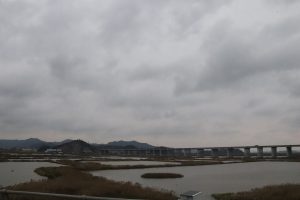
The minibus rattles across the Wanquan River bridge just as the morning light turns the water the color of weak tea. On the bank, an old man in a straw hat casts a net in a perfect circle, the lead weights flashing before they disappear. No tour groups queue for photos here. The city wakes up to the clatter of ceramic bowls and the smell of fermented bean curd drifting from open kitchen windows.
Getting There Without a Headache
Qionghai Bo’ao Airport sits closer to the forum site than to Jiaji town, but the airport buses solve the geometry. Bus 1 runs toward the city government and the high-speed rail station; Bus 2 heads for Bo’ao and the fishing port of Tanmen. A taxi from the terminal to a Jiaji hotel takes twenty minutes and costs about the price of a decent bowl of noodles. If you arrive on the high-speed line, the station sits on the northern edge of Jiaji — grab a Didi or the local bus 6 to reach the riverfront hotels in ten minutes.
- Fly into Bo’ao Airport (BAR) from Haikou, Guangzhou, or Shanghai.
- Take the high-speed train to Qionghai Station, then bus 6 or a ride-hail to the river.
- Long-distance buses from Haikou East Station drop you at Jiaji bus terminal, a short walk from the old streets.
Where to Sleep: River Views vs. Forum Gloss
Jiaji rewards walkers. Pick a guesthouse on Wenming Road or the lanes behind the Catholic church — you’ll hear the river before you see it, and breakfast means steamed buns from the stall downstairs. Rooms in these family-run places run simple: tile floors, mosquito nets, a window that opens onto a banyan canopy. If you prefer air-conditioning that works on the first try and a lobby with English-speaking staff, cluster around the Bo’ao Water City development near the forum venue. The hotels there face the meeting halls across a manicured lagoon; they cost three times as much and feel like any business district in Shenzhen.
- Budget: Family inns near Wenming Road — ask for a river-facing balcony.
- Mid-range: Chain hotels (Jinjiang, Atour) near the high-speed rail station.
- Splurge: Bo’ao Water City resorts — book early during forum season.
Two Days on Foot and Water
Start early at the Wanquan River promenade. Rent a single kayak from the wooden dock behind the culture center — fifty yuan for an hour, paddle upstream past mangrove roots where kingfishers dart. Return by nine, walk the old quarter’s arcade streets where shophouses lean together like tired dancers. The Catholic church on Zhongshan Road opens its doors at ten; inside, the stained glass throws blue light onto worn pews. Lunch at a corner stall: rice noodles in clear broth, topped with pickled bamboo shoots and a spoonful of chili oil the color of dried blood.
Afternoon heat drives you to the Bo’ao Asian Forum permanent site. The architecture is all glass and white steel, but the real draw is the narrow spit of sand where the Wanquan meets the South China Sea. Walk the boardwalk until the wind pushes you back. Dinner in Tanmen harbor: order the steamed grouper with ginger and scallion, a plate of stir-fried water spinach with fermented tofu, and a bottle of warm beer. The fishing boats unload their catch under floodlights while you eat.
- Morning: Kayak the upper Wanquan mangroves.
- Midday: Explore Jiaji arcade streets and the Catholic church.
- Afternoon: Bo’ao forum site and the river-mouth sandbar.
- Evening: Seafood dinner at Tanmen fishing harbor.
Eating Like a Local, Not a Tourist
Qionghai cuisine leans salty-sour, heavy on preserved vegetables and seafood dried on rooftop racks. The signature dish is Jiaji duck — braised until the skin turns mahogany and the meat falls off the bone, scented with star anise and aged tangerine peel. You’ll find it at any restaurant with a red lantern and a cleaver-chopped block out front. Order a whole duck to share, plus a side of bitter melon stuffed with minced pork. For breakfast, hunt down the woman pushing a bamboo cart of *qing bu liang* — shaved ice drowned in coconut milk, red beans, mung beans, and a tangle of sweet potato noodles. Eat it squatting on a plastic stool before the sun climbs.
- Jiaji duck: braised with star anise, tangerine peel, soy; skin glossy, meat shredding.
- Bitter melon stuffed with pork: blanch melon first to cut bitterness, steam twenty minutes.
- Qing bu liang: shaved ice, coconut milk, red bean, mung bean, sweet potato noodle, jelly.
- Tanmen steamed fish: whole grouper, ginger matchsticks, scallion, hot oil poured tableside.
Culture Traps and Quiet Wins
Don’t assume everyone speaks Mandarin fluently — elders in the market answer in Hainanese and smile when you try a few words. Learn *m goi* (thank you) and *ho bo* (delicious); the vendors will slip you an extra piece of fried dough. Avoid the “cultural village” tours that stage Li minority dances for bus groups; instead, take the county bus to Baishi Ridge on a market day (the third, sixth, and ninth of each lunar month). Villagers come down from the hills to trade wild herbs, honey, and hand-woven baskets. Stand back, watch, buy a small basket if you like — no one pressures you.
Another mistake: treating Bo’ao as a day trip from Sanya. The forum area empties out after five; the magic lives in the early morning when fishermen mend nets on the beach and the water is flat enough to reflect the hotel towers. Stay one night in a Bo’ao guesthouse, wake at dawn, walk the empty sand. That silence is what you came for.
- Learn two Hainanese phrases: *m goi* (thanks), *ho bo* (delicious).
- Visit Baishi Ridge on lunar market days (3rd, 6th, 9th) for authentic hill-tribe trade.
- Skip staged cultural shows; wander Tanmen harbor at sunrise instead.
- Stay overnight in Bo’ao to catch the empty beach at dawn.
Moving Around: Wheels, Wheels, Wheels
Public buses connect Jiaji, Bo’ao, and Tanmen, but they run on village time — twenty minutes early or forty late. Download the local ride-hailing app (the green one, not the orange) or flag a green-plate electric taxi. Negotiate a half-day rate if you plan multiple stops: around 150 yuan for four hours, driver waits while you kayak or eat. Scooter rental shops cluster near the Jiaji bus station; they’ll hand you a helmet with a cracked chin strap and a key. Only take one if you’ve ridden in Chinese traffic before — the roundabouts here have no lanes, only intuition.
- Green-plate electric taxis: hail on street or app; agree price before moving.
- Half-day hire: ~150 yuan for four hours, driver waits.
- Scooter rental: near Jiaji bus station; bring your own helmet if possible.
- County buses: cheap but erratic; ask the driver “dao bu dao Bo’ao?” before boarding.
Seasonal Rhythm
The dry season, from the tenth lunar month through the third, brings blue skies and northeast winds that flatten the sea — ideal for the river mouth and kayaking. Spring rains arrive around Qingming, turning the mangroves luminous green but making the river choppy. Summer typhoons can close the airport and strand you in Tanmen for days; locals stock up on rice and candles when the warning flags go up. The Bo’ao Forum usually sits in the third lunar month; hotel prices triple and the river promenade fills with security checkpoints. Plan around it unless you’re attending.
- Best weather: Tenth to third lunar month — dry, cool, calm water.
- Spring rains: Around Qingming — lush mangroves, rougher kayaking.
- Typhoon season: Sixth to ninth lunar month — check forecasts, keep flexible tickets.
- Forum period: Third lunar month — book six months ahead or avoid entirely.