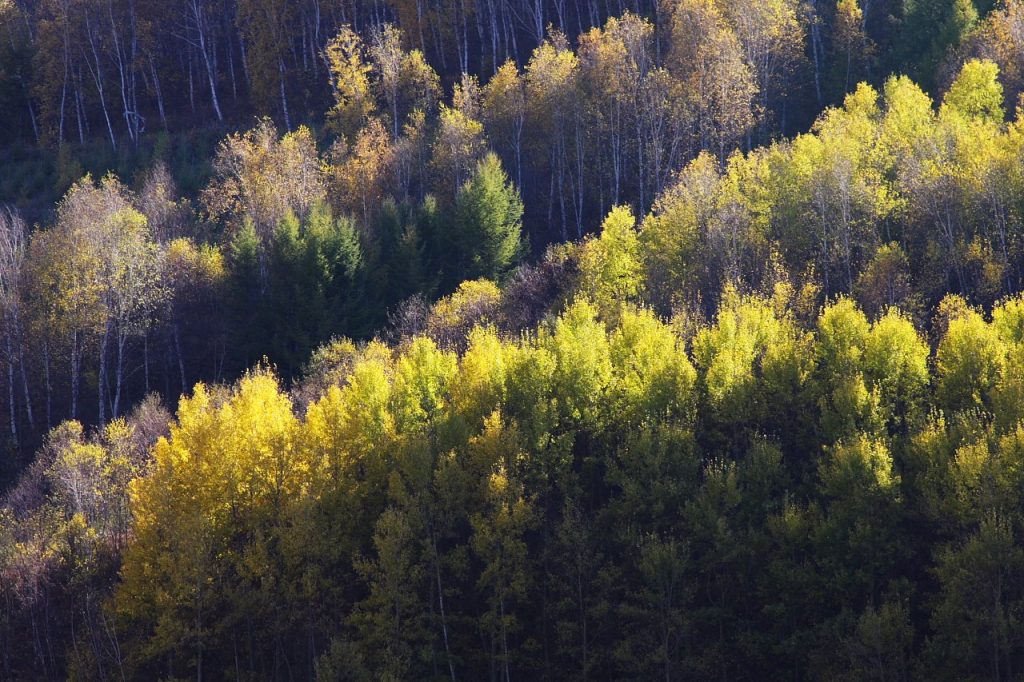
Saihanba autumn colors 2026: what you need to know first
Saihanba (塞罕坝) is a huge planted forest and grassland plateau in Weichang Manchu and Mongol Autonomous County, in the far north of Chengde, Hebei. With the wider Bashang (坝上) grassland belt along the edge of the Inner Mongolian plateau, it is where Beijing and Tianjin go each autumn for gold larch, white birch, red oak scrub and wide, windy skies. For foreign residents in northern China it is one of the most rewarding road trips of the year, but it is also one of the easiest to time badly.
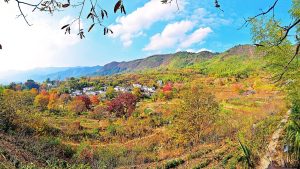
The key fact for 2026: Saihanba’s colour comes early. On 30 September 2026, People’s Daily Online published photos of the Saihanba National Nature Reserve showing autumn colour “in its concentrated display period.” That is typical. Long-running local travel guidance puts the main colour window at roughly late September to early October, often only two to three weeks long, with leaves dropping quickly once strong wind and frost arrive. Today is 6 October 2026, day six of the National Day Golden Week (1–7 October, with a makeup workday on Saturday 10 October, per the State Council holiday notice).
So this guide is honest about two things: what you can still realistically see in the second week of October, and how to plan a calmer, better-timed trip for the 2027 season.
What is still left after Golden Week
If you can leave in the next few days, here is what to expect, as a range rather than a promise:
- Larch forests (the dominant gold) may still hold yellow and amber needles on sheltered slopes, while exposed ridges thin out first. A single windy night can change a hillside.
- Birch stands usually drop leaves earlier than larch; expect bare white trunks mixed with lingering yellow.
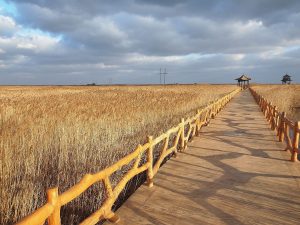
- Grassland turns tawny and straw-coloured, which many photographers actually prefer for low-sun landscape work, with hay bales, fences and long shadows.
- Lakes such as Qixing Lake (七星湖) and Moon Lake (月亮湖) still offer reflections on calm mornings, but colour on the shoreline may be patchy.
Before you drive four or five hours, check the latest photos and notices on official channels, such as the Saihanba scenic area’s WeChat account and Weichang or Chengde tourism notices. Recent posts from domestic travellers on social apps also help, but look at the date on every picture. If recent photos show mostly bare trees, consider a nearer autumn trip instead, such as Chengde Mountain Resort in autumn, or a city-park day using our autumn ginkgo walks guide.
Why Saihanba matters: a forest people planted
Saihanba is more than a pretty view. Under the Qing dynasty, this area was part of the Mulan Weichang imperial hunting grounds. Later logging and fires left much of the land degraded, and from 1962 the state-run Saihanba Mechanical Forest Farm began planting trees on a very large scale. The Saihanba afforestation community received the United Nations Environment Programme’s Champions of the Earth award in 2017. For visitors, this explains why you see rows of planted larch and pine as well as natural birch and oak, and why fire-prevention rules here are strict. Many rangers and staff take them personally.
Where to go: Saihanba vs the wider Bashang belt
“Bashang” simply means “on the dam/plateau edge.” It is a region, not one park. English-speaking visitors usually mean one of these:
Saihanba National Forest Park (Weichang, Chengde)
This is the main forest-and-lake area, with sites such as Saihan Tower (塞罕塔), Qixing Lake, Moon Lake, Taifeng Lake and birch groves. Saihanba is often sold together with the neighbouring Yudaokou (御道口) grassland area. Ticket bundles, validity and prices change, so buy through the official channel and keep your passport ready for real-name checks.
Fengning Bashang and the Chengde scenic drive
South-west of Saihanba, Fengning county’s grasslands and the promoted National No. 1 Scenic Avenue (国家一号风景大道) give rolling roadside views. This works well if you are self-driving and want a slower route rather than one big park.
Zhangbei and the Grassland Skyway
Further west in Zhangjiakou, the Grassland Skyway (草原天路) ridge road is another classic autumn drive from Beijing. It is a different trip from Saihanba, so do not try to combine both in one weekend. For broader context, see our Zhangjiakou travel guide.
Getting there from Beijing
Most visitors self-drive or join a tour. Public transport inside the forest is limited, and distances between viewpoints are long. Practical points:
- By car: An expressway now links Beijing toward Saihanba. Allow most of a day each way with stops and holiday traffic. During Golden Week 2026, Chinese media reported heavy jams near scenic entrances, so outside the holiday, leave very early.
- By rail plus car: High-speed trains reach Chengde from Beijing; from there you still need a long road transfer north. Check routes on 12306 and book a driver or rental in advance.
- Tours: Chinese-language photography tours from Beijing run in season. Ask exactly which areas are included, how long you will stay at each stop, and where you will sleep.
If you rely on ride-hailing at either end, read Didi for foreign visitors. Make sure mobile payments work before leaving the city (Alipay and WeChat Pay guide), as small guesthouses rarely take foreign cards. Mobile signal can drop in valleys, so download offline maps first.
Driving notes for foreigners
You need a valid Chinese driving licence or an official temporary driving permit; an international driving permit on its own is not accepted in mainland China. Roads inside the park are narrow, livestock and photographers stop suddenly, and wrong-way overtaking during jams is a known problem. Drive patiently, never park on bends, and keep fuel above half.
Weather and packing: colder than you think
Saihanba sits around 1,500 metres above sea level on average, and it is genuinely cold. October mornings are often below freezing, wind is strong on open grassland, and early snow is possible. Even if Beijing is mild, pack:
- A down jacket or warm insulated layer, hat and gloves
- A windproof shell and warm socks; sturdy shoes for frosty grass
- Sunscreen and sunglasses, because high-altitude sun is strong at midday
- Snacks and a thermos, since food stops can be far apart in the forest
- A power bank (batteries drain fast in the cold)
Our China autumn packing list covers layering in more detail.
Where to stay
Many travellers stay in guesthouses around the forest farm area or in nearby towns. During late September and Golden Week, prices rise and rooms sell out, sometimes weeks ahead. After 7 October the pressure eases, but some smaller places reduce operations as the season ends. Confirm heating and hot water before booking, and that the property can register foreign passports. Our hotel check-in with a foreign passport guide explains what to expect.
A realistic two-day plan
Day 1: Leave Beijing early. Arrive by early afternoon, check in, then drive one scenic loop slowly with two or three stops (a lake, a birch grove, a ridge viewpoint). Catch late-afternoon light on grassland, eat a hot dinner and sleep early.
Day 2: Get to a lake viewpoint before sunrise for mist and frost. Then climb Saihan Tower area for the panoramic view if it is open. Leave by early afternoon to avoid driving the expressway in the dark.
This is enough. Trying to cover Saihanba, Fengning and the Zhangbei skyway in one long weekend means most of your trip is spent in the car.
Planning for the 2027 season
If 2026 has slipped past, use it to plan better:
1. Pencil in mid-September to early October 2027 and watch colour reports from early September.
2. Avoid the National Day holiday if your schedule allows. A weekday in the last ten days of September usually means easier roads and rooms. The 2027 holiday dates will come from the State Council notice, usually published in late autumn of the previous year.
3. Book refundable rooms early, then decide a few days ahead based on weather.
4. Plan around fire rules. Spring and autumn fire-prevention restrictions can close some roads; check official notices.
For general crowd strategy, our Golden Week crowd-avoidance cities guide and returning after Golden Week tips are useful companions.
Etiquette and safety
- No smoking or open flames in forest areas. Fire rules are strictly enforced.
- Do not drive or walk onto fenced grassland or farmland for photos; much of it is herders’ land.
- Keep drones packed unless flying is clearly allowed.
- Ask before photographing herders, horses for hire or people at work.
- Take all litter out with you.
FAQ
When is the peak of Saihanba autumn colors?
It usually runs from roughly late September to early October and lasts only two to three weeks. Exact timing varies each year with temperature and wind, so check recent official photos and notices.
Is it worth going to Saihanba after Golden Week 2026?
It can be, if recent photos still show colour and you enjoy straw-gold grassland and quiet roads. Do not expect peak colour after mid-October; leaves fall quickly once frost and wind arrive.
Can I visit Saihanba without a car?
It is difficult. Most independent foreign visitors hire a driver or join a tour, because viewpoints are spread across a large area.
How cold is Saihanba in October?
Very cold mornings are normal, often near or below freezing, and snow is possible. Pack winter layers even if Beijing feels mild.
Is Saihanba the same as Bashang?
Saihanba is one park within the wider Bashang plateau-edge region, which also includes Fengning and Zhangbei grasslands.
Lovely China was founded in 2025 to help English-speaking travellers and expats plan calmer days in China. Spotted an outdated detail? Email [email protected].
Cover photo: wuqiang_beijing / Wikimedia Commons (CC BY 3.0). Golden larch and birch forest in Saihanba National Forest Park.