The minibus rattles past endless rows of persimmon trees, their orange fruit heavy against the grey-green leaves, before the road suddenly drops toward a basin of white. Ahead, the Salt Lake stretches flat and blinding under the late autumn sun, its crust crunching under tires where trucks haul away mounds of crystalline sodium sulfate. An old man on a three-wheeled cart waves us down, selling vacuum-sealed bags of black jujubes still warm from the drying racks. This is the first taste of Yuncheng: salt in the air, sweetness in the hand, and the weight of three thousand years pressing against the window glass.
Getting There and Moving Around
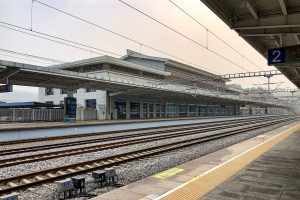
High-speed trains from Xi’an North or Taiyuan South slide into Yuncheng North Station in under two hours. The station sits ten kilometers north of the old city, so a taxi or Didi ride costs roughly forty yuan and takes twenty minutes through the industrial ring road. If you arrive on a conventional overnight train, you step out at Yuncheng Station right beside the Guan Yu Temple district—convenient for dropping bags at a guesthouse before the crowds gather. Local buses numbered 1, 8, and 19 connect the railway stations, the Salt Lake scenic gate, and Yongle Palace, but they run every twenty minutes and stop early in winter. Renting an electric scooter from a shop near the Drum Tower (about thirty yuan a day) lets you chase the light across the lake’s edge and slip down alleyways no bus reaches.
Salt Lake: Walking on Crystals
The lake divides into two moods. The developed scenic zone at the northeast corner charges an entry fee and floats rubber rafts for tourists who want to bob in water so dense you cannot sink. Locals skip that gate. They drive to the wild western shore near Zhangjiapu village, where the water retreats each dry season to leave a pavement of hexagonal salt plates. You walk barefoot on geometry, the plates cracking like thin ice, while brine shrimp bloom pink in the shallow pools. Mid-afternoon light turns the surface into a mirror that swallows the Zhongtiao Mountains whole. Bring a towel, a wide-brim hat, and a liter of water—the glare burns retinas and lips within minutes. If you stay until the sun drops behind the peaks, the crust glows rose-gold, and the only sound is wind scraping salt dust across the flats.
Yongle Palace: Murals That Breathe
Thirty kilometers north of the city, Yongle Palace hides behind a grove of ancient locust trees. The main hall, Sanqing Dian, survived a reservoir relocation in the 1950s—every timber numbered, dismantled, and rebuilt brick by brick. Inside, four hundred square meters of Yuan-dynasty murals cover the walls: immortals riding cranes, dragons coiling through clouds, court ladies offering peaches of longevity. The pigment—malachite green, cinnabar red, azurite blue—has not faded. A monk with a key unlocks the side chapel at 9 a.m. and 3 p.m.; slip him twenty yuan and he lets you stand nose-to-wall with the “Procession of the Deities,” where each face bears a different expression: mischief, sorrow, boredom, awe. Photography is forbidden, so you memorize the brushstroke that defines a dragon’s whisker in a single pull.
Guan Yu’s Hometown: Incense and Iron
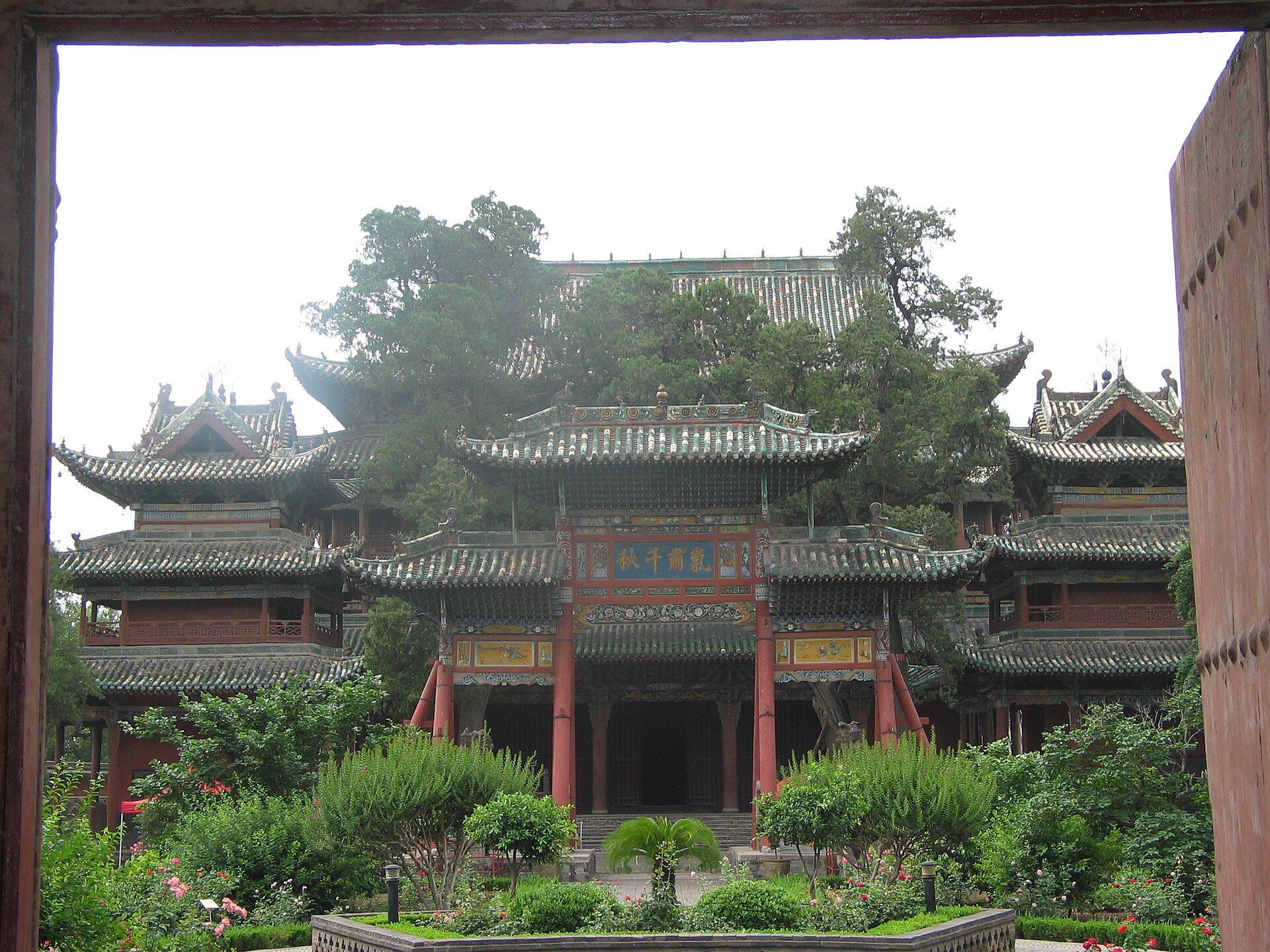
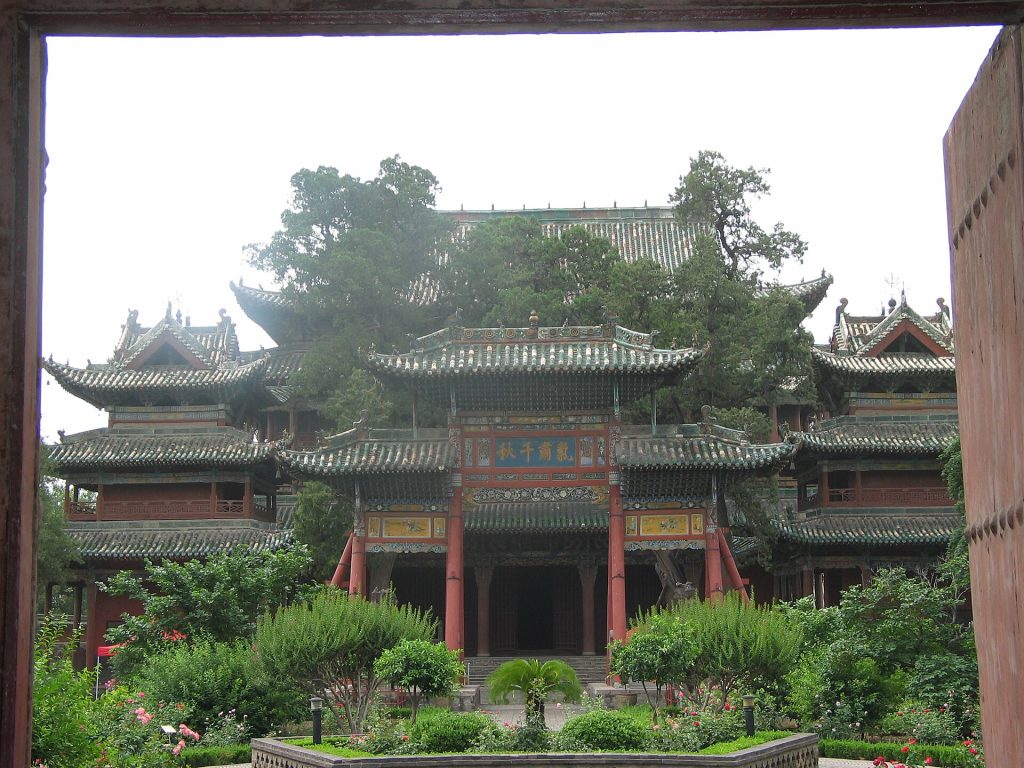
Jiezhou Guan Yu Temple sits in Changping Village, fifteen minutes south by scooter. The complex sprawls across three courtyards aligned on a north-south axis, each gate guarded by stone lions whose manes have been smoothed by centuries of pilgrim hands. The central hall houses a Ming-dynasty bronze statue of Guan Yu, three meters tall, his phoenix eyes painted with gold leaf. Devotees queue before dawn on the first and fifteenth of every lunar month, carrying bundles of yellow paper money and raw pork shoulders. They kneel on the blue stone slabs, foreheads touching the threshold, whispering petitions for loyalty in business and safety on the road. Outside, vendors grill lamb skewers over charcoal, dusting them with cumin and chili powder that cuts the sweet smoke. Eat one standing, grease dripping on your fingers, while an old veteran in a PLA cap adjusts the red tassel on a replica Green Dragon Crescent Blade.
Eating in the Granary: Noodles, Vinegar, and Persimmons
Yuncheng sits on the Loess Plateau’s eastern edge, where wheat dominates. Breakfast means a bowl of *dao xiao mian*—knife-shaved noodles—served in a broth thick with mutton, radish cubes, and a spoonful of aged Shanxi vinegar that hits sour, salty, and sweet in one breath. The best stall I found hides behind the Drum Tower: a woman named Auntie Li shaves dough directly into boiling water with a curved blade, each ribbon landing in a perfect curl. Order “da wan” (large bowl) and she adds a poached egg and a handful of pickled garlic shoots.
Knife-shaved noodles: high-gluten flour, water, pinch of salt — rest dough thirty minutes, shave thin ribbons into rolling boil, cook ninety seconds.
Mutton broth: shoulder bones simmered four hours with ginger, scallion, star anise, cassia bark — skim foam, season with salt and aged vinegar at the end.
Persimmon cake: ripe fruit peeled, mashed, spread on bamboo trays, sun-dried ten days until white frost (glucose crystals) blooms on the surface.
Black jujubes: small dates smoked over jujube wood until skin wrinkles black, flesh turns sticky-sweet — eat whole, pit and all.
Lunch often shifts to *rou jia mo*—crisp flatbread stuffed with braised pork belly that falls apart into threads. The bread, baked against the inner wall of a clay oven, cracks open with a hiss of steam. Dinner in a family courtyard might bring steamed wheat flour rolls (*hua juan*) twisted like flowers, served with a dish of stir-fried yam and wood ear fungus. The local vinegar, brewed from sorghum, barley, and peas in ceramic jars buried underground for three years, appears on every table in a tiny porcelain dish. Do not pour soy sauce on your dumplings here; the vinegar is the soul.
Sleeping in the Old Lanes
The most atmospheric beds lie inside the Ming-Qing residential compounds west of the Drum Tower. Families have converted side courtyards into guesthouses with heated brick beds (*kang*) covered in cotton quilts. A room with a private bathroom runs 180 to 260 yuan in the cool season; prices double during the Guan Yu cultural festival in the ninth lunar month. The hostess will wake you at 6 a.m. with a thermos of millet porridge and a plate of fermented bean curd. If you prefer quiet, book a courtyard guesthouse near the Confucian Temple—fewer tour groups, and the night watchman still strikes the bronze bell at 10 p.m. and 4 a.m., a sound that vibrates in the ribs.
Seasonal Rhythms and Festival Pulse
Spring arrives with the Qingming kite festival: hundreds of paper swallows and centipedes ride the thermal rising off the Salt Lake, strings humming against the wind. Summer brings the “Dog Days” heat—temperatures climb above thirty-five Celsius—and the lake turns pink with halophilic algae. Locals harvest salt at midnight when the crust hardens; you can join a work crew if you ask the cooperative chief in Xiezhou town, but wear rubber boots and expect blisters. Autumn is persimmon season. Villages along the Yellow River tributaries hang red curtains of fruit from eaves, and the air smells of fermenting juice. The ninth lunar month hosts the Guan Yu Culture Festival: opera troupes perform *The Battle of Red Cliffs* on temporary stages, martial artists spar with heavy weapons, and the temple stays open all night for continuous incense. Winter freezes the lake into a white desert; migratory swans settle in the unfrozen channels near the water treatment plant. Photographers camp in sub-zero wind for the dawn takeoff.
Mistakes That Cost Time or Face
First-timers often book a day tour that rushes Salt Lake, Yongle Palace, and Guan Yu Temple into eight hours. You spend more minutes in the van than looking at murals. Stay two nights minimum. Another error: wearing white sneakers on the salt flats. The brine stains orange permanently; bring dark sandals or cheap rubber boots you can discard. At Guan Yu Temple, never point at the statue with a single finger—cup your hand, palm up. Do not step on the threshold; stride over it. When a vendor offers a “blessed” red string for fifty yuan, smile and walk away; the same string costs five yuan at the stall behind the Drum Tower. Finally, do not assume Mandarin works everywhere. The local dialect (Jin Chinese) swallows tones; learn “xie xie” (thank you) and “bu yao” (don’t want) in the Yuncheng cadence—sharp rising, short falling—and doors open.
Day Trips Beyond the City Wall
An hour west by hired car, the Hukou Waterfall thunders where the Yellow River squeezes through a gorge twenty meters wide. In the dry season the curtain splits into braids; in flood it becomes a single brown wall shaking the bedrock. The viewing platform vibrates under your soles. Northward, the ancient stage of Guangsheng Temple in Hongtong County holds the only surviving Yuan-dynasty wooden theater in China—its dougong brackets interlock without a nail. Climb the Flying Rainbow Pagoda beside it for a view of the Fen River valley patchwork: wheat, corn, apple orchards, solar panels. If you have a third day, drive south to the Zhongtiao Mountains’ hidden valleys where Taoist hermits still tend tea gardens. The path is unmarked; ask a villager in Xiyang for “Lao Zhang”—he knows the spring where the water tastes of orchid root.