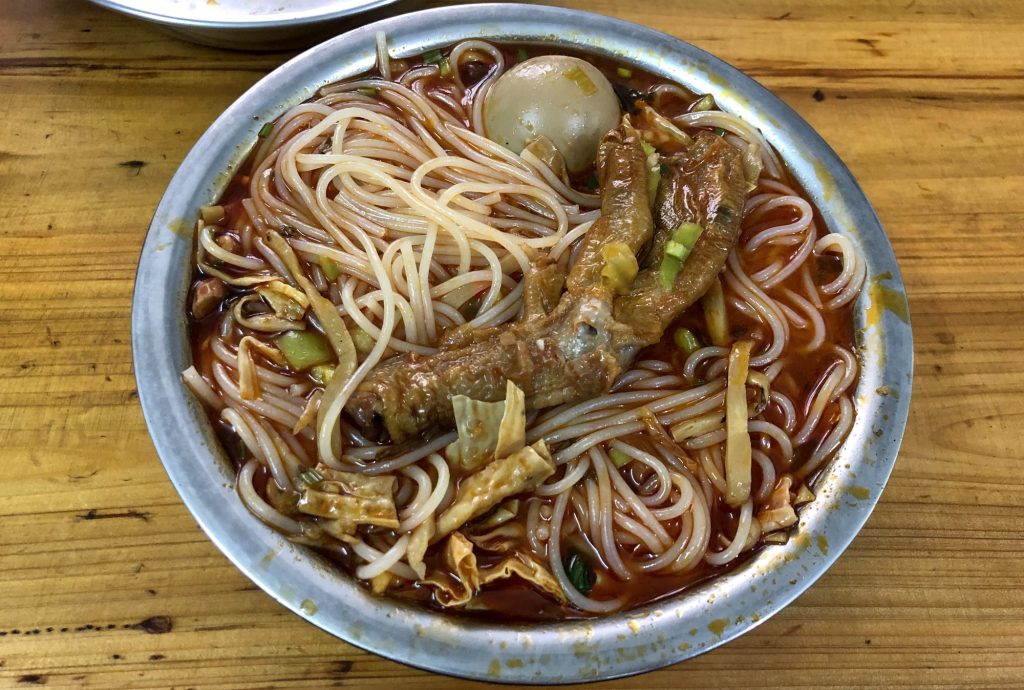
What luosifen is (aroma included)
Luosifen (螺蛳粉) is Liuzhou’s famous river-snail rice noodle soup: sour-spicy broth, rice noodles, pickled bamboo, peanuts, tofu skin, greens, and often a bold aroma that announces itself before the bowl arrives. The smell intimidates newcomers; the taste converts many of them. First-timers should expect funk-forward fragrance, adjustable heat, and a toppings party in one bowl.
It is not Japanese ramen, not Guilin mifen exactly, and not “just spicy noodles.” Snail is traditionally part of the broth story even when you do not see a pile of snails on top — ask if you need clarity. Instant bag versions made luosifen a national grocery phenomenon; shop bowls remain the fuller experience when you can sit down.
Ordering your first bowl
Shop vs instant
Specialist shops in Liuzhou and across Chinese cities cook to order with fresh toppings. Instant packets are travel luggage legends — useful on trains, different from a proper shop bowl. For a first taste judgment, prefer a busy shop.
Show 螺蛳粉. Ask for mild or less spicy (少辣 / 微辣) if you are chilli-cautious — you can add heat; you cannot easily remove it. Confirm whether peanuts arrive by default if you have allergies.
Toppings and sour-spicy balance
Pickled bamboo shoots and sour notes are part of the identity. Peanuts add crunch. Tofu skin and greens balance richness. Egg or other add-ons appear on many menus — start classic before stacking every extra.
Stir before tasting so oil, vinegar, and chilli distribute. The first spoon teaches whether you need more vinegar, chilli, or simply more noodles.
Taste notes
Expect sour, spicy, savoury, and aromatic broth with springy rice noodles. The smell is stronger than the taste for many diners — give it three honest bites before deciding. If heat overwhelms, add noodles/rice if offered, drink soy milk or a mild drink, and slow down. If the bowl tastes only of chilli without sour complexity, try another shop.
Etiquette and practical habits
Eat sooner rather than later — noodles continue to soften. Do not block narrow shop aisles while filming the aroma reaction video. Set up Alipay and WeChat Pay. Tipping is not expected.
For street-adjacent small shops, see street food safety for the first month. Busy turnover helps.
Common mistakes
- Ordering maximum spice as a dare on the first bowl
- Judging only by smell without tasting
- Ignoring peanut allergies
- Comparing instant packet to a flagship shop unfairly — or vice versa
- Eating luosifen right before a quiet HSR carriage without mints and awareness — aroma lingers; be kind to neighbours, especially in quiet coaches (see HSR quiet carriage etiquette)
Allergies and diet
Rice noodles are usually rice-based (sometimes with starch). Broth and sauces may include soy, shellfish/mollusc (snail), peanuts, sesame, and chilli oil. Not reliably vegetarian. If you avoid molluscs, ask clearly whether snail is in the broth — do not assume “no snail pieces” means no snail stock.
Holiday travel note
Luosifen shops near stations get slammed around Mid-Autumn and Golden Week. Order, step aside, eat. Instant packets in convenience stores become backup when queues look impossible — still not the same as a shop bowl, but fine for hunger.
A calm first-timer plan
1. Choose a busy specialist; ask for mild spice.
2. Order a classic bowl; declare peanut allergy if needed.
3. Stir; taste broth; adjust vinegar/chilli carefully.
4. Finish while noodles still have bounce.
5. Decide later whether instant packets deserve suitcase space.
Why English speakers bounce — and why they come back
The aroma is a social test. Colleagues may watch your face. Smile, take the bite, and comment on sourness or noodle texture rather than only the smell. Many travellers who hesitated once become packet smugglers on the flight home. Others remain politely unconvinced — that is fine. China’s noodle map is huge; you can love Guilin mifen or Chongqing xiaomian instead without failing any exam.
If you are in Guangxi beyond Liuzhou, ask locals which shop styles are soup-forward versus topping-forward. Keep a photo of the bowl you liked so you can reorder by pointing.
Instant luosifen in hotels and dorms
Instant bags are a cultural moment: boil water, assemble toppings, open the vinegar and chilli packets carefully. Follow packet instructions; ventilation matters because aroma travels down hotel corridors. Be kind to neighbours. Instant quality varies wildly — a shop bowl should still be your reference tasting.
Grocery stores across China stock multiple brands. If you are flying internationally, check liquid/gel rules for sauces before packing opened packets in hand luggage.
Sourness knobs: vinegar, pickled bamboo, and personal taste
If the bowl tastes flat, a little vinegar may help. If it tastes only sour without depth, the broth may be weak — try another shop. Pickled bamboo is polarising; you can nudge pieces aside without failing the experience. Peanuts are easier: declare allergy or remove them if cross-contact is acceptable for your risk level — true allergies should avoid shops that default-mix peanuts.
Pairing drinks and what not to drink
Mild soy milk, tea, or herbal drinks are common companions. Ice-cold dairy on top of heavy chilli is a personal experiment. Alcohol is optional; many bowls are weekday lunches without beer. Water helps more than people admit.
Liuzhou vs other cities’ luosifen shops
Liuzhou remains the spiritual home; big-city chain shops can be excellent or mediocre. Busy lunch lines and visible topping stations are positive signs. If a mall stall serves lukewarm noodles sitting under a lamp, keep walking. Late September travellers connecting through Guangxi can make luosifen the trip’s food anchor without needing a full banquet itinerary.
Broth colour and what it tells you
Luosifen broth can look reddish, brownish, or cloudy depending on chilli oil and ingredients. Colour alone does not equal quality. Smell and taste after stirring. A thin watery bowl with little aroma is a worse sign than a boldly fragrant bowl that intimidates at first.
Tomato-forward or fusion variants appear in some cities. Try classic first so you have a baseline. If you love the classic, explore variants later.
Sitting alone vs groups
Solo diners are normal at luosifen shops. Take a counter seat, hang your bag where you can see it, and eat without apology. Groups should still avoid blocking the ordering path — these shops are built for fast turnover.
After the bowl: breath and plans
Carry mints if you have afternoon meetings. The aroma clings to clothes less than you fear if ventilation is decent, but your breath may advertise lunch. Brush if you are heading to a client visit. For travel days, schedule luosifen when you are not about to enter a quiet carriage for five hours without water and gum.
Building a Guangxi noodle map
If you like luosifen, you may also like other Guangxi and neighbouring noodle bowls on other days — but do not stack three heavy soups in one afternoon. Space experiences. Guilin-style mifen is a different comfort; keep them separate so you can taste honestly.
Bottom line
Luosifen is sour-spicy rice noodles with a famous aroma — order mild first, watch peanuts, stir before tasting, and judge after three bites. Shop bowls beat instant for first impressions; packets win for trains. Brave the smell once with spice control and you will know where you stand.